-By Abhinav Sekhri Prologue: The Budget Leaks of 1956 Aschara Lal Mehra was, presumably, one of many Sales Managers in Bombay's Mercury Paints and Varnishes Ltd.; a pre-independence firm which continues to exist today. Perhaps Mehra was dissatisfied with the income Mercury Paints gave him, because when he was introduced to one Davinder Pal Chadha from … Continue reading Indefinite Incarceration of Approvers — In Need of Necessary Amendments

Author: cclsnluj
Lalita Kumari, and Police Discretion at the Stage of Registering an FIR
By Abhinav Sekhri Six year old Lalita Kumari went missing from near her house on the night of May 5, 2008. When she did not come back, her father filed a missing persons report. A week later he was told that his daughter had been abducted, and so he filed a complaint with Police Station … Continue reading Lalita Kumari, and Police Discretion at the Stage of Registering an FIR
Errantry — Further thoughts on the new Criminal Procedure (Identification) Act
By: Abhinav Sekhri As expected (mostly), parliament passed the Criminal Procedure (Identification) Bill 2022 in double quick time without referring the bill to a committee. It is disheartening, given the obvious flaws that are present in the Bill, but in an environment where courts are unable to hear matters pertaining to important matters of constitutional law … Continue reading Errantry — Further thoughts on the new Criminal Procedure (Identification) Act
A Peculiar Problem Posed by the J&K Reorganisation?
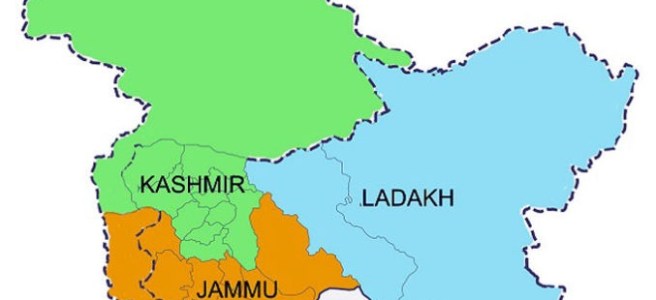
By: Aman Saraf The legal framework regulating Jammu and Kashmir can in recent terms be adequately referred to as protean and erratic – and for good reason. Post the Constitutional Order 273 passed by the President declaring that Article 370 of the Constitution of India ceased to be operative (barring the applicability of the Constitutional provisions to … Continue reading A Peculiar Problem Posed by the J&K Reorganisation?
Victims and Bail — The Judgment in Jagjeet Singh v. Ashish Mishra
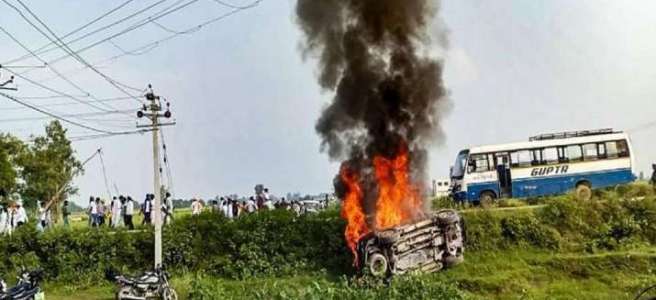
By: Abhinav Sekhri In a much-publicised judgment, the Supreme Court set aside the order granting bail to the main accused in the Lakhimpur Kheri incident from October 2021 [Jagjeet Singh & Ors. v. Ashish Mishra & Anr., Crl. Appeal 632 of 2022 (decided on 18.04.2022) ("Ashish Mishra")]. At the outset, it would be necessary to clarify that the court … Continue reading Victims and Bail — The Judgment in Jagjeet Singh v. Ashish Mishra
THE SUDDEN FIGHT EXCEPTION: AN ANATHEMA TO CRIMINAL LAW?
By: Hritik Merchant (This article is a Part I of the submission.) I. Introduction Exception 4 to Section 300 of the Indian Penal Code, 1860 (“IPC”) posits that if a person dies in a sudden fight with the accused, the accused’s culpability will be reduced to culpable homicide not amounting to murder (“the sudden fight … Continue reading THE SUDDEN FIGHT EXCEPTION: AN ANATHEMA TO CRIMINAL LAW?
Setting the paper tiger free – Bail provisions and UAPA
-Sanjana Gupta & Aditi Roy Introduction Bail can be termed as the procurement of a person’s release from legal custody through an undertaking that one shall remain present at the designated time and place and submit himself to the Court. Bail can be denied only in exceptional circumstances and has to be given as a … Continue reading Setting the paper tiger free – Bail provisions and UAPA
PRACTICE OF WITCH HUNT IN INDIA: FALLACIES IN STATUTES AND EXIGENCY FOR A CENTRAL LEGISLATION (GENDER-BASED VIOLENCE)
By: Aditi Pandey INTRODUCTION Women as individuals have been victimized in various manners including gender-based violence which is solely justified as culture. Whereas, it is nothing but the supremacy of men over women through established “patriarchy” in the society. As a result, there exists tremendous trauma to women both on physical and psychological levels. According … Continue reading PRACTICE OF WITCH HUNT IN INDIA: FALLACIES IN STATUTES AND EXIGENCY FOR A CENTRAL LEGISLATION (GENDER-BASED VIOLENCE)
Envisioning admissibility of wearable devices in Indian Courts
Rishabh Saumya and Gayatri Singh Introduction The leap of technology from our desk to our wrist is quite remarkable. From measuring our heartbeat to calculating our footsteps, wearable devices, gradually, are becoming an essential fitness accessory among health-conscious folks. These activity tracking devices are equipped with wearable technology and are marketed for their health tracking … Continue reading Envisioning admissibility of wearable devices in Indian Courts
Prosecutorial fair disclosure – A concept conveniently swept under the carpet?
By: Chaitanya M. Hegde Introduction Recently, when the process of framing charges had begun in the Elgar Parishad case, the accused filed a plea before the Bombay High court seeking stay of the trial as certain vital materials relied by the NIA was not provided to them. This once again has shed the light on … Continue reading Prosecutorial fair disclosure – A concept conveniently swept under the carpet?
Whether Apprehension of death on account of COVID a valid ground for anticipatory bail?
By: Srishti Gupta Introduction Recently, the courts have been adapting to new set of circumstances and leaning towards bail to decongest prisons. Due to COVID-19 outbreaks in detention centers, courts are rethinking whether pre-trial custody is necessary to maintain public confidence in the criminal justice system. In a recent Allahabad High Court order, anticipatory bail … Continue reading Whether Apprehension of death on account of COVID a valid ground for anticipatory bail?
Cyber-crime and Bulli Bai App:
Where do we draw the line? Priyanshi Jain & Preeti Bohra Introduction India’s internet user population is increasing tremendously. However, the gender imbalance on the internet is an ever-existing challenge. Patriarchy operates consistently when a woman often comes across as invading a man’s cyberspace, primarily when they express their views on politically sensitive issues. At … Continue reading Cyber-crime and Bulli Bai App:
RECONSIDERING THE CASE OF NEHA V. VIBHOR GARG
By Aayushi Swaroop Introduction In Neha v. Vibhor Garg, a divorce petition was filed pursuant to which the husband produced the telephonic conversation of the wife to establish the case of cruelty by the wife. To this, the High Court stated that the same is an infringement of the right to privacy of the wife … Continue reading RECONSIDERING THE CASE OF NEHA V. VIBHOR GARG
TRANS RIGHTS AGAINST SEXUAL OFFENCES IN INDIA: IS PROTECTION FROM RAPE STILL A FAR CRY?
By: Aprajita Tyagi Though the existence and acceptance of transgender persons have long been recorded in ancient Indian texts, the recognition of their legal rights is a recent occurrence in the country. It was only in 2019 that the Indian Parliament enacted the nation’s first legislation, namely the Transgender Persons (Protection of Rights) Act, 2019 … Continue reading TRANS RIGHTS AGAINST SEXUAL OFFENCES IN INDIA: IS PROTECTION FROM RAPE STILL A FAR CRY?
Zero FIR: purview, analysis and propositions
By: Ridhi Aggarwal and Vedant Bisht Although the term First Information Report (“FIR”) hasn’t been explicitly mentioned in the Code of Criminal Procedure, 1973 ("CrPC”), S.154 of CrPC provides for the process of registering the information relating to the commission of a cognizable offence. The concept of Zero FIR eliminates the barriers of territorial jurisdiction … Continue reading Zero FIR: purview, analysis and propositions
Stand-Up Comics & The Imbroglio of Criminal Complaints
By Arundhati Rajput Introduction Vir Das, an Indian Stand-up comic, has yet again become the center of vehement criticism as his monologue: ‘The Story of Two Indias’, has stirred opposing sentiments. In this monologue, the comic portrayed India in a sagacious manner having an undertone of satire. However, several lawyers and political leaders felt that … Continue reading Stand-Up Comics & The Imbroglio of Criminal Complaints
The crime of possessing or viewing child pornography: Cannot always agree on who is harmed?
By: Martin Kwan John Stuart Mill’s harm principle is one of the most common justifications for the criminalization of a certain conduct. In simple terms, the principle provides that acts that cause harm to others should be criminalized. Naturally, the aim of the offences involving child pornography would be to prevent harm to children – … Continue reading The crime of possessing or viewing child pornography: Cannot always agree on who is harmed?
Why we need to strengthen Child Welfare Committees
By: Ann Sarasa K R India’s devastating second wave has wreaked havoc on lakhs of people across the country, and the statistics are disheartening. In an affidavit submitted to the Supreme Court, the National Commission for Protection of Child Rights (NCPCR) showed that over 30,000 children lost either one or both parents or were abandoned … Continue reading Why we need to strengthen Child Welfare Committees
TAKING BACK JUSTICE: A CRITICAL APPRAISAL OF SECTION 321 OF THE CRIMINAL PROCEDURE CODE
By: Milind Malhar Sharma INTRODUCTION Public Prosecutors play important roles like representing the state and are charged with proving the guilt of the accused in the criminal justice system.. This points us towards an interesting set of questions – should public prosecutors be allowed to withdraw criminal cases from prosecution leading to potential criminals not … Continue reading TAKING BACK JUSTICE: A CRITICAL APPRAISAL OF SECTION 321 OF THE CRIMINAL PROCEDURE CODE
Major Bank Frauds: A Need For A Rethink Of ‘Offences Against Property’ In The Indian Penal Code
By: Meghana Senthil Introduction India has witnessed multiple major bank frauds over the course of the last decade. As per the Annual Report of the Reserve Bank of India (“RBI”), the reported bank fraud cases have increased by 159% in value during the fiscal year of 2019-2020. The increased complexity and costs involved in them … Continue reading Major Bank Frauds: A Need For A Rethink Of ‘Offences Against Property’ In The Indian Penal Code
An Analysis of Mitesh Ashokbhai Chunavala v. State of Gujrat – using Section 482 as a Backdoor for Reinforcing Patriarchal Norms in Rape Trials
By: Shivani Mody Introduction The Chief Justice of India, while hearing the case of Mohit Subhash Chavan v. State of Maharashtra, asked a rape accused to marry the victim in order to potentially reduce punishment for the offence, which resulted in widespread backlash and condemnation. However, the truth is that such deliberations are not new … Continue reading An Analysis of Mitesh Ashokbhai Chunavala v. State of Gujrat – using Section 482 as a Backdoor for Reinforcing Patriarchal Norms in Rape Trials
CCTVs Cameras in Police Stations: A Comprehensive Step to deter Custodial Violence?
By: Nishant Nagori ‘Panopticism’, one of Foucault’s most intriguing concepts on surveillance is premised upon the Panopticon, a prison where guards are positioned within a central tower to employ surveillance on all the inmates. This creates a conscious sense of ‘permanent visibility’ amongst the ones under surveillance, eventually leading to internalized authority and self-discipline. This … Continue reading CCTVs Cameras in Police Stations: A Comprehensive Step to deter Custodial Violence?
Consent in Section 375 is Superior to Consent in Section 90
By: Manas Agarwal and Ritu Bhatiya Introductory Remarks The absence of consent is a sine qua non element of the offence of rape involving people above the age of 18. This paper focuses on one such category of consent, which is consent based on the promise of marriage. Two provisions of the Indian Penal Code … Continue reading Consent in Section 375 is Superior to Consent in Section 90
Conspiracy: The Substantive Offence (Part I)
By: Abhinav Sekhri [This article is a second part of a conspiracy series.] Over the next two posts, we will discuss the substantive offence of conspiracy. We will first try and identify what purpose is this offence of conspiracy designed to serve, its costs and benefits, and only then turn to the Indian statutory provisions … Continue reading Conspiracy: The Substantive Offence (Part I)
“The Unscrupulous”: Invariably and Unalterably Criminals? (Part II)
-By Akanksha Singh [The article is the 2nd part of a two-part series] Not all psychopaths are criminals/serial killers If we again consider the example of the above mentioned fictional characters of Sheldon Cooper and Villanelle, for anyone who has watched the shows, it is evident that Sheldon Cooper is far from engaging in any … Continue reading “The Unscrupulous”: Invariably and Unalterably Criminals? (Part II)
Conspiracy: Introducing the series
-By Abhinav Sekhri [The article is the first part of a conspiracy series] It would not be an overstatement to suggest that the idea of conspiracies has come to underpin almost all prosecutions where more than one person is accused of an offence, be it a blockbuster case (Elgar Parishad, Delhi Riots, Kerala Gold Smuggling, … Continue reading Conspiracy: Introducing the series
“The Unscrupulous”: Invariably and Unalterably Criminals?
-By Akanksha Singh [The article is the first part of a two part series] Theophrastus, one of Aristotle’s disciples, was probably the first person to ever write about psychopaths, calling them ‘the unscrupulous’, which precisely translates to ‘someone having or showing no moral principles; not honest or fair’. These people lack the ordinary connections that … Continue reading “The Unscrupulous”: Invariably and Unalterably Criminals?
Violation of Principles of Fair Trial in Rape Cases – Part 2
By: Bipasha Kundu [This article is the second part of a two- part series.] II. “Instant Justice” meted out in the Disha Rape Case is no Justice at all Another horrifying incident that shocked the nation was the Disha rape case. A 26year old veterinary doctor in Shamshabad, Telangana, was brutally raped by four men … Continue reading Violation of Principles of Fair Trial in Rape Cases – Part 2
Violation of Principles of Fair Trial in Rape Cases – Part I
By: Bipasha Kundu [This article is a part one of the two part series] Abstract Rape is one of the most heinous offences; unfortunately, the principles of fair trial are violated in such cases due to various factors. The occurrence of such cases leads to enormous public outrage. Such outrage often finds its way into … Continue reading Violation of Principles of Fair Trial in Rape Cases – Part I
WHAT IS THE EXTENT OF PROSECUTORIAL IMMUNITY ACCORDED TO JUDGES & PUBLIC SERVANTS? ANALYSIS OF SECTION 197, CrPC.
-By Devansh Pandit INTRODUCTION: Complete or partial immunity from lawsuits accorded to the members of judiciary or those exercising powers on behalf of the state, is not a novel concept. For example, no civil or criminal cases lie against the British Crown, or those exercising powers on their behalf; The United States itself accords prosecutorial … Continue reading WHAT IS THE EXTENT OF PROSECUTORIAL IMMUNITY ACCORDED TO JUDGES & PUBLIC SERVANTS? ANALYSIS OF SECTION 197, CrPC.
SIDDHARTH V. STATE OF U.P. – Doing away with unnecessary custody
By: Kapil Devnani and Ashutosh Kumar Introduction “I would like to be remembered as a person who wanted to be free and wanted other people to be also free.” This famous quote by Rosa Parks presents the true value of the Right to liberty, and it would not be wrong to say that the framers … Continue reading SIDDHARTH V. STATE OF U.P. – Doing away with unnecessary custody
The New Supreme Court “Guidelines” on Bail
By: Abhinav Sekhri It is fairly well known that under the Criminal Procedure Code 1973 [Cr.P.C.], the investigating agency files a Report before court upon completing an investigation, sharing the finding of its investigation [Section 173]. What is not so well known is that, at this stage, if police concludes that there is sufficient evidence … Continue reading The New Supreme Court “Guidelines” on Bail
Bridging the Gap: Analysing Section 311 of the Criminal Procedure Code
-By Varda Saxena Introduction India is an example of an adversarial system of law. However, there are instances when the Magistrate steps up to assist the course of justice. The powers under Section 311 of the Criminal Procedure Code, 1973 ("CrPC"), which complement Section 165 of the Evidence Act, 1872 (“Evidence Act”) is a sound … Continue reading Bridging the Gap: Analysing Section 311 of the Criminal Procedure Code
SECTION 295A AND ITS ARBITRARINESS
By-Aditi Gupta Introduction “In October 2020, a Malayalam journalist named Siddique Kappan was charged under sections 124A (sedition), 153A (for promoting enmity between groups), and 295A (outraging religious feelings) of the IPC and UAPA. He was detained while on his way to cover the Hathras event in Uttar Pradesh.” This detention raises questions in a … Continue reading SECTION 295A AND ITS ARBITRARINESS
The conundrum of ‘Necrophilia’ in India: Broadening the sphere of punishment is demanded.
- Rohan Mishra INTRODUCTORY REMARK - NECROPHILIA Ever since the Indian Penal Code, 1860 (hereinafter, “IPC”) came into play it has been celebrated widely as a great piece of penal legislation by positively testifying as the balance wheel of the society containing in itself a rich lode of progressive laws as per the growing … Continue reading The conundrum of ‘Necrophilia’ in India: Broadening the sphere of punishment is demanded.
ALEXA: A CATALYST IN THE EVIDENCE LAW?
By: Rishabh Saumya “Alexa raise your hand”. The problem is Alexa has no hands or any other human feature. We know Alexa- that’s the name used by Amazon for its virtual personal assistant, most frequently invoked on its echo in-home smart speaker. It may not have a face but the program can be treated as … Continue reading ALEXA: A CATALYST IN THE EVIDENCE LAW?
GUJARAT CONTROL OF TERRORISM AND ORGANISED CRIME ACT: A PROCRUSTES SOLUTION
-By Darshil Sakhia and Pratham Shah Introduction In September 2020, a petition was filed in the Gujarat High Court (“Gujarat HC”) challenging the constitutionality of sections 2(1) (c), 16, 20(3), 20(4) and 20(5) of the Gujarat Control of Terrorism and Organized Crime Act, 2015 (“Act”). While the case is still being heard in the Gujarat … Continue reading GUJARAT CONTROL OF TERRORISM AND ORGANISED CRIME ACT: A PROCRUSTES SOLUTION
Bail under CrPC v. Bail under UAPA: A Critical Analysis
-By Renuka Nevgi The term ‘bail’ essentially means procurement of release of an accused awaiting trial or appeal by the deposition of security as an assurance for his/her submission whenever demanded by legal authority. The application for bail can be approved or rejected on various grounds such as nature of the offence, severity of punishment, … Continue reading Bail under CrPC v. Bail under UAPA: A Critical Analysis
Discrimination through the Tinted Glass: VIP Culture and its Manifestation
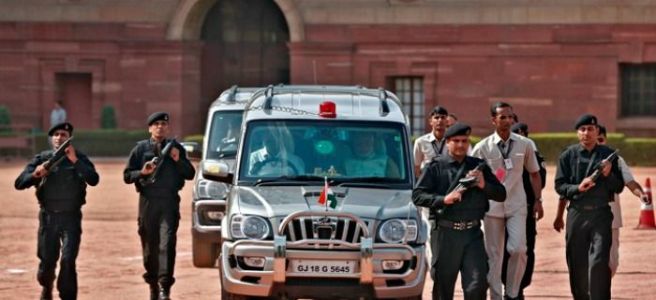
By: Injila Khan and Utkarsh Mishra Abstract – “The current political situation in the country with the right-wing government and a complex set of relations between the state and the centre has given us a cause to revisit the realms of the VIP culture that has pervaded our governments and bureaucracy since the colonial era. … Continue reading Discrimination through the Tinted Glass: VIP Culture and its Manifestation
AWARDING CUSTODIAL CONFESSIONS WITH EVIDENTIARY VALUE: A TIME TO MAKE REFORMS?
By: Shambhavi Shani INTRODUCTION Confession made by a suspect, being decisive in nature plays a significant role when criminal proceedings are pursued. Confession, simply put, is an acknowledgment of guilt by accused which is traced back, in various common law countries, to the guilt conscience associated with it. Being conclusive, it is of utmost importance … Continue reading AWARDING CUSTODIAL CONFESSIONS WITH EVIDENTIARY VALUE: A TIME TO MAKE REFORMS?
MARITAL RAPE: REDIFINING SOCIETAL NORMS AND CONSENT BOUNDARIES IN MARRIAGE
By: Harsh Sethi INTRODUCTION Marital rape is defined as the non-consensual sexual intercourse in a marital relationship with one’s own spouse. The act, often justified for reasons of the ‘implied consent of the spouse’, not only violates the sexual freedom of the wife but also undermines her dignity and self esteem. Nonetheless, marital rape remains … Continue reading MARITAL RAPE: REDIFINING SOCIETAL NORMS AND CONSENT BOUNDARIES IN MARRIAGE
Criminalising “Stealing the Affection of a Brother Officer’s Wife”: A Comparative Analysis with reference to the USA and South Africa
By- Digvijay Sahni Introduction Decriminalising adultery and viewing it from outside the realm of criminal jurisprudence, was one of the landmark judgments that was rendered by the Supreme Court in 2018. The abrogation of the long-standing English provision in the IPC 1860 was seen as a step in the positive direction for which civil remedy … Continue reading Criminalising “Stealing the Affection of a Brother Officer’s Wife”: A Comparative Analysis with reference to the USA and South Africa
ECOCIDE: CHANGING THE LEGAL REALITY AND CULTURAL MINDEST
By- Swetha Somu On March 18, 2021, the French MPs approved to make ‘ecocide’ a serious crime under French law. The draft legislation passed the National Assembly by 44 votes to 10. Under the law, anyone intentionally causing pollution to land, water or soil will be liable for up to 10 years in prison along … Continue reading ECOCIDE: CHANGING THE LEGAL REALITY AND CULTURAL MINDEST
Rendering Criminal Law Meaningless: On the Draconian Telangana Preventive Detention Law
-By Abinav Sekhri In 2017, the Telangana government passed a Bill to ratify and ordinance which had made the "Telangana Prevention of Dangerous Activities of Bootleggers, Dacoits, Drug-Offenders, Goondas, Immoral Traffic Offenders and Land-Grabbers Act 1986", into the "Telangana Prevention of Dangerous Activities of Bootleggers, Dacoits, Drug-Offenders, Goondas, Immoral Traffic Offenders, Land-Grabbers, Spurious Seed Offenders, Insecticide Offenders, Fertiliser Offenders, … Continue reading Rendering Criminal Law Meaningless: On the Draconian Telangana Preventive Detention Law
Protection of Women from Harassment at Workplace: A Mirror Reflection of the Vishakha Judgment
-By Vidhik Kumar Introduction The status of women in our society can only be uplifted when we as a community tread towards the path of social justice, equality, and dignity- and provide women, without any discrimination, equal opportunities in every sphere of life. India has adopted several legislations for uplifting women in the social sphere, … Continue reading Protection of Women from Harassment at Workplace: A Mirror Reflection of the Vishakha Judgment
Social Media – A Breeding Ground for Juvenile Offenders
-By Yana Gupta and Ayush Mangal Social Media may either act as a bane or a boon for society and individuals. However, sometimes its cost outweighs its benefits, especially for juveniles. The access to electronic gadgets for long durations has opened floodgates of opportunities for juveniles to get inspired from the content on social media … Continue reading Social Media – A Breeding Ground for Juvenile Offenders
In ‘Furtherance’ of Substituting Criminal Conspiracy
-By Sarthak Wadhwa (This article is the second part of a two part series) Introduction In a recent two-part post on this blog, Shraddha and Yana present a comprehensive account of how colonial era laws are weaponized to ‘crackdown on dissent’ – and how the detention of Safoora Zargar and Disha Ravi for sundry charges … Continue reading In ‘Furtherance’ of Substituting Criminal Conspiracy
Crackdown on Dissent: A Conspiratorial Approach
~Sarthak Wadhwa (This article is the first part of a two-part series) Introduction In a recent two-part post on this blog, Shraddha and Yana present a comprehensive account of how colonial era laws are weaponized to ‘crackdown on dissent’ – against the ideals of democracy and criminal justice as found in the Indian Constitution and … Continue reading Crackdown on Dissent: A Conspiratorial Approach
Section 295A and Harm-Offence Debate
-By Kirti Meena and Sandli Pawar Introduction Section 295A of the Indian Penal Code, 1860 has become a catchword in the context of any real or reel issue related to hurting religious sentiment. Section 295A criminalises any deliberate or malicious act intended to offend the religious sentiment of any class of people. The Section mandates … Continue reading Section 295A and Harm-Offence Debate
The Abuse of Parole and Furlough – An Analysis
-By Mannat Marwah Introduction Parole or furlough is the temporary release of a prisoner before they have completed their sentence, on a conditional basis. Rules relating to parole and furlough are enshrined under the Prison Act, 1894 and the Prisoner Act, 1900. Each state has its own rules governing parole and furlough with only minor … Continue reading The Abuse of Parole and Furlough – An Analysis
Reverse onus of proof: An incongruity in UAPA
-Himanshu Mishra In all countries, the laws to prevent unlawful activities that may cause harm to the sovereignty and integrity of a nation are extremely consequential. In India, a law called Unlawful Activities Prevention Act, 1967 [hereinafter, “UAPA”]was enacted for this purpose. In recent times, our country has witnessed a plethora of UAPA cases and … Continue reading Reverse onus of proof: An incongruity in UAPA
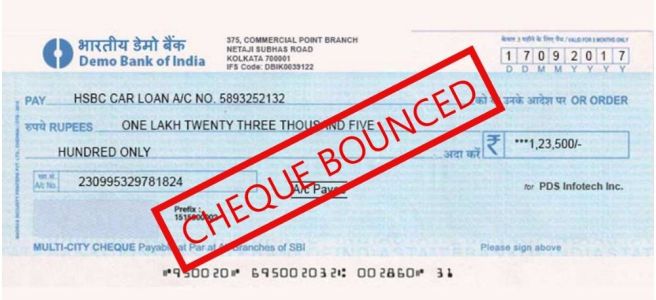
The Supreme Court and Delays in Cheque Bouncing Cases
-By Abhinav Sekhri This April, a Constitution Bench of the Indian Supreme Court took up the issue of delays in cheque bouncing cases — i.e., complaints instituted under Section 138 of the Negotiable Instruments Act 1881 — and passed some important directions on how such cases should be run [Order dated 16.04.2021 in Suo Motu Writ Petition (Crl.) 2 … Continue reading The Supreme Court and Delays in Cheque Bouncing Cases


A Closer Look at the 1976 Deletion of Section 438 CrPC in Uttar Pradesh
-By Abhinav Sekhri (Special thanks to Ashna D and Aniket Singh for their help with research on some aspects.) In 2019, the State of Uttar Pradesh amended the Criminal Procedure Code of 1973 insofar as it applied to the state, to re-insert Section 438 (its at the end of the linked file) which provides for anticipatory bail. … Continue reading A Closer Look at the 1976 Deletion of Section 438 CrPC in Uttar Pradesh
Assessing the Quality of Legal Aid: Need for A Uniform Legal Framework
-By Harsh Panwar Introduction Access to legal aid is considered a pertinent issue by the stakeholders in the criminal justice system. However, much of the conversation on legal aid mechanisms have only been centred around access to legal aid to an accused. At the same time, there exists hardly any conversation around guaranteeing the ‘effectiveness’ … Continue reading Assessing the Quality of Legal Aid: Need for A Uniform Legal Framework
Exploring Holocaust Survivors’ Post Liberation Delinquency: An Analysis Through an Unexplored Theory of Neutralization of Crime
-By Sanjeet Aggarwal The Nazi extermination camps of Central Europe, which used to murder over 2.7 million people during the Holocaust, were among the most brutal and barbarous manifestations of human malice and cruelty that anybody could persist through. On detainment by the SS(Schutzstaffel), the prisoners taken in by the Nazi's went through a literal … Continue reading Exploring Holocaust Survivors’ Post Liberation Delinquency: An Analysis Through an Unexplored Theory of Neutralization of Crime
Virendra Khanna v State of Karnataka –Passwords and the Dilution of the Right Against Self-Incrimination
-By Kashish Khandelwal In Riley v California, while holding that an accused cannot be forced by the police to reveal their password, the US Supreme Court observed that owing to the rapid development of technology, the majority of the people “typically carry a cache of sensitive personal information” in their pockets. However, this has also … Continue reading Virendra Khanna v State of Karnataka –Passwords and the Dilution of the Right Against Self-Incrimination
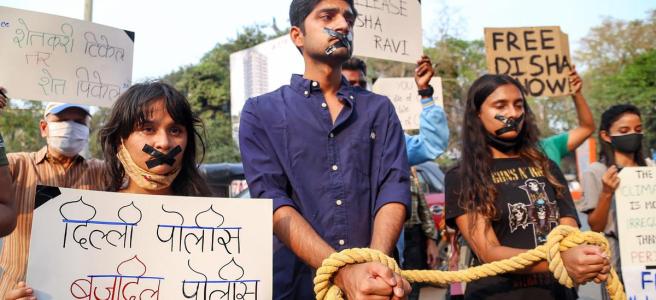
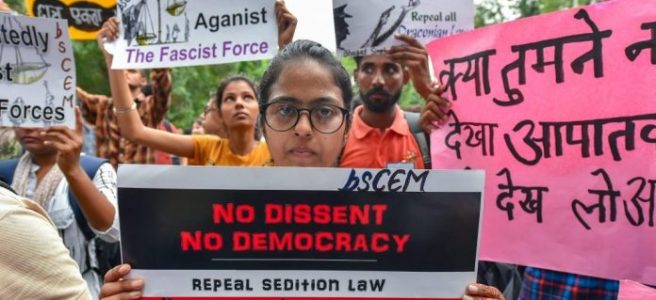
Crackdown on Dissent : A Call for Reform and Action
- By Shraddha and Yana Gupta (This article is the second part of a two-part series) Introduction India is a democratic nation and recognition of dissent remains a sine qua non of a true and a living democracy. However, grave misreading of law coupled with dubious intents on the part of the Indian government has … Continue reading Crackdown on Dissent : A Call for Reform and Action
Weaponizing the Law to Stifle Dissent
-By Shraddha and Yana Gupta (This article is the first part of a two-part series) Introduction In theory India remains a democratic country where its citizen have a constitutional right to speech and expression, but the authors of this article contend that our practice does not match to the high standards set by the democratic … Continue reading Weaponizing the Law to Stifle Dissent
Anticipatory Bail in Offences under CGST Act: A Developing Jurisprudence
-By Nitesh Mishra The Central Goods and Services Act, 2017 (“the Act” or “CGST Act”) ushered in a novel tax regime in India. Section 132 of the Act has prescribed certain offences which attract punishment in accordance with the provisions of the Act. Owing to the recent enactment of the Act, there does not exist … Continue reading Anticipatory Bail in Offences under CGST Act: A Developing Jurisprudence
A Criminological Perspective on Sexual Crimes in India
-By Bhavya Sharma Introduction Cases of rape in India are reported in the newspapers almost every other day. A careful reading of these reports through a criminological perspective, keeping in mind the theories of crime causation, would help in not only identifying the circumstances that led to the commission of the offence but also in … Continue reading A Criminological Perspective on Sexual Crimes in India
Marry your rapist: An unending saga of compromise in Rape Cases
-By Harshita Dixit Introduction Recently a Supreme Court bench headed by Chief Justice of India S.S. Bobde asked a rape accused to marry her victim. The accused, who is a state government employee, is facing charges for repeatedly raping his relative- when she was a minor. The apex court was hearing a petition against an … Continue reading Marry your rapist: An unending saga of compromise in Rape Cases
Proviso to Section 372 or Section 378(4) of the Code of Criminal Procedure, 1973; which remedy to avail? – An Interpretative Perplexity
-By Atreya Chakraborty and Aurin Chakraborty Introduction The Latin maxim of Ubi Jus Ibi Remedium embodies a settled principle of common law which essentially means that ‘where there is a right, there is a remedy’. It envisages the establishment of an equitable legal mechanism wherein, every grievance must have a remedy in law. A wider … Continue reading Proviso to Section 372 or Section 378(4) of the Code of Criminal Procedure, 1973; which remedy to avail? – An Interpretative Perplexity
Crafting Accessible Remedies to deal with Multiple FIRs and Complaints
-By Abhinav Sekhri 2020 (and January 2021) witnessed a series of high-profile cases where the potential accused persons were sought to be prosecuted across the country for their conduct. Arnab Goswami, Amish Devgn, the makers of Tandav; in all these cases, specific speech acts of the accused persons attracted the ire of people across states … Continue reading Crafting Accessible Remedies to deal with Multiple FIRs and Complaints
Crafting Accessible Remedies to deal with Multiple FIRs and Complaints
-By Abhinav Sekhri 2020 (and January 2021) witnessed a series of high-profile cases where the potential accused persons were sought to be prosecuted across the country for their conduct. Arnab Goswami, Amish Devgn, the makers of Tandav; in all these cases, specific speech acts of the accused persons attracted the ire of people across states … Continue reading Crafting Accessible Remedies to deal with Multiple FIRs and Complaints
Legality of Hindutva Politics under Section 171C IPC: Scope of the Section and Hindutva’s Varied Interpretations
-By Vaibhav Yadav Introduction Elections form a vital part of a democracy. Every person who is eligible to vote in a democratic country has the right to freely choose whom he/she wants to vote for. However, this right to vote freely can be affected by a number of factors and considerations. It can be influenced … Continue reading Legality of Hindutva Politics under Section 171C IPC: Scope of the Section and Hindutva’s Varied Interpretations
Right against Self-Incrimination: A Deontological Pitch
-By Shantanu Mishra Right against self-incrimination has its origins in the English common law and cannon law. It is an important right amongst a few rights which are available to the accused. The fact that it has been envisaged as a fundamental right in the Indian Constitution shows the importance that should be accorded to … Continue reading Right against Self-Incrimination: A Deontological Pitch
Victim Assistance in India: Broadening the Scope of Victim Reparations in the Criminal Justice System
-By Tanisha Prashant Introduction The justice system does not provide any succor to the victims of crime. The concept of fair trial and justice embodies in itself a triangulation of rights and interests of the accused, the victim and the society. Under an adversarial system, the rights of the community and the accused are exhaustively … Continue reading Victim Assistance in India: Broadening the Scope of Victim Reparations in the Criminal Justice System
Analysing the Shakti Bill through Beccaria’s Lens of Deterrence
-By Sanvi Bhatia and Sukrut Khandekar Of late, a concerning trend in relation to rape laws in India can be observed. Even though India recorded around 88 rape cases a day in 2019, every once in a while there has been one particular case like the Delhi gang rape case of 2012 or the Hyderabad … Continue reading Analysing the Shakti Bill through Beccaria’s Lens of Deterrence
Parole in India – Current state and the Need for Reforms- II
-By Tanish Arora and Hardik Batra (This article is the second part of a two-part series.) The Need for Reforms and Suggestions As observed in the previous part, the subjectivity and non-uniformity in the procedure to increase the scope of rehabilitation and reformation throughout the country leads to significant confusion and differentiation. It is owing … Continue reading Parole in India – Current state and the Need for Reforms- II
Parole in India – Current state and the Need for Reforms- I
-By Tanish Arora and Hardik Batra (This article is the first part of a two-part series) Introduction Crime is a matter of public importance in the society. The way a society responds to crime is what shapes its future. If such way of responding is harsh or arbitrary in its impact, it works a gross … Continue reading Parole in India – Current state and the Need for Reforms- I
Misuse of section 295-A IPC: A Potent weapon in Criminalising Comedy and Cinema
-By Jai Babaria While India is deemed to be a secular country, religion has always divided us. There is a constant tussle between various religious groups, be it explicit or dormant and ‘outrage’ is a fairly common term nowadays where everything has the potential to offend, shock or disturb religious sentiments. Section 295-A of the … Continue reading Misuse of section 295-A IPC: A Potent weapon in Criminalising Comedy and Cinema
Preventive Detention: Anarchical Law
-By Kumar Kartikeya and Avinash Kumar Yadav Preventive detention implies holding an individual in custody of the police based only on suspicion that they may commit some wrongful cognizable act or pose harm towards society. The police have all the power to detain a person whom they strongly believe can commit a cognizable offence. For … Continue reading Preventive Detention: Anarchical Law
Redefining the scope of Exculpatory Material at the Stage of Bail
-By Dev Bansal Introduction Recently, in Prashant Dagajirao Patil v. Vaibhav @ Sonu Pawar and Anr. Etc. (“Patil”), Hon’ble Supreme Court (“SC”) has observed that the High Court ("HC") cannot issue any such directions at the stage of bail which will have "a direct bearing upon the trial." Subsequently, it quashed the direction of the … Continue reading Redefining the scope of Exculpatory Material at the Stage of Bail
POCSO Or Atrocities Courts: Which Jurisdiction Is More ‘Special’?
-By Abhijeet Shrivastava Introduction As is well known, the Scheduled Castes and the Scheduled Tribes (Prevention of Atrocities) Act (“Atrocities Act”) was enacted by the Indian Parliament in 1989 as an anti-discrimination law. This legislation focused on countering negative discrimination against persons from the aforesaid categories. It crafted offences which had a nexus with their … Continue reading POCSO Or Atrocities Courts: Which Jurisdiction Is More ‘Special’?
Preservation of Evidence: Need of our Criminal Justice System
-By Mujeeb Ur Rehman “A person is innocent until proven guilty” This is one of the most sacred principles of the criminal justice system, regardless of jurisdiction of which it belongs to; and in order to prove any person guilty, evidence against him/her is a mandatory requirement. Here the criminal justice system fails to believe … Continue reading Preservation of Evidence: Need of our Criminal Justice System
Sexual Assault under the POCSO Act: A Flawed Interpretative Methodology
-By Sarthak Bhardwaj and Rupam Jha Introduction: In India, every sensitive socio-political development finds its way to the judiciary. The Supreme Court and the various high courts are constantly grappling with several matters of public importance. However, seldom do judgements assume the centre stage and become a subject of controversy. This is precisely what happened … Continue reading Sexual Assault under the POCSO Act: A Flawed Interpretative Methodology
Solitary Confinement: A Temporary Measure Causing Permanent Isolation?
-By Aditi Behura Introduction Solitary confinement is a penal form of confinement in which a prisoner is isolated from fellow prisoners and is under rigorous surveillance. It has been established that such confinement is torturous, and has an adverse impact on the holistic well-being (physical and mental health) of the prisoner. Convicts are placed in … Continue reading Solitary Confinement: A Temporary Measure Causing Permanent Isolation?
Relevancy of Medical and Forensic Evidences in Sexual Offences – An Analysis
-By Muskan Jhunjhunwala Introduction Sexual offences, in a general sense, are a rigorous attack on the body, particularly the molestation of genitals without the sufferer’s consent. It tends to outrage the dignity, self-respect and modesty of the victim and in its true sense is an attack on bodily integrity. Rape, in India, is considered a … Continue reading Relevancy of Medical and Forensic Evidences in Sexual Offences – An Analysis
A Case against Chemical Castration for Sex Offenders
-By Rajashri Seal Introduction Recently, a post on the blog argued in favour of chemical castration laws by hailing chemical castration as an effective and constitutionally sound measure against curbing rape, especially when such procedure is carried out with the consent of the sex offender. In the recent past, there has been a clamour for … Continue reading A Case against Chemical Castration for Sex Offenders
‘Retrospective’ Victim Compensation? Evaluating The Kerala HC’s Dworkinian Judging
-By Abhijeet Shrivastava Background This post concerns Bechu Kurian Thomas, J.’s recent judgment as a part of the Kerala High Court’s (“HC”) Single Bench in District Collector v. District Legal Service Authority (22.12.2020). The decision involved a temporal question over the scope of the provisions of Section 357A of the Code of Criminal Procedure, 1973 … Continue reading ‘Retrospective’ Victim Compensation? Evaluating The Kerala HC’s Dworkinian Judging
‘Miniscule Fraction of The Total Population’: Not Entitled to Legal Marriage and Protection from Abuse?
-By Prachi Agrawal & Charu Sharma Introduction: Namesake Recognition In the years antecedent to 2018, same sex carnal intercourse, regardless of consent, was considered against the order of nature and was weighed at par with bestiality, i.e. sexual intercourse between humans and animals. Under Section 377 of the Indian Penal Code, 1860 [hereinafter ‘IPC’], it … Continue reading ‘Miniscule Fraction of The Total Population’: Not Entitled to Legal Marriage and Protection from Abuse?
Munawar Faruqui is not an Exception: Systemic Malaise in Bail Hearings
-By Abhinav Sekhri Munawar Faruqui might have been about to crack a joke, but he was arrested by Madhya Pradesh police before he could do that. A case was registered against him which invoked offences such as Section 295-A IPC that are cognizable and non-bailable (more on that later). One court has dismissed his bail as well … Continue reading Munawar Faruqui is not an Exception: Systemic Malaise in Bail Hearings
Rethinking Mental Cruelty under Indian Matrimonial Law
-By Mohd Rameez Raza & Neha Tripathi The Hindu Marriage Act, 1955 (‘Act’ hereafter) lays down marital laws that are applicable to Hindus, Jains, Buddhists, and Sikhs. Up until the 1970s, the ground for divorce under the Act did not include ‘cruelty’. The various grounds were: voluntary sexual intercourse with any other person than his … Continue reading Rethinking Mental Cruelty under Indian Matrimonial Law
Voluntary Intoxication Leading to Insanity – A Review
-By Manas Agrawal If A= {1} and B = {4}, then AUB = {1, 4}. Furthermore, a code is designed whose function is to identify subsets of (AUB). There are four possible outputs that this code can return. They are {1}, {4}, {1, 4} and {ϕ}. In the same way, if A= {Voluntary Intoxication} and … Continue reading Voluntary Intoxication Leading to Insanity – A Review
Is Punishment for AI Justified?
-By Amishi Aggarwal This is the second part of a two-part series. The earlier link can be accessed from here. Generally, punishment is justified on the grounds of deterrence, punishment, prevention, reformation etc. Some of the broad reasons behind the imposition of criminal punishment are: firstly, the consequentialist benefits that punishment brings about i.e. increasing the … Continue reading Is Punishment for AI Justified?
Analysing the Possibility of Imposing Criminal Liability on AI Systems
-By Amishi Aggarwal (This article is part-I of a two-part series) Introduction The increasing role of Artificial Intelligence (AI) in human life and the advancements in its functioning have raised numerous questions. AI entities have attempted to escape labs, made racist comments, injured, and even killed people. Usually, crimes committed by an AI entity have … Continue reading Analysing the Possibility of Imposing Criminal Liability on AI Systems
The status of Confessions in Wildlife Protection Act- A review of Discrepancies and Flaws
-By Nishtha Gupta INTRODUCTION India has enacted several special laws to ensure speedy and efficient disposal of cases applying to a special category of offences. One of such special legislations is the Wildlife Protection Act, 1972 [“WLPA”]. It has been enacted for the protection of flora and fauna and for the overall ecological and environmental … Continue reading The status of Confessions in Wildlife Protection Act- A review of Discrepancies and Flaws
‘Does Determinism obliterate Responsibility?’ A Critical Analysis
-By Aarchie Chaturvedi Introduction “The actual consequences which happen to proceed from any action, have a very great effect upon our sentiments concerning its merit or demerit, and almost always either enhance or diminish our sense of both.” -Adam Smith A good will is an intrinsic good, i.e., good in itself. It is like … Continue reading ‘Does Determinism obliterate Responsibility?’ A Critical Analysis
An Argument for the ‘Fruit of the Poisonous Tree’ Doctrine
-By Shuchi Agrawal Introduction The Indian Evidence Act of 1872 does not forbid the examination of illegally collected evidence by the Courts, if it is relevant or establishes guilt or innocence. However, Indian courts have had conflicting opinions on the admissibility and evidence value of illegally collected evidence. Two major doctrines related to this conflict … Continue reading An Argument for the ‘Fruit of the Poisonous Tree’ Doctrine
Section 144 Cr.P.C. — Part VIII: Politicians, Protests, and the Court (1961 – 1970)
-By Abhinav Sekhri (This is the eighth part in a multi-part series on the Blog. Earlier posts in the series can be accessed here) The previous instalments in this series on Section 144 Cr.P.C. have attempted to trace a history that goes beyond the courtroom and looks at the provision more holistically by turning to the … Continue reading Section 144 Cr.P.C. — Part VIII: Politicians, Protests, and the Court (1961 – 1970)
Need for Application of Judicial Mind in Granting Remand: Discerning the Nexus between Remand Periods and Media Pressure
-By Tanmay Gupta and Yashasvi Raj Introduction As per Section 167 of the Code of Criminal Procedure (“Code”), an accused can be remanded for a maximum period of fifteen days at a time, up to ninety days. Conventionally, since the first day is included in the 24-hour production before the Magistrate, in practice, the maximum … Continue reading Need for Application of Judicial Mind in Granting Remand: Discerning the Nexus between Remand Periods and Media Pressure
Chemical Castration of Sexual Offenders in India – A Need for Reformation in Indian Anti-rape Laws
- By Anand Singh Introduction - On November 24th, 2020, Pakistan’s cabinet approved two anti-rape ordinances that call for chemical castration of the rapists and setting up special courts for trails. The two ordinances are the Anti-Rape (Investigation and Trail) Ordinance, 2020 and the Criminal Law (Amendment) Ordinance, 2020. The legislation comes after an incident … Continue reading Chemical Castration of Sexual Offenders in India – A Need for Reformation in Indian Anti-rape Laws
Quackery and the Urgency to Curb It
-By Sohini Bose Quackery is a socio-economic problem which is turned a blind eye towards for reasons unascertained. With the Government neither having taken any active interest nor steps to curtail it with the additional lacuna of dedicated penal provisions or legislation against it, this article proceeds to enumerate as to why and how quackery … Continue reading Quackery and the Urgency to Curb It
Rajesh Sharma And Ors. v. State of UP – Wrongly Feeds into the Narrative of 498A being Misused?
-By Khushi Agrawal INTRODUCTION With the incidents of domestic violence increasing by manifolds during COVID-19 times, it becomes pertinent to throw light on a 2017-judgement which reduced the importance of section 498-A IPC to a major extent. Section 498-A provides that if any person being the husband or the relative of the husband of a … Continue reading Rajesh Sharma And Ors. v. State of UP – Wrongly Feeds into the Narrative of 498A being Misused?
Some Thoughts after Diving into Prisons Data and Emerging on the Other Side
-By Abhinav Sekhri The National Crime Records Bureau [NCRB] runs the annual Crime in India reports as well as the Prison Statistics India reports. Both get their yearly moment in the sun when, around their publication, news stories with attractive pie charts get published with infographics to show that an unearthly number of cases are pending … Continue reading Some Thoughts after Diving into Prisons Data and Emerging on the Other Side
‘Fit State Of Mind’: An Argument for a more Objective Test for Recording Dying Declarations
-By Esha Goyal Section 32(1) of the Indian Evidence Act, 1872 allows for a dying declaration in the form of a statement regarding the cause of the declarant’s death to be made a relevant fact. The criminal rules of practice of each State in India require the declarant to be in a ‘fit state of … Continue reading ‘Fit State Of Mind’: An Argument for a more Objective Test for Recording Dying Declarations
End of Justice? The Supreme Court’s Order in Hitesh Verma v State of Uttarakhand
by Prannv Dhawan & Ishwar Singh The Supreme Court’s recent judgment in Hitesh Verma v. State of Uttarakhand [decided on 05.11.2020] reversed an order of the Uttarakhand High Court and quashed the case with respect to allegations under SC/ST (Prevention of Atrocities) Act 1989 (‘the Act’). The Court held that insulting or intimidating a person belonging … Continue reading End of Justice? The Supreme Court’s Order in Hitesh Verma v State of Uttarakhand
Juxtaposition of IP and Criminal Law
-By Namrata Pahwa Introduction When the products of any brand are authentic and original, it receives a considerable amount of recognition in the minds of its prospective buyer. It is important to preserve the market integrity of any product sold by such brands and that protection is granted by the product-related intellectual property rights, i.e. … Continue reading Juxtaposition of IP and Criminal Law
Preliminary Inquiry Before FIR: A Panacea for Malicious Prosecution?
-By Saisha Singh Earlier this year the Delhi High Court, in the process of hearing a case about registering FIRs against BJP Leaders, who have delivered alleged hate speeches, which are being said as being instrumental in inciting violence in NCR, was seen reminding the police to follow guidelines as established by the case of … Continue reading Preliminary Inquiry Before FIR: A Panacea for Malicious Prosecution?
Privileged Evidence under S.123, Yashwant Sinha v. CBI and Beyond?-Part II
-By Sudev Singh This is the second part of a two-part series. In the first part the author throws light on the case of Yashwant Sinha v. Central Bureau of Investigation, more popularly referred to as the Rafale case. An attempt has been made to highlight the importance of this case in the context of … Continue reading Privileged Evidence under S.123, Yashwant Sinha v. CBI and Beyond?-Part II