Witness Protection Under Section 398 of BNSS: A Milestone or a Missed Opportunity?

-Preet Chawla The enactment of Bharatiya Nagarik Suraksha Sanhita (BNSS), 2023, marks an important development in the Indian criminal justice system. Under this list of provisions, the only one which is distinctly different is that of Section 398, which introduces an express reference to witness protection under general criminal law. Limited safeguards for witnesses have … Continue reading Witness Protection Under Section 398 of BNSS: A Milestone or a Missed Opportunity?

Parole & Furlough: A Decision-Making Process or Institutionalized Discrimination?

-Mudrika Agarwal In this article, I examine offence-based restrictions on parole and furlough, arguing that it currently institutionalises discrimination. To address this, I put forward a case for an individualised, rehabilitation-focused decision-making process to decide parole and furlough applications. The grant of parole and furlough is largely based on the interplay of two significant considerations … Continue reading Parole & Furlough: A Decision-Making Process or Institutionalized Discrimination?

Effect of an Inactive Predicate Offence on the PMLA Trial

-Khushi Dhingra A paradox surrounds the Prevention of Money Laundering Act, 2002 [“PMLA”]: it creates an independent prosecution machinery for an offence that cannot, by its own definition, exist in the absence of an underlying scheduled offence. This paradox is most revealed when the Enforcement Directorate [“ED”] prosecutes a money laundering case while the predicate … Continue reading Effect of an Inactive Predicate Offence on the PMLA Trial

Committed Crimes And Over-Committed Courts: How Far Can My Lord Bend The BNSS – Part II

-Mayank Khichar Part IV: Harmonising Kishun Singh and Ranjit Singh Through The “Active” and “Passive” Role of the Magistrate in Dharam Pal Further, the tension between Kishun Singh and Ranjit Singh found partial resolution in Dharam Pal v. State of Haryana, at para 27 and 28, where the Court introduced a nuanced distinction between the “active” … Continue reading Committed Crimes And Over-Committed Courts: How Far Can My Lord Bend The BNSS – Part II

Committed Crimes And Over-Committed Courts: How Far Can My Lord Bend The BNSS – Part I

-Mayank Khichar “Jurisdiction is not given for the sake of the judge, but for that of the litigant.”- Blaise Pascal Introduction This article examines one of the core and contentious issues often involved in criminal trials. Namely, it centres around the focal point that (a) which forum may call ‘the accused’ to answer, and (b) when … Continue reading Committed Crimes And Over-Committed Courts: How Far Can My Lord Bend The BNSS – Part I

Inherited Guilt? Criminal Liability of Acquiring Companies for Pre-Merger Wrongs Under Indian Law

-Arham Anwar When one company absorbs another through a merger or amalgamation, the acquiring entity inherits a great deal of assets, contracts, employees, and often, reputation. But what about sins of the past? If the target company committed criminal offences before the deal closed, does the acquirer step into the dock as well? Under Indian … Continue reading Inherited Guilt? Criminal Liability of Acquiring Companies for Pre-Merger Wrongs Under Indian Law

Between Text and Purpose: Interpreting “Public Servant” Under POCSO

-Bhushan Raut Introduction The most difficult cases in criminal law are not the ones where the law is silent, but where it speaks and it produces an answer that feels normatively unsatisfying. The Delhi High Court’s order in the Unnao rape case is one such instance. Few cases more starkly demonstrate the abuse of power, … Continue reading Between Text and Purpose: Interpreting “Public Servant” Under POCSO

ADMISSIBILITY OF DNA EVIDENCE BEYOND DNA PROFILING: IS EVIDENCE PROCURED USING NEXT-GENERATION SEQUENCING ADMISSIBLE?

-Ritwik Sharma, Gurdeep Rai Introduction The use of advanced forensic genomics can expedite trials and has necessitated modernising existing procedural and evidentiary laws in India. Currently, classical DNA Profiling methods involving identification via fingerprinting are used in criminal investigations, and the evidence collected is admissible under the Bharatiya Sakshya Adhiniyam, 2023 (‘BSA’). However, it remains … Continue reading ADMISSIBILITY OF DNA EVIDENCE BEYOND DNA PROFILING: IS EVIDENCE PROCURED USING NEXT-GENERATION SEQUENCING ADMISSIBLE?

From 375 to 377: right to orientation conflicting with right to consent? Part- II

-Dhruv Madan and Maya Sarmah In Part I of this two-part post, we examined the shifting jurisprudence under Sections 375 and 377 IPC, through the cases of Imran Khan @ Ashok Ratna v. State of U.P. and Mohd. Mustafa & Ors. v. NCT of Delhi. Both these cases take a contradictory stance on whether the … Continue reading From 375 to 377: right to orientation conflicting with right to consent? Part- II

From 375 to 377: right to orientation conflicting with right to consent? Part- I

-Dhruv Madan and Maya Sarmah Introduction The law on sexual offences in India has witnessed substantial doctrinal shifts, yet certain judicial interpretations remain anchored in outdated binaries. Despite reforms via the Criminal Law (Amendment) Act, 2013 and Navtej Singh Johar v. Union of India, Indian High Courts continue to inconsistently distinguish between ‘natural’ and ‘unnatural’ … Continue reading From 375 to 377: right to orientation conflicting with right to consent? Part- I

Trading Shadows: Money Laundering & Insider Deals in the Metaverse’s Legal Void

-Advait Sharma and Bhadra Anil “In a world coded without consequence, shadows become the currency and silence the law.”  Introduction In any society where substantial transactions occur, be it in markets, industries, or the virtual world, in the absence of robust regulatory oversight, crime inevitably concurs to exploit the system or leverage it for greater … Continue reading Trading Shadows: Money Laundering & Insider Deals in the Metaverse’s Legal Void

From Mandate to Discretion: How Imran Pratapgadhi Reconfigures the Understanding of FIR Jurisprudence

- Kush Taparia, Hanshita Sharma “The greatest dangers to liberty lurk in insidious encroachment by men of zeal, well-meaning but without understanding.” - Justice Louis D. Brandeis Introduction The recent ruling of the Supreme Court ["SC"] in Imran Pratapgadhi v. State of Gujarat [“Imran Pratapgadhi”] has once again brought into focus the ambiguity and uncertainty … Continue reading From Mandate to Discretion: How Imran Pratapgadhi Reconfigures the Understanding of FIR Jurisprudence

Criminalising Critique: Sedition and the Ashoka Professor Controversy

-Sarah Unhelkar and Hitanshi Jain The Supreme Court recently granted interim bail to Ashoka Professor Ali Khan Mahmudabad with specific conditions. Mahmudabad was arrested on May 18th, following two FIRs being registered against him with the Haryana Police for his social media posts. While sharing his thoughts via his X (earlier “Twitter”) account, he applauded … Continue reading Criminalising Critique: Sedition and the Ashoka Professor Controversy

How Judicial Permissiveness Sustains Solitary Confinement in Indian Prisons

-Ayush Gupta Introduction The long and contentious aspect of solitary confinement has always been a topic of debate in criminal law jurisprudence, which raises serious human rights and legal concerns. Keeping inmates in confinement for prolonged hours without meaningful human contact has been criticized globally for its harmful physiological and psychological effects. This practice is … Continue reading How Judicial Permissiveness Sustains Solitary Confinement in Indian Prisons

Penalising Adolescent Bodily Agency: Is It Time to Revisit Consent under the POCSO Act?

- Vaani Negi Introduction Adolescence, the latest four-episode miniseries on Netflix, has been rapidly gaining acclaim, and deservedly so. The series delves into the harrowing aftermath of a 13-year-old boy being accused of murder.  The narrative reveals school-going children looking for direction from a digital world that warps their perceptions, rather than from teachers no … Continue reading Penalising Adolescent Bodily Agency: Is It Time to Revisit Consent under the POCSO Act?

WHO GOT IT WRONG—THE ALLAHABAD HIGH COURT OR US?

-Aarya Dubey & Kush Shanker. INTRODUCTION Recently, in a judgement delivered by the Hon’ble Ram Manohar Narayan Mishra J. of the Allahabad High Court, it was observed that groping breasts, snapping off the girl’s pyjama strings and dragging her beneath the culvert prima facie do not constitute an attempt to rape under the relevant provisions … Continue reading WHO GOT IT WRONG—THE ALLAHABAD HIGH COURT OR US?

CRUELTY; BUT NOT FOR THE SECOND WIFE

-Ishan Vijay Introduction There is a lot of uproar of Section 498-A of the Indian Penal Code (IPC) or Sections 85 and 86 of the Bharatiya Nyaya Sanhita (BNS) i.e. cruelty, and its misuse, from activists to courts. And while that remains to be an existing challenge, this article seeks to focus on a less … Continue reading CRUELTY; BUT NOT FOR THE SECOND WIFE

Criminalising Deepfake NCII: A Swift and Just Sword

-Arnav Kaman & Gauri Sidana Introduction Before the start of the Paris AI summit, President Macron shared a video with deepfake AI generated versions of himself in popular movies and TV shows. An ill attempt at humour by the president wanting to bring attention back on to himself. One cannot help but feel the video … Continue reading Criminalising Deepfake NCII: A Swift and Just Sword

Digital Platforms and Dirty Money:  Addressing Financial Non-Regulation within Social Media Platforms

-Tanya Sara George Introduction As per a 2024 FATF report, most domestic money laundering operations are conducted through open sources and social media networks. Initially designed as neutral forums for communication under Section 2(w) of the IT Act of 2000, these platforms have evolved into dual-purpose entities, facilitating not just digital interactions but financial transactions. … Continue reading Digital Platforms and Dirty Money:  Addressing Financial Non-Regulation within Social Media Platforms

Adnan Nisar v. Directorate of Enforcement: Highlighting the Cross-Border Implications of the PMLA

~ By Akshat Patria The Delhi High Court recently, in the case of Adnan Nisar v. Directorate of Enforcement, passed a significant verdict expanding the scope of the Prevention of Money Laundering Act, 2002 (hereinafter referred to as the PMLA) to the offences committed outside India. The Hon’ble High Court has clearly held that an … Continue reading Adnan Nisar v. Directorate of Enforcement: Highlighting the Cross-Border Implications of the PMLA

REAFFIRMING THE LIBERAL BAIL JURISPRUDENCE

-Mohamed Thahir Sulaiman                                                                                                 INTRODUCTION In its recent judgment in Jalaluddin Khan v. Union of India, the Supreme Court has reemphasized the well-established principle that "bail is the rule, jail is the exception," even in cases arising under special statutes like the Unlawful Activities (Prevention) Act, 1967 (‘UAPA’). However, this ruling conflicts with the Court's earlier … Continue reading REAFFIRMING THE LIBERAL BAIL JURISPRUDENCE

E-SAKSHYA APPLICATION: STREAMLINING JUSTICE WHILE ADDING LAYERS OF COMPLEXITIES

- Insha Pani While the nation’s historic overhaul of the three major criminal laws captured national and international attention, another significant development is breathing its way quietly but powerfully is the introduction of the E-Sakshya Mobile application—part of a broader digital transformation within the criminal justice system. The E-Sakshya app, developed in consonance with Sections … Continue reading E-SAKSHYA APPLICATION: STREAMLINING JUSTICE WHILE ADDING LAYERS OF COMPLEXITIES

Rethinking Consent: Addressing Flaws in India’s POCSO Act for Teenage Relationships

-Akashdeep S R Introduction In India, rape, as defined in Section 63 of the Bharatiya Nyaya Sanhita (BNS), 2023, is a punishable offence. The requirement is that the victim should not have consented to the alleged sexual act. If the victim is under 18, she would be considered a minor, and her consent would not … Continue reading Rethinking Consent: Addressing Flaws in India’s POCSO Act for Teenage Relationships

REDEMPTION AND REFORM: ANALYSING THE ‘SECOND CHANCES’ LEGISLATION IN AMERICA’S CRIMINAL JUSTICE LANDSCAPE

-Yash Sharan Introduction In the first half of 2024, the lawmakers of the United States of America (“US”) have taken cognizance of the cases involving prisoners undergoing long-term sentences. For instance, the state of Oklahoma in the US passed a law that would reduce sentences for those criminals who are victims of domestic violence. This … Continue reading REDEMPTION AND REFORM: ANALYSING THE ‘SECOND CHANCES’ LEGISLATION IN AMERICA’S CRIMINAL JUSTICE LANDSCAPE

Beyond Technicalities: A Call for Judicial Sensitivity in Indian Rape Cases

-Sharnam Agarwal Introduction Every day in India, 86 women are reported as victims of rape, according to the National Crime Records Bureau [“NCRB”]. Among these harrowing statistics, the most disturbing trend is the 96% increase in child rape cases from 2016 to 2022. A recent judgment by the Rajasthan High Court in Suwalal v. State … Continue reading Beyond Technicalities: A Call for Judicial Sensitivity in Indian Rape Cases

From Untrustworthy to Trustworthy? The Bharatiya Sakshya Adhiniyam’s Mandatory Corroboration of Accomplice Evidence

- Yushmita Sidar. Introduction “When the only proof against a person charged with a criminal offence is the evidence of an accomplice, uncorroborated in any material particular, it is the duty of the judge to warn the jury that it is unsafe to convict any person upon such evidence, though they have a legal right … Continue reading From Untrustworthy to Trustworthy? The Bharatiya Sakshya Adhiniyam’s Mandatory Corroboration of Accomplice Evidence

WARFARE AND LEGISLATION: IPC SECTION 125’S STANCE ON ASIATIC POWER CONFLICTS

- Adeeba Hasan, Asad Naushad Khan ABSTRACT The intersection of warfare and legislation poses significant challenges in balancing national security with legal and ethical standards. Section 125 of the Indian Penal Code (IPC), which criminalizes waging war against an Asiatic power allied with or at peace with India, epitomizes this complexity. Rooted in colonial-era concerns, … Continue reading WARFARE AND LEGISLATION: IPC SECTION 125’S STANCE ON ASIATIC POWER CONFLICTS

UNCERTAINTY UNDER-TRIAL: DISCRETION IN DENIAL OF BAIL U/S 436A 

-Jugaad Singh INTRODUCTION Overflowing and overburdened prisons are often a consequence of either an increased crime rate or an increased conviction rate. However, in India, the situation is neither. It is the consequence of a delayed judicial process, as more than 75% of the in-mates are under trial prisoners. While the overflow of prisons is … Continue reading UNCERTAINTY UNDER-TRIAL: DISCRETION IN DENIAL OF BAIL U/S 436A 

Negotiating with Constitutionality: Retention of the Reverse Onus Clause in Sec. 35 of the NDPS Act

Nixon in 1968: drug abuse is “public enemy number one.” “In order to fight and defeat this enemy,” he continued, “it is necessary to wage a new, all-out offensive.” With that statement, the “war on drugs” began. John Ehrlichman, a top Nixon aide (1994): The Nixon campaign in 1968, and the Nixon White House after … Continue reading Negotiating with Constitutionality: Retention of the Reverse Onus Clause in Sec. 35 of the NDPS Act

Capital Punishment: Mitigating Factors in Light of The Biopsychosocial Model 

- This blog has been authored by Anmol Yadav. The author is 3rd year student of B.A. L.LB. (Hons.) at Faculty of Law, Banaras Hindu University, Varanasi.  In the complex discourse surrounding capital punishment, the consideration of mitigating factors becomes paramount, particularly when viewed through the lens of the Biopsychosocial Model. This interdisciplinary framework, encompassing biological, … Continue reading Capital Punishment: Mitigating Factors in Light of The Biopsychosocial Model 

Is the Liability of the Abettor Concomitant to that of the Principal Offender?

                                             ~ Diya Gaur Introduction Abetment is not direct commission of an offence but the facilitation of one. It is an expression of intentional support for the fulfilment of an act which would constitute an offence under the Indian Penal Code, 1860. Inclusion of abetment as an offence under the Indian Penal Code underpins the fact … Continue reading Is the Liability of the Abettor Concomitant to that of the Principal Offender?

The Section 187 Dilemma in the New CrPC

-Prasun Nabiyal Last week, the centre presented its revised version of the new CrPC Bill (also known as the “Bharatiya Nagarik Suraksha (Second) Sanhita, 2023 ”) in the Parliament. The purpose of such revised editions is to incorporate changes suggested during the legislative process. These changes may arise out of any phase of the legislative … Continue reading The Section 187 Dilemma in the New CrPC

Unconstitutionality of Premature Release: Examining the Abuse of Remission Policies

-Shruti Mishra Introduction Premature release entails a prisoner’s release before the completion of his judicially ordained sentence. States may grant premature release to convicts owing to several factors, as laid down in the case of Bir Singh v. State of Himachal Pradesh, which includes good conduct by the prisoner, no commission of jail offence, prisoner’s … Continue reading Unconstitutionality of Premature Release: Examining the Abuse of Remission Policies

The 283rd Law Commission Report – Better If Not Implemented

- Vedant Choudhary The Law Commission of India in its 283rd report, titled, ‘Age of Consent under the Protection of Children from Sexual Offences Act, 2012’ has recommended against amending the age of consent under the POCSO Act. This negative recommendation comes in light of growing cases of romantic relationships between minors, where de facto … Continue reading The 283rd Law Commission Report – Better If Not Implemented

SECTION 311A CRPC: UNEXPLORED ARENA OF POSSIBILITIES OF ARREST AND PRE-TRIAL DETENTION

~ By Khushi Neb On the suggestion of the court in the case of Ram Babu Mishra v. State of Uttar Pradesh, where the court extensively examined the need for enacting legislation along the lines of Section 5 of the Identification of Prisoners Act, Section 311A, CrPC, that focuses on the magisterial power of ordering … Continue reading SECTION 311A CRPC: UNEXPLORED ARENA OF POSSIBILITIES OF ARREST AND PRE-TRIAL DETENTION

Denial of Sanction under Prevention of Corruption Act: A case for Expansive Interpretation

~ By KV Kailash Ramanathan & Vasishta Ganapathi K Introduction Incurring the ire of stakeholders prejudiced by their actions is an inexorable professional hazard in the life of public servants. Whether these acts are rectitudinous or condemnable, someone is aggrieved in the oft zero-sum game of governance. Mercy, while being a quality worthy of Shakespearian … Continue reading Denial of Sanction under Prevention of Corruption Act: A case for Expansive Interpretation

NUTRITION BEHIND BARS: ELIMINATING FOOD AS A MEANS OF PUNISHMENT [Part II]

~By Jugaad Singh Part I of the Blog dealt with the historical context and the legal background pertaining to prison food in India. Part II of the blog will be tackling the introduction of the Modern Prison Manual of 2016 as well as providing a global perspective of the problem along with possible solutions.  THE … Continue reading NUTRITION BEHIND BARS: ELIMINATING FOOD AS A MEANS OF PUNISHMENT [Part II]

On POCSO and the Need for a Balancing Act to Navigate the Quandary Posed by Consensual Adolescent Relationships 

~By Vasundhara Mehta Introduction  Recently, during my time at the chambers of the Hon’ble Mr Justice S. Ravindra Bhat, Judge, Supreme Court of India, I encountered the quagmire posed by consensual adolescent relationships in India. Almost every day at the Apex Court, I would hear the advocates state that the ‘victim’, a minor girl has … Continue reading On POCSO and the Need for a Balancing Act to Navigate the Quandary Posed by Consensual Adolescent Relationships 

Solidifying the Perspective of Obscenity: A Closer View to the Quandary

~By Mr. Parth Birla and Mr. Garv Arora INTRODUCTION “Nudity should not be tied to sex. The mere sight of the naked upper body of the woman should not be deemed to be sexual by default.”  The Kerala High Court in its judgment has made an aberration from the patriarchal view on the autonomy of women. The … Continue reading Solidifying the Perspective of Obscenity: A Closer View to the Quandary

Right of the Dead: Analysing the Legal Framework for Necrophilia in India

~By Tanya Verma Necrophilia, characterized by the pursuit of sexual satisfaction through engaging in sexual acts with corpses, has undergone a significant transformation in societal perception. The recent acquittal by the Karnataka High Court (HC) of a man accused of sexually assaulting the lifeless body of a 21-year-old woman following her murder highlights the concern regarding the … Continue reading Right of the Dead: Analysing the Legal Framework for Necrophilia in India

Machine Culpabilis: Assessing the Viability of Holding AI Criminally Liable

-Vedant Saxena Introduction ‘M3gan’, short for ‘Model 3 Generative Android’, is the latest in the line of movies involving Artificial Intelligence (AI) models going rogue. ‘M3gan’, hailed as a ‘marvel of artificial intelligence’, is an AI humanoid doll created by a skilled roboticist, Gemma, to give her recently-orphaned niece, Cady, a human-like companion to fill … Continue reading Machine Culpabilis: Assessing the Viability of Holding AI Criminally Liable

The Conundrum of Women being Prosecuted for Gangrape

- Rushil Batra On 13.02.2023, a single judge bench of the Allahabad HC gave a rather interesting judgment in the case of Suneeta Pandey v State of UP wherein it held that women can be prosecuted for the offence of gang rape under Section 376D of the IPC. This conclusion is interesting since generally rape as an offence is seen … Continue reading The Conundrum of Women being Prosecuted for Gangrape

Justice in Courts of Inquisition? The Delhi High Court on UAPA Remand Extensions

A person should not be condemned without knowing why. One would think that this precept is not a point of debate in the legal system of a constitutional, democratic, republic. After all what personifies the shift from a culture of impunity and subservience to one of justification than the ability of individual citizens to ask … Continue reading Justice in Courts of Inquisition? The Delhi High Court on UAPA Remand Extensions

EXECUTION OF DEATH SENTENCE AFTER TREATING MENTAL ILLNESS

-Madhav Aggarwal INTRODUCTION The Supreme Court in its recent judgement in the case of Manoj v. State of MP laid down guidelines to be adhered to in cases pertaining to offences that can lead to a death sentence. It held that for sentencing, the jail authorities must produce a contemporaneous psychological and psychiatric report of … Continue reading EXECUTION OF DEATH SENTENCE AFTER TREATING MENTAL ILLNESS

A Not So ‘Fair’ & Lovely Criminal System

-Sofia Dash & Ahan Gadkari Introduction The recent Criminal Procedure (Identification) Act, 2022 (“CP Act”) has spurred nationwide debates amongst human rights activists and the government officials. The CP Act, which aimed at replacing the archaic Identification of Prisoners Act, 1920,permits law enforcement officers to collect identifiable information of all convicts, arrested persons, and detainees, … Continue reading A Not So ‘Fair’ & Lovely Criminal System

Section 167, ‘Default Bail’, and its Cancellation

- Abhinav Sekhri Recently, a Division Bench of the Supreme Court delivered its judgment in Central Bureau of Investigation v. T. Gangi Reddy [Crl. Appeal No. 337 of 2023, decided on 16.01.2023; "Gangi Reddy"]. The CBI had gone up to the Supreme Court against an order of the Andhra Pradesh High Court from March, 2022, and what it wanted was to … Continue reading Section 167, ‘Default Bail’, and its Cancellation

‘SHOWN ARREST’: A PRACTICE TO BE NIPPED IN THE BUD

-Sakshi Komal Dubey Arrests are so fundamental to how we view law enforcement; we frequently assess the effectiveness of the police by the number of arrests they make. The Code of Criminal Procedure, 1973 (“Code”) does not define the term “Arrest”. Having no standard definition, however, it can be defined as, when an officer takes … Continue reading ‘SHOWN ARREST’: A PRACTICE TO BE NIPPED IN THE BUD

MISTAKE OF LAW DEFENSE: A TOOL FOR SAVING INNOCENTS FROM INCARCERATION

-Srinjoy Debnath INTRODUCTION             For an act to be criminal, a person should not only commit an offense but should also have mens rea or guilty mind; but what happens when someone commits an illegal act but did not have the knowledge that it was criminal or illegal? The maxim Ignorantia Juris Non Excusat which … Continue reading MISTAKE OF LAW DEFENSE: A TOOL FOR SAVING INNOCENTS FROM INCARCERATION

“Uncovering the Implications of Recording Information in Criminal Justice System: An Analysis of Section 154 of the Criminal Procedure Code “

-Himanshu Ranjan Introduction The recording of ‘information’ under Section 154 of the Criminal Procedure Code (hereinafter referred to as Cr.P.C) is one of the most important procedures, which  inter alia sets in motion the criminal justice system as and when a cognisable offence is committed. Section 154, Cr.P.C is the inaugural provision of Chapter XII- … Continue reading “Uncovering the Implications of Recording Information in Criminal Justice System: An Analysis of Section 154 of the Criminal Procedure Code “

Judicial Quandary on ‘Police Officers’ Under Section 25 IEA and Special Statutes

-Aarushi Jain Recently, the apex court in Tofan singh v. State of Tamil Nadu held that the horizons of Section 25 of the Indian Evidence Act, 1872 (hereinafter 'IEA') extend to the statements recorded under Section 67 of the Narcotic Drugs and Psychotropic Substances Act, 1985 (hereinafter 'NDPS Act'). The definition of 'police officer' under … Continue reading Judicial Quandary on ‘Police Officers’ Under Section 25 IEA and Special Statutes

Procedure in the Trial of Counter/Cross cases

-Nehaol Sri L V Two criminal cases with conflicting versions arising out of the same incident are called as counter or cross-cases[2]  These cases represent opposing views of the same incident happening at the same time and space, and are usually seen at the level of trial courts. There is no standard definition or procedure … Continue reading Procedure in the Trial of Counter/Cross cases

A Cross-Country Caper and Constitutional Criminal Procedure

-Abhinav Sekhri "He was a humble man who shunned publicity and lived a quiet life. He was born in Cologne, Germany ... [and] came to America as an immigrant with a middle school education. ... He bought his first building in Los Angeles when he was 21, an endeavour that bloomed into a real estate … Continue reading A Cross-Country Caper and Constitutional Criminal Procedure

Interpreting Sanction for Prosecution under UAPA in the light of GN Saibaba verdict

-Devvrat Singh and Nishita Gupta Introduction The Supreme Court recently stayed an order of the Bombay High Court discharging Professor G.N. Saibaba in an alleged Maoist links case under the UAPA (Unlawful Activities Prevention Act). The effect of the order was that professor Saibaba who happens to be wheelchair bound and suffering from 90% disability … Continue reading Interpreting Sanction for Prosecution under UAPA in the light of GN Saibaba verdict

The Mens Rea of Fraud: Lessons from the Great White North

-By Shreyas Sinha Introduction The Latin term ‘mens rea’ refers to the mental element of a criminal act, i.e., a legally-determined state of mind required to convict an individual of a criminal offence. A person can be said to possess the requisite mens rea vis-à-vis a criminal offence when – (1) they are aware that … Continue reading The Mens Rea of Fraud: Lessons from the Great White North

Taking a Closer Look at the Criminal Procedure Identification Act & Rules 

~By Abhinav Sekhri The Criminal Procedure Identification Act, 2002 ["CPIA"] was passed this April amidst significant criticism [see, for instance, here, here and here]. The issues identified with this law were across a wide spectrum — the attack on the right to privacy, the uncertain status of the forensic 'science' at play, the lack of clarity in terms of implementation. Some … Continue reading Taking a Closer Look at the Criminal Procedure Identification Act & Rules 

Preserving the silence: Different spheres of Section 313 CrPC and Article 20(3) of the Indian Constitution 

~By Pragun Goyal Introduction Section 313 of the Criminal Procedure Code, 1973 (“CrPC”) has a profane silhouette around it. After the prosecution has closed its evidence, the accused is given an opportunity to explain the incriminating matter in evidence against him or her. No matter how bleak or scanty the prosecution evidence is, the court has to provide an opportunity … Continue reading Preserving the silence: Different spheres of Section 313 CrPC and Article 20(3) of the Indian Constitution 

The Most Recent Clarifications to the Supreme Court Bail Guidelines

~By Abhinav Sekhri On July 11, 2022, the most recent clarifications were issued by the Supreme Court in respect of the bail guidelines which it had first issued in October, 2021 [MA No. 1849 of 2021 in SLP (Crl) 5191 of 2021, titled 'Satender Kumar Antil v. CBI' (Order dated 11.07.2022)]. This blog had covered the guidelines in October, … Continue reading The Most Recent Clarifications to the Supreme Court Bail Guidelines

Returning to Barendra Kumar Ghosh- The Group Liability Conundrum (Part 1)

By- Niharika Mukherjee (This article forms the first part of a two part series) Introduction This article shall review the case of Barendra Kumar Ghosh v King Emperor,  with a focus on its interpretation and application of Section 34 of the Indian Penal Code, 1860 [“IPC"]. In this part, the article shall, first, shall briefly … Continue reading Returning to Barendra Kumar Ghosh- The Group Liability Conundrum (Part 1)

Rethinking our Perspectives to Criminal Obscenity- From Moralism to Harm Principle

By Vidhi Srivastava Introduction Legal Moralism is a criminalisation theory that advocates employing criminal law to penalise immorality per se and ‘wrong’ conducts, irrespective of whether they adversely affect others.[1]  In India, ‘obscenity’ has been viewed from the lens of morality and decency. The law is embodied in s. 292 of the IPC. This provision … Continue reading Rethinking our Perspectives to Criminal Obscenity- From Moralism to Harm Principle

Marital Rape through the lens of Judicial Activism in India

By Srushti S Kekre & Udisha Surana A man is a man; an act is an act; rape is a rape, be it performed by a man the “husband” on the woman “wife” -Justice M. Nagaprasanna The prevalence of marital rape in India emanates from the archaic doctrine of coverture where a wife is considered as … Continue reading Marital Rape through the lens of Judicial Activism in India

On Section 91 Notices and the Razorpay Furore

By: Abhinav Sekri Razorpay, a payments platform, got a request under Section 91 of the Criminal Procedure Code 1973 [Cr.P.C.] from Delhi Police asking it to furnish information in connection with an ongoing investigation in connection with the journalist Mohammad Zubair and the fact-checking platform Alt News. From news reports and public statements made by parties concerned, it appears … Continue reading On Section 91 Notices and the Razorpay Furore

Possession Offences: Of Strict Liability and The Indian Judiciary’s Take

By: Kajal Jamdare Introduction The recent flux of headlines about celebrities and star kids being found in possession of drugs prohibited by law has brought the issue of possession offences to limelight in India. Another, often ignored case of possession offences in India is the detention of individuals for possession of fire-arms and ammunitions. Many … Continue reading Possession Offences: Of Strict Liability and The Indian Judiciary’s Take

Comparing the Procedure of CrPC with PMLA

By: Aryaman Kapoor Introduction The Code of Criminal Procedure of 1973 [‘CrPC’] is applicable to the whole of India for investigation, inquiry and trial of every offence which is committed under the Indian Penal Code and most statutes which regulate offences that are criminal in nature. However, when it comes to the offence of money … Continue reading Comparing the Procedure of CrPC with PMLA

The “Presence of the Accused” Requirement under Section 34 of the IPC: An Analysis

By: Ria Goyal Introduction The Indian Penal Code (hereinafter referred to as “IPC” or “the Code”) contains several provisions imposing joint or constructing liability upon members of groups for criminal acts committed in furtherance of common intention. These sections do not create any distinctive offences – rather, they act as evidentiary principles rendering every person … Continue reading The “Presence of the Accused” Requirement under Section 34 of the IPC: An Analysis

Why the Delhi High Court is Wrong to Deny Satyendar Jain his Right to Counsel

By Abhinav Sekhri It appears that by an interim order passed on 03.06.2022, the Delhi High Court has stayed operation of a portion of an order passed by the Trial Court whereby it had directed that Satyendar Kumar Jain, who has been arrested by officers of the Enforcement Directorate and remanded to their custody for ten … Continue reading Why the Delhi High Court is Wrong to Deny Satyendar Jain his Right to Counsel

Resolving corporate successor liability through substantial continuity

By: Shailendra Shukla Introduction The 21st century has seen a meteoric rise in the commission of white-collar crimes, which can be attributed to the rapid pace of technological advancement. Now, money can be transferred to any part of the world in seconds. Additionally, there is increased interconnectivity across the globe, which gives miscreants access to … Continue reading Resolving corporate successor liability through substantial continuity

Extending Privileged Communication to Live-in Partners: Protecting Mutual Trust

By: Saumya Shankar & Pratik Rath Section 122 of The Indian Evidence Act states that spouses shall not be allowed to reveal any communication between them, except with the consent of the other. The bar is not just limited to communications of a confidential character rather, the provision is applicable to all communications between the … Continue reading Extending Privileged Communication to Live-in Partners: Protecting Mutual Trust

Victims and Bail — The Judgment in Jagjeet Singh v. Ashish Mishra?

By Abhinav Sekhri In a much-publicised judgment, the Supreme Court set aside the order granting bail to the main accused in the Lakhimpur Kheri incident from October 2021 [Jagjeet Singh & Ors. v. Ashish Mishra & Anr., Crl. Appeal 632 of 2022 (decided on 18.04.2022) ("Ashish Mishra")]. At the outset, it would be necessary to clarify that the court … Continue reading Victims and Bail — The Judgment in Jagjeet Singh v. Ashish Mishra?

Criminal Procedure (Identification) Bill 2022: A Necessary Evil?

By Nishant Kumar INTRODUCTION The Criminal Procedure (Identification) Bill, 2022 got the approval of the President on April 18, 2022. The bill replaces The Identification of Prisoners Act, 1920 which allows the collection of identifiable information like fingerprints, footprints from the convicts. The primary motive cited behind the introduction of the bill is to increase … Continue reading Criminal Procedure (Identification) Bill 2022: A Necessary Evil?

Plea Bargaining: A Comparison Between USA And India

By: Aditi Roy & Sanjana Gupta I.         Introduction Indian courts are bludgeoned under the growing number of criminal cases. The chronic delay in disposing of the cases has led to prisons filled with prisoners who are incarcerated without undergoing a trial. It was in response to this dismal status quo of the justice system that … Continue reading Plea Bargaining: A Comparison Between USA And India

Indefinite Incarceration of Approvers — In Need of Necessary Amendments

-By Abhinav Sekhri Prologue: The Budget Leaks of 1956 Aschara Lal Mehra was, presumably, one of many Sales Managers in Bombay's Mercury Paints and Varnishes Ltd.; a pre-independence firm which continues to exist today. Perhaps Mehra was dissatisfied with the income Mercury Paints gave him, because when he was introduced to one Davinder Pal Chadha from … Continue reading Indefinite Incarceration of Approvers — In Need of Necessary Amendments

Lalita Kumari, and Police Discretion at the Stage of Registering an FIR

By Abhinav Sekhri Six year old Lalita Kumari went missing from near her house on the night of May 5, 2008. When she did not come back, her father filed a missing persons report. A week later he was told that his daughter had been abducted, and so he filed a complaint with Police Station … Continue reading Lalita Kumari, and Police Discretion at the Stage of Registering an FIR

Errantry — Further thoughts on the new Criminal Procedure (Identification) Act

By: Abhinav Sekhri As expected (mostly), parliament passed the Criminal Procedure (Identification) Bill 2022 in double quick time without referring the bill to a committee. It is disheartening, given the obvious flaws that are present in the Bill, but in an environment where courts are unable to hear matters pertaining to important matters of constitutional law … Continue reading Errantry — Further thoughts on the new Criminal Procedure (Identification) Act

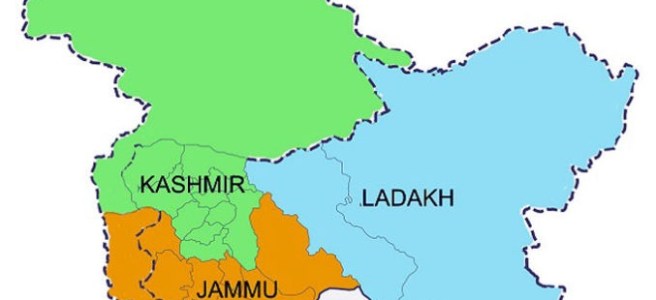
A Peculiar Problem Posed by the J&K Reorganisation?

By: Aman Saraf The legal framework regulating Jammu and Kashmir can in recent terms be adequately referred to as protean and erratic – and for good reason. Post the Constitutional Order 273 passed by the President declaring that Article 370 of the Constitution of India ceased to be operative (barring the applicability of the Constitutional provisions to … Continue reading A Peculiar Problem Posed by the J&K Reorganisation?

Victims and Bail — The Judgment in Jagjeet Singh v. Ashish Mishra

By: Abhinav Sekhri In a much-publicised judgment, the Supreme Court set aside the order granting bail to the main accused in the Lakhimpur Kheri incident from October 2021 [Jagjeet Singh & Ors. v. Ashish Mishra & Anr., Crl. Appeal 632 of 2022 (decided on 18.04.2022) ("Ashish Mishra")]. At the outset, it would be necessary to clarify that the court … Continue reading Victims and Bail — The Judgment in Jagjeet Singh v. Ashish Mishra

THE SUDDEN FIGHT EXCEPTION: AN ANATHEMA TO CRIMINAL LAW?

By: Hritik Merchant (This article is a Part I of the submission.)                                                                                             I. Introduction Exception 4 to Section 300 of the Indian Penal Code, 1860 (“IPC”) posits that if a person dies in a sudden fight with the accused, the accused’s culpability will be reduced to culpable homicide not amounting to murder (“the sudden fight … Continue reading THE SUDDEN FIGHT EXCEPTION: AN ANATHEMA TO CRIMINAL LAW?

PRACTICE OF WITCH HUNT IN INDIA: FALLACIES IN STATUTES AND EXIGENCY FOR A CENTRAL LEGISLATION (GENDER-BASED VIOLENCE)

By: Aditi Pandey INTRODUCTION Women as individuals have been victimized in various manners including gender-based violence which is solely justified as culture. Whereas, it is nothing but the supremacy of men over women through established “patriarchy” in the society. As a result, there exists tremendous trauma to women both on physical and psychological levels. According … Continue reading PRACTICE OF WITCH HUNT IN INDIA: FALLACIES IN STATUTES AND EXIGENCY FOR A CENTRAL LEGISLATION (GENDER-BASED VIOLENCE)

Prosecutorial fair disclosure – A concept conveniently swept under the carpet?

By: Chaitanya M. Hegde Introduction Recently, when the process of framing charges had begun in the Elgar Parishad case, the accused filed a plea before the Bombay High court seeking stay of the trial as certain vital materials relied by the NIA was not provided to them. This once again has shed the light on … Continue reading Prosecutorial fair disclosure – A concept conveniently swept under the carpet?

Whether Apprehension of death on account of COVID a valid ground for anticipatory bail?

By: Srishti Gupta Introduction Recently, the courts have been adapting to new set of circumstances and leaning towards bail to decongest prisons. Due to COVID-19 outbreaks in detention centers, courts are rethinking whether pre-trial custody is necessary to maintain public confidence in the criminal justice system. In a recent Allahabad High Court order, anticipatory bail … Continue reading Whether Apprehension of death on account of COVID a valid ground for anticipatory bail?

Cyber-crime and Bulli Bai App:

Where do we draw the line? Priyanshi Jain & Preeti Bohra Introduction India’s internet user population is increasing tremendously. However, the gender imbalance on the internet is an ever-existing challenge. Patriarchy operates consistently when a woman often comes across as invading a man’s cyberspace, primarily when they express their views on politically sensitive issues. At … Continue reading Cyber-crime and Bulli Bai App:

TRANS RIGHTS AGAINST SEXUAL OFFENCES IN INDIA: IS PROTECTION FROM RAPE STILL A FAR CRY?

By: Aprajita Tyagi Though the existence and acceptance of transgender persons have long been recorded in ancient Indian texts, the recognition of their legal rights is a recent occurrence in the country. It was only in 2019 that the Indian Parliament enacted the nation’s first legislation, namely the Transgender Persons (Protection of Rights) Act, 2019 … Continue reading TRANS RIGHTS AGAINST SEXUAL OFFENCES IN INDIA: IS PROTECTION FROM RAPE STILL A FAR CRY?

Zero FIR: purview, analysis and propositions

By: Ridhi Aggarwal and Vedant Bisht Although the term First Information Report (“FIR”) hasn’t been explicitly mentioned in the Code of Criminal Procedure, 1973 ("CrPC”), S.154 of CrPC provides for the process of registering the information relating to the commission of a cognizable offence. The concept of Zero FIR eliminates the barriers of territorial jurisdiction … Continue reading Zero FIR: purview, analysis and propositions

Stand-Up Comics & The Imbroglio of Criminal Complaints

By Arundhati Rajput Introduction Vir Das, an Indian Stand-up comic, has yet again become the center of vehement criticism as his monologue: ‘The Story of Two Indias’, has stirred opposing sentiments. In this monologue, the comic portrayed India in a sagacious manner having an undertone of satire. However, several lawyers and political leaders felt that … Continue reading Stand-Up Comics & The Imbroglio of Criminal Complaints

The crime of possessing or viewing child pornography: Cannot always agree on who is harmed?

By: Martin Kwan John Stuart Mill’s harm principle is one of the most common justifications for the criminalization of a certain conduct. In simple terms, the principle provides that acts that cause harm to others should be criminalized. Naturally, the aim of the offences involving child pornography would be to prevent harm to children – … Continue reading The crime of possessing or viewing child pornography: Cannot always agree on who is harmed?

Why we need to strengthen Child Welfare Committees

By: Ann Sarasa K R India’s devastating second wave has wreaked havoc on lakhs of people across the country, and the statistics are disheartening. In an affidavit submitted to the Supreme Court, the National Commission for Protection of Child Rights (NCPCR) showed that over 30,000 children lost either one or both parents or were abandoned … Continue reading Why we need to strengthen Child Welfare Committees

Major Bank Frauds: A Need For A Rethink Of ‘Offences Against Property’ In The Indian Penal Code

By: Meghana Senthil Introduction India has witnessed multiple major bank frauds over the course of the last decade. As per the Annual Report of the Reserve Bank of India (“RBI”), the reported bank fraud cases have increased by 159% in value during the fiscal year of 2019-2020. The increased complexity and costs involved in them … Continue reading Major Bank Frauds: A Need For A Rethink Of ‘Offences Against Property’ In The Indian Penal Code

An Analysis of Mitesh Ashokbhai Chunavala v. State of Gujrat – using Section 482 as a Backdoor for Reinforcing Patriarchal Norms in Rape Trials

By: Shivani Mody Introduction The Chief Justice of India, while hearing the case of Mohit Subhash Chavan v. State of Maharashtra, asked a rape accused to marry the victim in order to potentially reduce punishment for the offence, which resulted in widespread backlash and condemnation. However, the truth is that such deliberations are not new … Continue reading An Analysis of Mitesh Ashokbhai Chunavala v. State of Gujrat – using Section 482 as a Backdoor for Reinforcing Patriarchal Norms in Rape Trials

CCTVs Cameras in Police Stations: A Comprehensive Step to deter Custodial Violence?

By: Nishant Nagori ‘Panopticism’, one of Foucault’s most intriguing concepts on surveillance is premised upon the Panopticon, a prison where guards are positioned within a central tower to employ surveillance on all the inmates. This creates a conscious sense of ‘permanent visibility’ amongst the ones under surveillance, eventually leading to internalized authority and self-discipline. This … Continue reading CCTVs Cameras in Police Stations: A Comprehensive Step to deter Custodial Violence?

Consent in Section 375 is Superior to Consent in Section 90

By: Manas Agarwal and Ritu Bhatiya Introductory Remarks The absence of consent is a sine qua non element of the offence of rape involving people above the age of 18. This paper focuses on one such category of consent, which is consent based on the promise of marriage. Two provisions of the Indian Penal Code … Continue reading Consent in Section 375 is Superior to Consent in Section 90

Conspiracy: The Substantive Offence (Part I)

By: Abhinav Sekhri [This article is a second part of a conspiracy series.] Over the next two posts, we will discuss the substantive offence of conspiracy. We will first  try and identify what purpose is this offence of conspiracy designed to serve, its costs and benefits,  and only then turn to the Indian statutory provisions … Continue reading Conspiracy: The Substantive Offence (Part I)

“The Unscrupulous”: Invariably and Unalterably Criminals? (Part II)

-By Akanksha Singh [The article is the 2nd part of a two-part series] Not all psychopaths are criminals/serial killers If we again consider the example of the above mentioned fictional characters of Sheldon Cooper and Villanelle, for anyone who has watched the shows, it is evident that Sheldon Cooper is far from engaging in any … Continue reading “The Unscrupulous”: Invariably and Unalterably Criminals? (Part II)

Conspiracy: Introducing the series

-By Abhinav Sekhri [The article is the first part of a conspiracy series] It would not be an overstatement to suggest that the idea of conspiracies has come to underpin almost all prosecutions where more than one person is accused of an offence, be it a blockbuster case (Elgar Parishad, Delhi Riots, Kerala Gold Smuggling, … Continue reading Conspiracy: Introducing the series

“The Unscrupulous”: Invariably and Unalterably Criminals?

-By Akanksha Singh [The article is the first part of a two part series] Theophrastus, one of Aristotle’s disciples, was probably the first person to ever write about psychopaths, calling them ‘the unscrupulous’, which precisely translates to ‘someone having or showing no moral principles; not honest or fair’. These people lack the ordinary connections that … Continue reading “The Unscrupulous”: Invariably and Unalterably Criminals?

Violation of Principles of Fair Trial in Rape Cases – Part 2

By: Bipasha Kundu [This article is the second part of a two- part series.] II.                “Instant Justice” meted out in the Disha Rape Case is no Justice at all Another horrifying incident that shocked the nation was the Disha rape case. A 26year old veterinary doctor in Shamshabad, Telangana, was brutally raped by four men … Continue reading Violation of Principles of Fair Trial in Rape Cases – Part 2

Violation of Principles of Fair Trial in Rape Cases – Part I

By: Bipasha Kundu [This article is a part one of the two part series] Abstract Rape is one of the most heinous offences; unfortunately, the principles of fair trial are violated in such cases due to various factors. The occurrence of such cases leads to enormous public outrage. Such outrage often finds its way into … Continue reading Violation of Principles of Fair Trial in Rape Cases – Part I

WHAT IS THE EXTENT OF PROSECUTORIAL IMMUNITY ACCORDED TO JUDGES & PUBLIC SERVANTS? ANALYSIS OF SECTION 197, CrPC.

-By Devansh Pandit INTRODUCTION: Complete or partial immunity from lawsuits accorded to the members of judiciary or those exercising powers on behalf of the state, is not a novel concept. For example, no civil or criminal cases lie against the British Crown, or those exercising powers on their behalf; The United States itself accords prosecutorial … Continue reading WHAT IS THE EXTENT OF PROSECUTORIAL IMMUNITY ACCORDED TO JUDGES & PUBLIC SERVANTS? ANALYSIS OF SECTION 197, CrPC.

SIDDHARTH V. STATE OF U.P. – Doing away with unnecessary custody

By: Kapil Devnani and Ashutosh Kumar Introduction                      “I would like to be remembered as a person who wanted to be free and wanted other people to be also free.” This famous quote by Rosa Parks presents the true value of the Right to liberty, and it would not be wrong to say that the framers … Continue reading SIDDHARTH V. STATE OF U.P. – Doing away with unnecessary custody

The New Supreme Court “Guidelines” on Bail

By: Abhinav Sekhri It is fairly well known that under the Criminal Procedure Code 1973 [Cr.P.C.], the investigating agency files a Report before court upon completing an investigation, sharing the finding of its investigation [Section 173]. What is not so well known is that, at this stage, if police concludes that there is sufficient evidence … Continue reading The New Supreme Court “Guidelines” on Bail

Bridging the Gap: Analysing Section 311 of the Criminal Procedure Code

-By Varda Saxena Introduction India is an example of an adversarial system of law. However, there are instances when the Magistrate steps up to assist the course of justice. The powers under Section 311 of the Criminal Procedure Code, 1973 ("CrPC"), which complement Section 165 of the Evidence Act, 1872 (“Evidence Act”) is a sound … Continue reading Bridging the Gap: Analysing Section 311 of the Criminal Procedure Code

SECTION 295A AND ITS ARBITRARINESS

By-Aditi Gupta Introduction “In October 2020, a Malayalam journalist named Siddique Kappan was charged under sections 124A (sedition), 153A (for promoting enmity between groups), and 295A (outraging religious feelings) of the IPC and UAPA.   He was detained while on his way to cover the Hathras event in Uttar Pradesh.” This detention raises questions in a … Continue reading SECTION 295A AND ITS ARBITRARINESS