
[Abhirup Das has a keen interest as well as specializes in Criminal Law. He is currently an Assistant Professor at National Law University, Jodhpur.]
Note: This work has been divided into multiple parts. This series of work elucidates various interrogation techniques and manuals that can be sources of knowledge for the development of interrogation manuals for Indian law enforcement organizations. Hereunder, we present Part I of the work that shall provide a brief history of interrogations and confessions.
Introduction
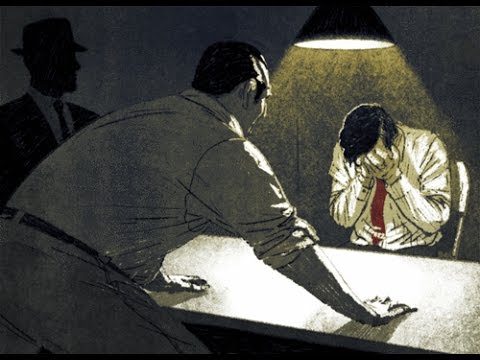
Modern methodologies of interrogation have the potential to change the entire process of criminal justice administration. Investigation, being the entire process of gathering of evidence conducted by a police officer or other authorized person, there exists a need to streamline the entire process. A major portion of investigation requires the collection of material evidence on the basis of statements made before the police officers. The problem that arises in the elicitation of statements is that many of the persons who are brought before the police officers refuse to cooperate with the officers. This creates an atmosphere of antagonism which results in the often alleged use of duress, inducement, coercion and force upon the detainee by the police or other law enforcement authorities. The usage of modern methodologies which may include videotaping, structured interviews, criminal profiling, and other forensic psychological techniques may, in fact, be more effective in ensuring cooperation and compliance of the person in custody than the present system. One may observe that the present system of criminal investigation has an abysmally low rate of conviction; the statistics as of 2016[1] indicate that the conviction rate for crimes under the Indian Penal Code was 46.8%.[2] The conviction rate under Special and Local Laws was 82.4%[3] whereas the conviction rate for murder was 38.5%.[4] The total conviction rate for crimes under the Indian Penal Code as well as Special and Local Laws is 63.4%. A large number of these acquittals may have been attributed to the violation of the principles of natural justice.
The practice of interrogations so far as Indian law enforcement system is concerned, is based on the various guidelines given by the Supreme Court in addition to the Central legislations, rules and regulations made thereunder, the Police Act and the various state police rules and regulations. Interrogation manuals and specific training of police and other law enforcement personnel are not heard of in the Indian criminal justice administration system.
Thus, there arises uncertainty of the techniques to be used in interrogations. Instead of vilifying the police and law enforcement officials for the improper or illegal use of interrogation techniques, a solution-oriented research is necessary. So far the research in India has focused on the problems of abuse of power, usage of intrusive modern technology and usage of torture and inhumane or degrading treatment; thus, the solutions have been ignored. These solutions might exist in the careful analysis of foreign interrogation methodologies and techniques with the aim of application to the Indian circumstances.
The proliferation of forensic psychological research pertaining to interrogations and confessions has greatly enhanced the methodologies that may be adopted in custodial interrogations with special emphasis on ascertaining the truth, rather than obtaining a mere confession. This trend has markedly been observed since the International Covenant on Civil and Political Rights came into force in 1979.
There have been numerous instances wherein extradition of accused persons to India has been denied and the extradition requests sent by the Government of India to foreign jurisdictions have been challenged successfully on the grounds that, inter alia, there is a threat to the life and there are reasonable grounds to believe that the person who extradition is sought may face grave human rights violations during custodial interrogations.
The present series of work has dealt with the following research questions:
- Whether the present methodologies and techniques of interrogations & investigations commonly utilized by law enforcement personnel are legally tenable?
- Whether the techniques presently in use are technologically obsolete?
- Why is there a need for a sustainable scientific alternative to present operating procedures?
- What are the alternatives which may be deployed to augment present interrogation techniques and methodologies?
- How are these techniques to be mandated by law and how are these techniques to be assimilated by law enforcement personnel?
The hypothesis for this research is that the present operating procedures of interrogations & investigations by law enforcement personnel tend to vitiate the rule of law in certain cases; thus there is a need for non-invasive and legal interrogation and investigation techniques. Human rights violations can be prevented by augmentation of scientific techniques for application by law enforcement agencies and these techniques can be reinforced by appropriate legislative and administrative measures.
The present research which is doctrinal in nature, was undertaken with a view to analyze new discoveries and scientific methodologies which may be utilized in interrogations & investigations by law enforcement personnel, to assess the credibility of new interrogation techniques which may have any application in law enforcement procedures and to suggest reformation in present law enforcement investigation procedures by augmentation of scientific forensic techniques by legislation in consonance with human rights laws. The researcher has scrutinized various materials pertaining to the interrogation of an accused. Many books and documents enumerate the enhanced interrogation techniques which are considered by some to be “cruel and inhuman treatment”. There are also procedures dealing with creating rapport, forming a baseline of behavior, statement analysis and full-body scan (kinesics) for detecting deception and asking questions appropriately. The available literature, primarily being of American origins, also deal with Miranda rights, which have some similarities and differences with regard to the Indian legal position.
This series of work deals with the brief history of interrogations and confessions, the subtle differences in the due process and crime control models, the legal position in India and abroad, the techniques of interrogation, enhanced interrogation techniques, polygraph, narco-analysis, brain electrical activation profiling test, non-invasive alternatives, the admissibility of statements in police custody and gives recommendations for reforms.
Brief History of Interrogations and Confessions
Historically, it has been the general practice of law enforcement personnel to apply techniques of torture in custodial interrogations. With the advent of modern methodologies, interrogations were primarily aimed at establishing the guilt of the accused by obtaining a confession. The veracity of the confessions was secondary to the rights of the accused before the advent of international legal instruments which began to effectuate individual liberty. In the absence of technology to interrogate those accused of an offence, pre-industrial societies relied on Divine intervention to detect lies- thus, trial by fire[5], trial by combat[6] and trial by torture[7] were some of the commonly utilized methods to establish the guilt or innocence of those accused of a crime. Post-Second World War, there were various human rights instruments which curtailed State power by limiting the amount of invasive techniques of interrogations that could be used against an accused. Some of these are the Universal Declaration of Human Rights[8], International Covenant on Civil and Political Rights[9] and regional instruments such as the European Convention for the Protection of Human Rights and Fundamental Freedoms[10]
The word “confession” appears for the first time in Section 24 of the Indian Evidence Act. This section comes under the heading of Admission so it is clear that the confessions are merely one species of admission. Confession is not defined in the Act. James Stephen defines confession as “confession is an admission made at any time by a person charged with a crime stating or suggesting the inference that he committed that crime.”[11] Confessions made before the police officer are not admissible as per sections 25, 26 and 27 of the Indian Evidence Act. However, a special legislation may change the system of excluding police confessions from admissibility as evidence. For example, under the Terrorists and Disruptive Activities (Prevention) Act, 1987, confessional statements were not excluded from evidence on grounds that the persons making them were in police custody[12]. It was an important departure from the ordinary law and must receive that interpretation which would achieve the object of that provision was that a confession recorded under of TADA was a substantive piece of evidence and could be used against a co-accused also.
Article 20 (3) of the Constitution is the embodiment of the right against self-incrimination.[13] It is important to note here that similar and analogous provisions exist in the Constitution of the United States of America. The USA has, arguably, a more exhaustive list of rights against self-incrimination in the trifecta of the Fourth[14], Fifth[15] and Sixth[16] Amendment to the US Constitution. It is, however, the Fifth Amendment that is the chief concern of law enforcement agencies during custodial interrogation other than section 1 of the Fourteenth [17]Amendment, which embodies the due process clause.
Due Process and Crime Control Models
Interrogations have a completely different purpose in jurisdictions having the “crime control model” in stark contrast with the “due process model”. Although the focus in interrogations in the crime control model is concerned with the obtaining of confessions, presently, in the due process model, the various stages of interrogations are directed at progressively ensuring compliance of the accused, building rapport and causing the disclosure of information relevant to the matter under investigation. While the crime control model focuses on the prevention, detection, and adjudication of offences even with the presumption of guilt and preponderance of probability; the due process model, which India generally follows is based on the balancing of individual liberty and State power by emphasizing on the presumption of innocence and the proof of culpability beyond reasonable doubt. The due process model derives its name from the 14th Amendment[18] to the Constitution of the United States of America which embodies the due process clause. In India, the expansive interpretation of Article 21 of the Constitution has limited the scope of the procedure established by law subject to just, fair and reasonable[19] procedures only. However, certain legislations such as the Terrorists and Disruptive Activities (Prevention) Act, 1987 can be said to be crime control in nature.[20]
[1] Crime in India -2016-Statistics, National Crime Records Bureau, Ministry of Home Affairs, Government of India
[2] Id. at p. 567.
[3] Id. at p. 573.
[4] Id. at p. 567.
[5] Sita’s Agnipariksha in the Ramayana is a case in point.
[6] It was assumed that the Divine intervention in combat would enable the truthful to be victorious and protect the innocent.
[7] A primitive form of trial by torture was to find the Devil’s Mark by the Inquisition in the pre-Industrial period. The present form of torture does not seem to be based on Divine Intervention.
[8] Universal Declaration of Human Rights, 1948, article 11.1 provides that, Everyone charged with a penal offence has the right to be presumed innocent until proved guilty according to law in a public trial at which he has had all the guarantees necessary for his defence.
[9] International Covenant on Civil and Political Rights, 1966 in article 14(3)(g) provides that (Everyone has a right) Not to be compelled to testify against himself or to confess guilt.
[10] European Convention for the Protection of Human Rights and Fundamental Freedoms in article 6(2) provides, Everyone charged with a criminal offence shall be presumed innocent until proved guilty according to law.
[11] James Fitzjames, Stephen, A Digest of the Law of Evidence, Macmillan & Co ( 5th Edn., London, 1887)
[12] Terrorists and Disruptive Activities (Prevention) Act, 1987, section 15
[13] Constitution of India, 1950 art. 20(3) provides, No person accused of any offence shall be compelled to be a witness against himself.
[14] The right of the people to be secure in their persons, houses, papers, and effects, against unreasonable searches and seizures, shall not be violated, and no warrants shall issue, but upon probable cause, supported by oath or affirmation, and particularly describing the place to be searched, and the persons or things to be seized.
[15] No person shall be held to answer for a capital, or otherwise infamous crime, unless on a presentment or indictment of a grand jury, except in cases arising in the land or naval forces, or in the militia, when in actual service in time of war or public danger; nor shall any person be subject for the same offense to be twice put in jeopardy of life or limb; nor shall be compelled in any criminal case to be a witness against himself, nor be deprived of life, liberty, or property, without due process of law; nor shall private property be taken for public use, without just compensation.
[16] In all criminal prosecutions, the accused shall enjoy the right to a speedy and public trial, by an impartial jury of the State and district wherein the crime shall have been committed, which district shall have been previously ascertained by law, and to be informed of the nature and cause of the accusation; to be confronted with the witnesses against him; to have compulsory process for obtaining witnesses in his favor, and to have the Assistance of Counsel for his defence.
[17] All persons born or naturalized in the United States, and subject to the jurisdiction thereof, are citizens of the United States and of the State wherein they reside. No State shall make or enforce any law which shall abridge the privileges or immunities of citizens of the United States; nor shall any State deprive any person of life, liberty, or property, without due process of law; nor deny to any person within its jurisdiction the equal protection of the laws.
[18] Id.
[19] Maneka Gandhi v. Union of India, 1978 SCR (2) 621
[20] Terrorists and Disruptive Activities, 1987, Section 15


3 thoughts on “The Application of Modern Methodologies in Interrogations and Confessions [Part I: Brief History]”