
[Abhirup Das has a keen interest as well as specializes in Criminal Law. He is currently an Assistant Professor at National Law University, Jodhpur.]
Note: This work has been divided into multiple parts. This series of work elucidates various interrogation techniques and manuals that can be sources of knowledge for the development of interrogation manuals for Indian law enforcement organizations. Hereunder, we present Part III of the work that shall deal with various techniques of interrogations. In Part I, the author had provided a brief history of interrogations and confessions, whilst Part II dealt with the legal position regarding interrogations and confessions in India and abroad. Previous parts of this work can be accessed here: Part I Part II
Techniques of Interrogation
There are broadly two kinds of interrogations – non-accusatory interrogations or interviews, and accusatory interrogations. The questioning techniques may vary from simple open-ended questioning, direct questioning, structured interviews to polygraph examinations, brain electrical activation profiling, and narco-analysis tests. Since the confessions of accused in police custody are admissible on waiver of the Miranda rights in the US, a plethora of methodologies and techniques have been developed there. There also exists no blanket ban on the admissibility of custodial confessions in English law. However, the circumstances prevailing in India are such that the Fundamental Rights of the accused would be violated on allowing confessions in police custody to admissible in the Courts of Law. When one examines the nature of a criminal act[1], the same problem is encountered. Thus, no absolute and immutable conclusion exists to determine the outcome of inquiries of this nature. One is thus concerned for the purposes of this exercise not with the nature of the crime but the detection of deceptive human behavior attempting to deny a criminal act, and to affirm the veracity of truthful human behavior exculpating the interviewee/detainee. The abilities to deceive and to be honest are equally important facets of human behavior and these abilities are essential for the survival of the individual as well as the species. Undoubtedly, human beings lie and the attempt of law enforcement personnel throughout the ages has been to detect such lies. The development of modern science enabled studies on human physiology, psychology, and neuroscience to be incorporated for tools of investigation even during interviews and interrogations.
There are fundamental differences between interrogations for prosecution and interrogations for intelligence collection. Whereas interrogation with the motivation of prosecution and conviction under the law of the land requires strict adherence to the criminal procedure, interrogations for intelligence collection has the motive of gathering information for the prevention of crime or advance warning of probable commission. While the ultimate consumers of the pieces of evidence gathered by interrogations for prosecution are the Courts of Law with the ultimate aim of justice administration, the ultimate consumers of intelligence are operational, tactical, strategic, military and political decision-makers.
Since the purposes of the information received by the two forms of interrogation are absolutely different, the same laws cannot be adequate for the divergent functions. Although the ultimate sources of information are human beings in both forms of interrogations, the same rights cannot be practically accorded in the different circumstances. This does not, however, mean that the same rights should not be accorded to the sources in all circumstances. One may illustrate the situations as follows:
Illustration 1: A is an operative of a hostile insurgent group in an armed conflict zone. A detonates a landmine resulting in the death of five paramilitary personnel. A is apprehended by civilian intelligence officers on intelligence received. A has to be interrogated as an accused under the Code of Criminal Procedure with a view to effectuate judicial punishment on the establishment of legal guilt.
Illustration 2: A is an operative of a hostile insurgent group in an armed conflict zone. There is a high likelihood of landmines having been planted by the hostile insurgent group in an area where a platoon of paramilitary personnel is scheduled to conduct a reconnaissance patrol for a subsequent combing operation. A is apprehended by civilian intelligence officers on intelligence received. A has to be interrogated with a view to reveal the location of the landmines to prevent the loss of lives of paramilitary personnel.
As these illustrations suggest, the situations being completely different in the two illustrations, the strategies as well as the laws for the two circumstances ought to be markedly different. Whereas, no amount or form of interrogation in the first case can bring the deceased back to life; in the second case a successful interrogation can substantially increase the likelihood of prevention of the loss of lives of many personnel.
There is, thus, intelligible differentia as well as reasonable classification between the two different circumstances in which interrogations may take place. Ideally, two different laws must operate for these different circumstances. The laws regarding the powers, liabilities, and functions of law enforcement agencies as well as the rights available to the dentenu/interviewee ought to be different considering the gravity of the situation.
It is a matter of grave concern to States that the Geneva Conventions (and Optional Protocols thereto), international human rights instruments such as the ICCPR[2] and the UN Convention against Torture, 1985 do not differentiate between the varying circumstances which warrant derogation of certain rights. However, the history of jus cogens mandating no torture in interrogations has more transgressions than adherence. Sometimes, norms are justified on the basis of an imagined and ideal past; perhaps those norms ought to be justified more on the basis of an imagined and ideal future. Quite ironically, the US, which is facing international condemnation because of the EITs[3] was the pioneer of liberty and civil rights. In a noted case[4], involving extra-territorial jurisdiction with regard to cases of torture, the United States Court Of Appeals, Second Circuit observed:
the torturer has become like the pirate and slave trader before him hostis humani generis, an enemy of all mankind.
Lofty ideals fall too soon when violence steals compassion away from human hearts. Undoubtedly, it is the greatness of the Americans, which prompted their Senate Committee on Intelligence to declassify the violations of human right by their own intelligence agency, even at the cost of causing a major political and diplomatic embarrassment.
A). ENHANCED INTERROGATION TECHNIQUES
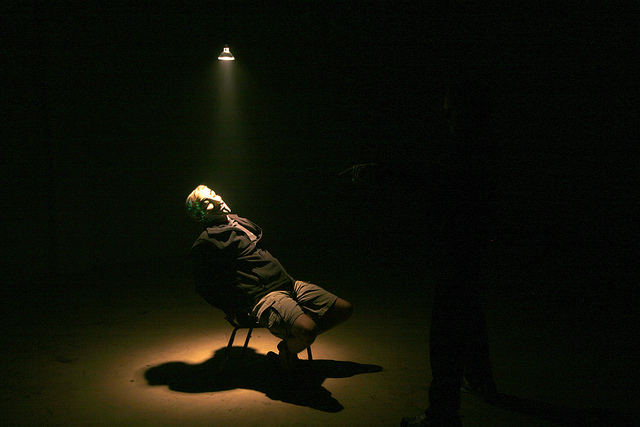
The history of the modern democratic world created after the Second World War will, in all probability, be segregated into the pre-9/11 and post-9/11 eras. One may observe that the entire jurisprudence of the presumption of innocence and due process were turned on its head by the ‘War on Terror’. Jose Rodriguez, James Mitchell, and John Jessen were named in the US Senate Committee on Intelligence’s Committee Study of the Central Intelligence Agency’s Detention and Interrogation Program, released in December 2014. The significance of the revelations is that the CIA’s contract for developing ‘Enhanced Interrogation Techniques’ and subsequent use of the techniques were documented.
However, this is not the first time that the United States Government found itself on troubled waters over the use of controversial interrogation techniques. In 1997, the Baltimore Sun made several requests under the United States’ Freedom of Information Act (hereinafter, FOIA) which resulted in the disclosure of the CIA’s KUBARK Counterintelligence Manual, 1963. This was at the height of the Cold War. Some of the interesting revelations included the fact that the manual contained the procedure for interrogations which indicated that the use of torture (although it was euphemistically called coercive interrogation techniques, or ‘if medical, chemical or electrical methods or materials are to be used to induce acquiescence’[5]). The FOIA requests also disclosed that the KUBARK Manual was replaced by the Human Resource Exploitation Manual in 1984. Since these documents are heavily redacted, it is necessary to draw inferences from the available information. The Human Resource Exploitation Manual H0-L17, mentions the use of coercive techniques. The editor(s) of the Manuals before public release were not discreet enough, and their redactions actually make the entire exercise of editing look ridiculous. It is clearly visible beneath the lines that were later cut and the efforts made to overwrite the relevant portions that the manuals were considered to be permissive of torture. Jose Rodriguez, the former Director of the National Clandestine Service of the Central Intelligence Agency has tried to explain and defend his actions on the use of Enhanced Interrogation Techniques in CIA detention facilities in his book – Hard Measures[6] he asserts how the interrogations of Abu Zubaydah and Khalid Sheikh Mohammed using Enhanced Interrogation Techniques revealed vital information. He also defends his actions by insinuating that the implicit approval of the White House i.e. the Office of the President of the United States was existent in the decision to use Enhanced Interrogation Techniques and later even to destroy the videotapes of the interrogations. Considering the circumstances in which these incidents happened, it was perceived to be in the interests of maintaining international security that the tapes were destroyed.
It is indeed a question of grave implications so as to whether Enhanced Interrogation Techniques are necessary for the ‘ticking-bomb’ situations. In the United Nations Convention Against Torture and Other Cruel, Inhuman or Degrading Treatment or Punishment, 1985 makes it unambiguous in article 2.2 that no exceptional circumstances including war, a threat to internal security, etc shall be a justification or exception to the complete ban on torture. The Prevention of Torture Bill, 2010 which sought to ratify the UN Convention Against Torture lapsed in the Indian Parliament, it is pertinent to mention here that the said Bill did not allow torture even in ‘ticking-bomb’ situations; rather, the previous sanction[7] required from the Government authorities could have been an impediment to prosecution had the Bill taken the form of a Statute in force in India. Furthermore, the limitation of six months for lodging of complaints was also an impediment to the prevention of torture.
B). POLYGRAPH, NARCO-ANALYSIS, AND BRAIN ELECTRICAL ACTIVATION PROFILING TEST
The techniques of Polygraph, Narco-analysis, and Brain Electrical Activation Profiling Test are designed to physiologically examine the accused during interrogations, these tests observe psycho-somatic changes as they occur in the induced stress of an interrogation. However, in Selvi & Ors. v. State of Karnataka[8], the Supreme Court held that the application of the Narco-analysis, Polygraph or Brain Electrical Activation Profiling tests can only be done with the consent of the accused or they would amount to an intrusion of his personal liberty. The Court also reiterated the guidelines[9] given by the National Human Rights Commission with regard to the Polygraph and ordered similar measures to be adopted for Narco-Analysis and Brain Electrical Activation Profiling Test as well.
There has been a reasonable amount of research into biometric identification such as fingerprinting, DNA analysis, voice identification, retinal scans, facial structure identification, etc. Techniques such as Narcoanalysis, Brain Electrical Activation Profile Test & Lie-Detection Tests must be administered by choice of the accused and not by compulsion. This puts a lot of pressure on Law Enforcement Organisations, which are constantly under pressure to secure more convictions which the pendency of cases keeps increasing exponentially. On similar lines, thematic apperception tests, statement analysis, forensic assessment interviews, a non-verbal behavioral assessment may also be integrated with non-invasive methods of interrogation to enhance the efficacy of the interrogations. Undoubtedly, the right to privacy has become an integral part of the human rights framework and resultantly, it can be read into the personal liberty of the individual. Thus a balance must be found between the consent of the accused and the penological interest of the State to secure the conviction of guilty individuals who are potential threats to society and the State at large.
C). NON-INVASIVE ALTERNATIVES
Typically, a non-invasive[10] method of interrogation would comprise of the following phases:
- Initial Stage of Investigation
The initial stage would comprise of the chronological steps of identification as a suspect/witness, taking such suspect and into police custody as per law, informing the suspect of his/her rights. (with audio-video recording), compulsory medical examination of the suspect on request or on suspicion of mental illness, compulsory medical examination. (with audio-video recording).
- Interview Stage of the Investigation
The stage of interviewing the suspect (under audio-video taping) would entail establishing and building rapport in order to make the suspect feel less anxious or hostile, building a psychological profile and analysis of previous criminal records (if any), eliciting information by way of conversation and non-verbal behavior, letting the suspect talk without being confrontational, leading the subject to repeat his statements and then enumerating the evidence corroborating the complaint giving him a chance to rationalize or lead to more evidence; if the suspect is cooperative, continuing the elicitation of information pertaining to the offence with a benign demeanor, if the suspect engages in attempts to deceive, changing tactics from elicitation to interrogation by confrontation with evidence, if the suspect is resistant/hostile – the environment may be changed to suit interrogation requirements.
- Interrogation Stage of the Investigation
After the preliminary phase of interviewing, if the suspect attempts to deceive the officer or if he is resistant or hostile, the mode of interrogation should be adjusted to suit the circumstances. (The only exception being in emergency situations, wherein vital information must be obtained, in such circumstances, operational necessities require that invasive techniques may be used; for example: in cases pertaining to prevention of impending terrorist attacks or other heinous crimes.) A two-way mirror should be used to analyze the behavior of suspects by psychological profilers of criminal behavior. The profilers may after appropriate analysis, issue assessments to the interrogator using communication devices attached to the interrogator’s ears. The interviewers should attempt to use soft-pressure tactics of non-threatening psychological methods; for instance, letting the suspect talk, and then ask questions after discrepancies are noted. If resistance is demonstrated instead of cooperation, attempts should be made to probe the facts without causing hostility, keeping the questions limited to the specific requirements, covering all elements of possible accomplices, associates, witnesses, evidence & victims. It is essential for maintaining rapport in order to cover all inconsistencies and discrepancies. Reminding about the benefits of cooperation with the investigation and explaining about the consequences of not cooperating is also essential to the success of the interrogation.
- Pre-trial Stage of the Investigation[11]
This stage comprises of production before the Magistrate for extending police custody or releasing the suspect within 24 hours as is required by the law. If the accused be remanded to police custody repeating the steps of interview and interrogation as is necessary. It is also necessary to augment investigation by new advances in technology such as forensic technologies; it is also mandated by the law of criminal procedure that a final report shall be filed.
[P.S. In the final part of this series, Mr. Abhirup Das shall discuss admissibility and appreciation of statements made in police custody and shall provide certain recommendations for a transformation in the law. Keep up with the updates!]
[1] “A crime is an act committed, or omitted, in violation of a public law, either forbidding or commanding it…and such act or omission is punishable by the State.” It is out of the necessity for certainty and clarity that the positivist definition of crime has been utilised.
[2] ICCPR, 1966, article 7 read with article 4.2.
[3] One can never be sure whether the CIA meant Enhanced Interrogation Techniques or Extremely Intense Tortures by using the abbreviation- EITs.
[4] Filartiga v. Pena-Irala, Court of Appeals, Second Circuit, 30 June 1980
[5] KUBARK Counterintelligence Manual, 1963, p. 8
[6] Jose A. Rodriguez, Hard Measures, Threshold Editions (2012)
[7] Prevention of Torture Bill, 2010, art. 6.
[8] Selvi & Ors. v. State of Karnataka, AIR 2010 SC 1974; the Supreme Court held: “ no individual should be forcibly subjected to any of the techniques in question, whether in the context of investigation in criminal cases or otherwise. Doing so would amount to an unwarranted intrusion into personal liberty. However, we do leave room for the voluntary administration of the impugned techniques in the context of criminal justice, provided that certain safeguards are in place. Even when the subject has given consent to undergo any of these tests, the test results by themselves cannot be admitted as evidence because the subject does not exercise conscious control over the responses during the administration of the test. However, any information or material that is subsequently discovered with the help of voluntary administered test results can be admitted, in accordance with section 27 of the Evidence Act, 1872.”
[9] Guidelines for the Administration of Polygraph Test (Lie Detector Test) on an Accused, National Human Rights Commission, 2000
[10] A composite synthesis of various techniques has been made from the available literature of interrogations and confessions.
[11] This takes place only when the police are convinced of the prima facie guilt of the accused.


2 thoughts on “The Application of Modern Methodologies in Interrogations and Confessions [Part III: Techniques of Interrogation]”