

[Gaurav Pathak is associated with VAS Global and practices law at New Delhi.]
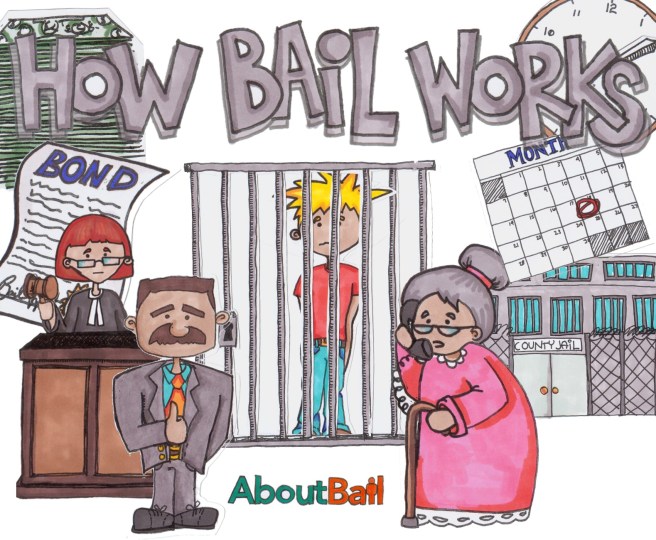
The Allahabad High Court in September 2018 amended its 10-days bail notice period rule and changed it to 2 days. This notice period means that no bail application will be placed before the High Court until two days have elapsed from the date of Government pleader in the High Court being provided with a copy of the bail application. In essence, if you are a completely innocent person, jailed by the police in Uttar Pradesh, even the High Court will not let you out before two days.
Bail is an age-old concept wherein a person accused of an offence is sought to be let free because of an undertaking given by a third person. The first instance of a plea for bail perhaps was when Socrates tried for the release of Plato in 399 BC. The present-day Indian law derives its principle and working on bail from England. In Vaman Narain Ghiya v. State of Rajasthan[1], the Supreme Court discussed the concept of bail by stating,
“’Bail’ remains an undefined term in CrPC. Nowhere else has the term been statutorily defined. Conceptually, it continues to be understood as a right for assertion of freedom against the State imposing restraints. Since the UN Declaration of Human Rights of 1948, to which India is a signatory, the concept of bail has found a place within the scope of human rights. The dictionary meaning of the expression “bail” denotes a security for appearance of a prisoner for his release. Etymologically, the word is derived from an old French verb “bailer” which means to “give” or “to deliver”, although another view is that its derivation is from the Latin term “baiulare”, meaning “to bear a burden”. Bail is a conditional liberty.”
In India, a person applies for bail after having been arrested by the police or any other investigative agency. The initial bail application is made by the accused before the court of the first instance, which is at the District level and could be the Court of a Magistrate or Sessions Judge, depending upon the offence. The Magistrate or Sessions Judge then decides the bail application of the accused, and if the application is rejected, the accused remains in custody. Upon rejection of the bail application by the Sessions Judge in Uttar Pradesh, an accused can move a Criminal Misc. Bail Application before the High Court, which for most of the districts in the State is located at Prayagraj
Bail in a non-bailable offence is a discretionary relief and the concerned judge at the District Court evaluates the circumstances before deciding the bail application. Of course, the naysayers will say that the Code of Criminal Procedure provides for multiple safeguards and bail applications are not denied without due cause. In my submission, it needs a brave judge to direct for bail. Most of the bail applications are rejected by at the District Court level, only to be allowed by the High Court. However, even as the person is eventually let out on bail by the High Court, the law in Uttar Pradesh ensures that the person has remained in jail, for a longer period, when compared to other states.
The 10-day rule was sought to be amended by a lawyer named Syed Mohammad Rizvi, who submitted various representations to the Allahabad High Court. As the High Court failed to act on his multiple representations, he approached the Supreme Court. On 2nd July 2018, the Supreme Court requested to decide the representations submitted within six weeks. On 19th September 2018, the amendment was notified by the High Court.
The 10-day rule (or even the 2-day rule at present) was made so that the Government Pleader could get the necessary instructions from the Investigating Officer, and that the bail application be decided on the first hearing itself. However, experience shows that on the first date, the Government pleader asks for time to file a counter after obtaining instructions. The pendency of cases ensures that even if a short date is given, a week goes by. Thereafter, there are situations like the matter not being taken up due to the long cause list, the judge being on leave or the Government Pleader being busy in another court! Again, this ensures that weeks go by while the hapless undertrial feels the fallacy of the accepted principle ‘innocent until proved guilty. More than 50 thousand Criminal Misc. Bail Applications were filed before the Allahabad Bench of the Allahabad High Court itself.
The solution to this unnecessary jailing is very simple. In Prahlad Singh Bhati v. NCT, Delhi[2], the Apex Court held,
“The jurisdiction to grant bail has to be exercised on the basis of well-settled principles having regard to the circumstances of each case and not in an arbitrary manner. While granting the bail, the court has to keep in mind the nature of accusations, the nature of the evidence in support thereof, the severity of the punishment which conviction will entail, the character, behaviour, means and standing of the accused, circumstances which are peculiar to the accused, reasonable possibility of securing the presence of the accused at the trial, reasonable apprehension of the witnesses being tampered with, the larger interests of the public or State and similar other considerations. It has also to be kept in mind that for the purposes of granting the bail the legislature has used the words “reasonable grounds for believing” instead of “the evidence” which means the court dealing with the grant of bail can only satisfy it (sic itself) as to whether there is a genuine case against the accused and that the prosecution will be able to produce prima facie evidence in support of the charge. It is not expected, at this stage, to have the evidence establishing the guilt of the accused beyond reasonable doubt.”
As most of the police stations are within the territorial jurisdictions of the Court having the case, the Magistrate or Sessions Judge has the direct submissions of the Investigation Officer at their disposal, and hence can best decide bail applications without wasting any time. Thus, bail must be denied only if there is a chance that accused will tamper with evidence or witnesses, flee from the jurisdiction or commit another crime. In order to prevent the same, judges should mandate weekly/daily attendance of the accused at the local police station. The surety amount can be kept high in cases of economic offences. The passport should be impounded and cooperation with investigation ensured. In case there is a violation of the bail condition, the accused can be sent to jail. However, this scheme of working will not only stop unnecessary incarceration but also put a curb on pendency in the High Court.
India’s prisons are full. There is no need to stuff in more people, more so, when the higher courts pronounce erudite judgments on liberty. As more and more bail applications are allowed, it will also restore the faith of the public in the judiciary, and it will not cast an eye of suspicion when bail is allowed. After all, bail is the rule and jail is an exception.
[1] Vaman Narain Ghiya v. State of Rajasthan, (2009) 2 SCC 281.
[2] Prahlad Singh Bhati v. NCT, Delhi, (2001) 4 SCC 280.


