

By Raj Krishna
- INTRODUCTION
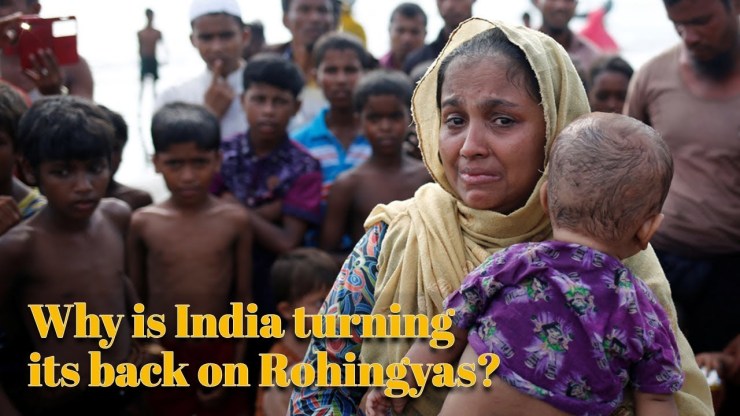
On 4th of October, 2018, a three judge bench of the Supreme Court of India refused to stop the deportation of seven Rohingya refugees to Myanmar. These men had entered the Indian territory in 2012 without valid documentation. As a result, they were prosecuted under The Foreigners Act, 1946 for illegal entry and sentenced to three months’ imprisonment. Post imprisonment, they were shifted to administrative detention in Silchar. The local media reported in September 2018 that pursuant to negotiations with Myanmar, the Indian Government would be deporting those seven men on October 4. The Government went ahead with its decision to deport these Rohingyas even though the case was pending before the Supreme Court.
As a result, an intervention application was filed before the apex court seeking a stay order on the deportation of these refugees. The petitioners contended that the detainees were refugees and they were at the risk of persecution in the state of Myanmar. On the other hand, the Government contended that the detainees had consented to return to Myanmar. The Government also informed the court that the Myanmar Embassy had confirmed the Myanmarese citizenship of those seven Rohingyas. As a result, the court dismissed the application of the petitioners stating that those seven men are not refugees but illegal immigrants, and therefore they should be deported back to Myanmar.
The dismissal of the intervention application by the apex court has set a dangerous precedent as several provisions of domestic and international laws were not taken into account while pronouncing this order.
- POSITION OF ROHINGYAS IN MYANMAR
The persecution and gross violations of human rights of the Rohingyas by the state of Myanmar has been condemned worldwide. The UN Human Rights Council’s Independent International Fact-Finding Mission on Myanmar has found Myanmarese military responsible for the offence of genocide against the Rohignyas. In these attacks, thousands of Rohingyas have already lost their lives and another thousand Rohingya women and girls have been subject to rape, including mass gang rapes.
Thus the Rohingyas in Myanmar have been subject to a spate of majoritarian attacks and have also been denied of their basic amenities, thereby forcing more than 723,000 of them to flee their country and seek refuge in neighboring countries like India and Bangladesh. As a result, the International Criminal Court has also taken cognizance of the matter by commencing a preliminary examination into the issue.
- FALLIBILITY OF THE ORDER
3.1. Violates the Principles of International Law.
The Supreme Court in this case failed to make a distinction between an illegal immigrant and a refugee. The court while passing the order, failed to take into consideration the grave human rights abuse which had forced the Rohingya Community to flee their native country.
The Government contended before the court that those seven men were willing to return to Myanmar. However, the consent of those seven people was not evinced. Further looking at the present conditions of Rohingyas in Myanmar, it is difficult to believe that any member of the Rohingya Community would ever voluntarily consent to return to his native country. Consequently, by deporting them back the court has violated the international legal principle of non-refoulement.
The principle of non- refoulement states that a person cannot be compelled to return to his home state if he continues to have a well-founded fear of persecution in that state. This principle is enshrined under Universal Declaration of Human Rights [UDHR], International Covenant on Civil and Political Rights [ICCPR], as well as in the UN Convention against Torture (Article 3 deals with Principle of Non- Refoulement). India is a signatory to all of these covenants and has even ratified the ICCPR. Therefore, India is supposed to play an active role in fulfilling its treaty obligations under the ICCPR. Further, obligations under ICCPR cannot be waived even in the state of emergency [Article 4, ICCPR].
However, in the present instance the principle of non- refoulement has not been followed by the apex court. Hence, it can be said that its current order violates this inviolable principle of international law.
3.2 Violates the provisions of Constitution.
In the case of National Human Rights Commission v. State of Arunachal Pradesh and Anr., the Supreme Court held that protection under Article 14 and 21 of the Constitution extends to foreigners, which also includes refugees.
Every individual, be it citizen or foreigner, enjoys the right to legal aid under the Constitution. The 40th Para of Magna Carta states that: “To no one will we sell, to no one will we deny, or delay right or justice.” Hence, it can be said that right to legal aid is not only a constitutional right, but a basic human right of which no individual should be deprived of.
However, in the present case, these seven Rohingyas were in administrative detention for the last six years and only the government had access to them. These men did not have access to any legal counsel and were also not given a chance to access asylum processing. Thus, it can be said that their basic human right of legal aid as well as constitutional rights granted under Article 14 and 21 of the Constitution have been violated.
Further Article 21 of the Constitution confers a right upon both citizen and foreigner to live life in a dignified manner. But, via deportation, the lives of these seven men are in grave danger as they fear persecution in Myanmar. Therefore, it can be said that by deporting these seven men back to Myanmar, the Court has violated their basic human right of right to live granted under Article 21 of the Constitution.
- WAY AHEAD
It may hence be concluded that by deporting these seven Rohingyas, India is in breach of several international human rights obligations. Moreover, by passing this order the court has violated its own decision to stay the deportation of all Rohingyas until the hearings are complete.
In the absence of a domestic law for refugee protection, it is up to the judiciary to extend minimum constitutional protection to the refugees which they have done on past occasions. However in the present case, by allowing deportation, the apex court has set a new precedent which is contrary to India’s core constitutional tenets. Amidst the rising tide of Hindu nationalism, this decision raises a cause for concern. One can now only hope that in the future the Supreme Court would continue its rights-based and humanitarian approach in deciding such matters.
However, such a situation can be combated in future if India enacts a rights-enabling statutory law for the refugees which would provide a robust framework for their identification and protection in accordance with India’s constitutional and international obligations.
[The author is a fourth year student at Chanakya National Law Universiy, Patna]


