

By Ankur Jhunjhunwala
The Disclosure Regime
Post the 1990’s, the disclosure regime has been described as the ‘battleground of the justice system.[1]It is fundamental to the aspect of a fair trial and prevention of wrongful convictions, and non-disclosure has historically often lead to miscarriages of justice.[2] There was a large amount of academic commentary and evidence, which suggested that the Criminal Procedure and Investigation Act, 1996 (CPIA) was ineffective. [3]Amendments were made by the Criminal Justice Act, 2003 (CJA), which sought in principle to address issues with prosecution disclosure, and extended defence disclosure obligations. It can be argued, however, that the CJA failed to use this opportunity to provide a safeguard against wrongful convictions [4] and instead merely removed obstructions to cheap and swift convictions. [5]The section argues that Keane and McKeown are right in saying that the CJA has made the law clearer and accessible on the legislative level, it fails, however, to take into account its practical workability in regard to both prosecution and defence disclosure. This is a consequence of 1) the failure of the regime to take into account the practices of the main enforcing authorities – the police, the prosecution and the defence solicitors; 2) conflicts of interest which arise between the role of the police and the rights of a defendant; and 3) the leniency with which violations of disclosure are treated.
Prosecution Disclosure
Under the CPIA[6], prosecution disclosure was a subjective two-stage process whereby, in addition to a schedule of non-sensitive material in possession of the prosecution, they must disclose any unused material ‘which in the prosecutor’s opinion might undermine the case for the prosecution against the accused.6’ This stage was known as primary prosecution disclosure. Post this, the defence was also now under an obligation to submit a case statement before trial. At the second stage, the investigator would reconsider the material in the context of the defence and advise the prosecutor with any material that might be reasonably expected to support their defence statement.7 This was problematic as it relied on the prosecutor’s subjective opinion of what undermines the prosecution’s case. The system expects them to pursue criminals vigorously, so they might be bad subjective judges of what might assist the defendant.
Consequently, the CJA 2003 attempted to simplify prosecution obligations by introducing an objective test under which after initial disclosure the prosecution is under a continuing duty to disclose any unused material which ‘might reasonably be considered capable of undermining the case for the prosecution against the accused or of assisting the case for the accused. [7]It removed ambiguity by assimilating the two-stage process and including assistance to defence as a criterion for disclosure. This made things clearer; however, the success of this regime mainly depends on how the police and prosecution fulfilled their duties in practice.
The main reason of the CPIA, even after CJA amendment, being unworkable is its heavy reliance on the police for the core task of compiling the schedules. Quirk finds the police to be ill-equipped by purpose, training and habits to deal with the disclosure regime, especially when they are playing the essential role of scheduling unused material and handing it over to the police. As per S.23 CPIA, a police officer must retain, record and reveal all relevant material in course of the investigation and forward it to the prosecutor. [8]In Plotkinoff and Wolfson’s study, the prosecutors found only 3 percent of the schedules compiled by the police sufficiently detailed or complete, [9]and more than 20 percent cases discontinued by the CPS were because of police failure in establishing a legal argument. This could be a consequence of the fact that scheduling requires judgement about the legality of the material; in the form of defence analysis and the breaking down of complex legal arguments;[10] tasks which the police is not trained to perform. This also results in the creation of an unrealistic responsibility on the prosecution, as the prosecution is formally responsible for disclosure. However, the prosecution will be as good as the material provided to them and over one-third of them have expressed concerns about their reliance on the police. [11]
As mentioned earlier, in our criminal justice process the police is perceived as an agent of prosecution [12] and is supposed to vigorously deal with criminals, which makes it difficult for them to carry out an impartial role. [13] Thus, investigations may often be constructed against those whom the officers believe to be guilty, and this may affect the ability to review evidence objectively or with defences in mind. [14]
Defence Disclosure
The CJA 2003 has extended defence disclosure obligations, requiring detailed disclosure from defendants. In addition to what was required under the CPIA-setting out the nature of the defence and indicating the matters on which they take issue with the prosecution- the CJA now requires the defence to disclose any defences and points of law they intend to rely on. [15] Further, S. 6C of the CPIA (as amended by CJA 2003) now requires the defence to disclose names, addresses and dates of birth of all defence witnesses. Non- disclosure, late disclosure and inconsistencies in the disclosure are penalised under S.11 CPIA by means of adverse inferences. [16]This section will argue that the amendments to defence disclosure brought about by the CJA raise several issues. First, they expose defendants to a greater risk of self-incrimination, and secondly, limited sanctions and relaxed judicial attitudes toward defence disclosure render defence disclosure obligations merely an administrative requirement having no practical utility.[17]
In comparison to defence obligations prior to the CPIA, where the defence was under no obligation to disclose, the CPIA as amended by the CJA now requires the defendant to be a much more active participant in the disclosure process. [18] This inevitably exposes the defendant to greater risks because the more information the defendant reveals the greater is his risk of self-incrimination.[19] This was evident in the cases Firth [20] and Nwell, [21] wherein Firth, actus reus was established by means of acceptance to the fact that defendant was involved in physical contact only with the intention of self- defence. In Nwell, inconsistencies with the defence statement allowed the admission of directly incriminating evidence. [22] In Zander’s opinion, ‘it is wrong to require the defendant to be helpful and to penalise him by adverse comment if he fails to do so.’ [23]
It seems that the extended defence disclosure obligations are mere formalities which enable effective prosecution. Evidence of this are the limited sanctions available for prosecution non-disclosure. [24]Judges are also reluctant in the sanctioning of adverse inferences. This is evidenced by the fact that there is only one case dealing with an adverse inference being drawn from defence non-disclosure, in comparison to the significant amount of case law that deals with inferences drawn from silence under CJPA 1994. [25] In addition, leave is required to comment on a failure to disclose a point of law or details of a witness which effectively makes room for no inference being drawn. Further, the absence of any sanctions or the failure to disclose expert details confirms, in accordance with above, that it is extremely difficult to draw adverse inferences at all. [26]
The working practises of defence solicitors also demonstrates little desire to adhere to defence disclosure obligations. This was demonstrated by the fact that most of their work is delegated to paralegals and pro-formas were used to complete defence statements. [27] In addition, in a report by Plotnikoff and Woolfson, more than 50% of defence statements did not meet CPIA requirements or insufficiently contained denial of guilt. [28]
In conclusion, whilst the objective test introduced by the CJA with respect to prosecution disclosure eliminates subjective bias, it ignores police practise and workability. It is safe to say that the problems that afflict prosecution disclosure are too deep-rooted to be to cured by legislative tweaking.’ [29] Defence disclosure obligations, on the other hand, were extended, this compromised the defendants against self-incrimination. The judges and defence solicitors attitudes render the regime a ‘symbolic instrument without any practical utility.’ [30]
Burden of proof
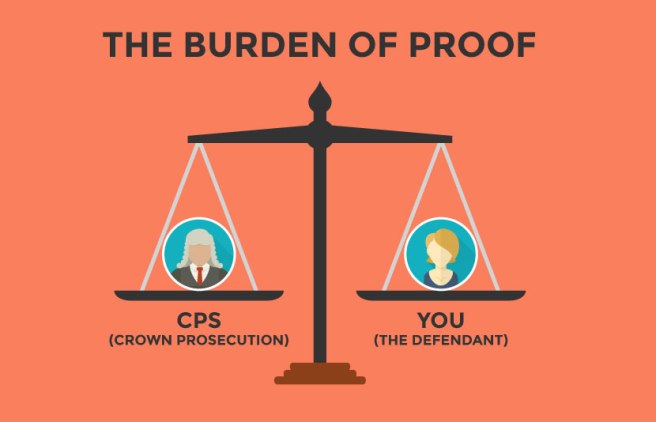
In Woolmington v DPP [31] it was established that under English criminal law it was the duty of the prosecution to prove the prisoners guilt, which was made subject to common law defence of insanity, implied or express statutory provisions which place a reverse burden of proof on the defendant. However, As per 6(2) of the ECHR ‘everyone charged with a crime shall be presumed innocent until proven guilty according to law.” Problems start to arise here as on the face of it the reverse burden of proof on the defendants seems incompatible with the presumption of innocence [32] the leading Strasbourg case of Salabiaku v France[33] provided some guidance for the courts on the compatibility of reverse burdens. However, it is evident from the leading English cases that the courts are having difficulties in applying those criteria’s [34] and have rejected any general rule on reverse onuses and said that each case is decided according to its circumstances. [35] This section doesn’t agree with Keane and McKeown’s inference on the ‘law of evidence being more clear and accessible’ in the context of reverse burden compatibility. It will argue that law in this respect is inconsistent and judicial uncertainty is prevalent in leading English cases. It’ll do so by considering the various factors, per Dennis and Hamer, on which the courts have relied on, in decision making ultimately leaving the law in ‘the form of a forensic lottery.’ [36]
The Leading cases
Salabaiku v France
A three-stage decision-making process to deal with the compatibility of a reverse burden was suggested. Whereby, firstly whether a burden has been placed on the accused. If so it distinguishes a legal burden[37] from an evidential burden [38], and it was submitted that an evidential burden must be held compatible with S. 6(2). Secondly, the reverse burden has to be justified. That is if it were a legal burden it has to serve a legitimate aim and the provision must be proportionate to that aim. Finally, if not justified under S.3 of the HRA the courts have the power to read down the burden to an evidential burden. And in case it cannot do so it should declare the provision incompatible under S.4 HRA. The main complexities arise in justification of a reverse onus and the English courts in their decisions have relied on various factors in doing so, which we will explore further.
This section will look at the main factors which the judges relied upon in the leading English cases of Kebiline [39] Lambert [40] Johnstone [41]Sheldrake [42]AG Reference (No. 4 of 2002) [43]
Judicial Deference
Judicial deference could be defined as the courts’ deference to other branches of the system such as the executive or legislature when it feels the decision lies more in their area of competence. [44] Competing views have emerged with respect to the justification of a reverse
burden by means of judicial deference, which has left the issue ambiguous. In Johnstone, Lord Nicholls stated, that the parliament is primarily responsible for deciding the constituent elements of an offence. Along similar lines, in Attorney General’s Reference (No.1 of 2004), Lord Woolf ruled that without good reason the parliament wouldn’t make an exception to the presumption of innocence. However, in Sheldrake, Lord Bingham referred to Lord Woolf’s proposition as a method of ducking the issue. He was of the opinion, that such an approach gives very little importance for the presumption of innocence. [45] The diverging views leave the issue unclear. [46] Dennis also argues that a strong principle of deference would not be helpful in ascertaining proportionality, as its evidence about parliaments thought regarding the presumption of innocence cannot be made out. Looking at the parliamentary debate might help the courts in deciding.
Classification of Offences
The courts have attempted to classify the offences as to reach a conclusion about justification, however, they provide a guide, which is indefinitive. In Lambert and Sheldrake, a distinction was made between acts that are truly criminal and acts that are regulated in the interest of the public (regulatory offences). And in both, it was suggested that it was easier to justify a reverse onus provision where the scale of the offence was lower. [47] Dennis argues that this wouldn’t be ‘robust’. As this could be a variable and subjective concept. What is truly criminal to one might not be to another, because the moral quality of the act comes into play. Therefore, a guiding principle for reverse onus justifiability cannot be established by classifying offences.
Elements of offences and defences
A distinction between elements of offences and exculpatory defences could be used to make reverse burden justifiable, however, it is not possible to make this simple distinction in some cases and even if it is made a reverse burden will be justified. In Lambert, a distinction was made between the elements of offences and statutory defences. In Lord Steryn’s opinion, one should focus on the moral blameworthiness of the accused’s mind frame. In AG Reference, the court was of the opinion that applying the principle established by it is not necessary to make a formal distinction between elements of the offence and the defences to an offence, as some defences might not form part of the true nature of the offence. [48] In addition, it cannot be assumed that a reverse burden on an essential element will not be justifiable. [49] For instance, non-possession of a driver’s licence was an essential element in Sheldrake.
Significance of maximum penalties/ Seriousness of the offence
The main argument here is that the weight of the presumption of innocence increases with the gravity of the offence, and maximum penalties might influence the justification of reverse burdens. In Lambert, the offence in question was the possession of a controlled drug with the intention to supply and Lord Steyn read down the reverse burden by attaching importance to the penalty of life imprisonment. In Sheldrake, the maximum penalty was only six months’ imprisonment and the reverse burden was upheld. Similarly, in AG Reference (No.4 of 2002), the maximum penalty was 10 years, and the reverse persuasive burden was read down. However, in Johnstone, the offence of possessing infringing goods carried a maximum penalty of 10 years and yet the courts upheld a reverse burden. The application of this principle has been patchy. [50]Therefore, again maximum penalties are an uncertain guide for the justification of reverse burdens.
Ease of Proof and Peculiar Knowledge
Peculiar knowledge is one of the factors relied upon. It can be easier for the defendant to prove something in its own peculiar knowledge than the prosecution. [51] However, treatment of peculiar knowledge as a deciding factor for justification of reverse burdens in recent cases has been inconsistent. In Lambert, it was considered by the majority that a reverse evidential burden would be sufficient to address the proof imbalance. Similarly, in AG reference (No.4 of 2002) on charges of being professing to be a member of a proscribed organisation, the House of Lords overturned the Court of appeal decision [52] and concluded that despite peculiar knowledge it would not be possible for the defendant to demonstrate his involvement with the organisation. On the Contrary, in Sheldrake, the defendant was found guilty of being in charge of a motor vehicle with over prescribed limit. The reasoning given was, the defendants peculiar knowledge did not give him any significant proof advantage. However, this might be a consequence of it being a regulatory offence.
In conclusion, the law with respect to the justification of reverse burdens is uncertain and inconsistent. This is a consequence of the courts’ case by case approach, resulting in authorities in different contexts which as Dennis argues is of limited value. The courts in order to ascertain proportionality gave non-uniform weightage to the various factors discussed above. Structured guidance by adopting general principles will make this area of law consistent and coherent.
[The author is a graduate of law from the University of Exeter (UK)]
[1] David Omerod, ‘Improving the disclosure regime’ (2003) 7 E & P 102, at 103
[2] Hannah Quirk, ‘The significance of culture in criminal procedure reform: why the revised disclosure scheme cannot work’ (2006) 10 E & P 42
[3] Omerod, above n. 1, at 102.
[4] Quirk, above n.2, at 42.
[5] Omerod, above n.2, at 103.
6 S.3 (1)(a)
7 Quirk, above n.2, at 42
[7] S.23. Quirk, above n.2, at 46
[8] ibid
[9] Mike Redmayne, ‘Criminal justice Act: 2003 (1) Disclosure & its discontents’ (2004) Crim. L.R. 441
[10] Quirk, above n.2, at 47
[11] ibid 52.
[12] Ibid 48
[13] ibid.
[14] ibid.
[15] CPIA s.5 (6). Redmayne, above n.10, at 444.
[16] CPIA s.11 (2) and (5). Abeena Owusu-Bempah, ‘Defence participation through Pre trial Disclosure: Issues and implications’ (2013) 17 International Journal of Evidence and proof
[17] Redmayne, above n.10, at 448.
[18] Bempah, above n.17, at 188. adverserarliasm: a system generally associated with English justice system, whereby the trial takes a form of contest between two sides in the presence of a judge or jury.
[19] Ibid 193. Self incrimination: the idea that the defendant cannot be required to provide authorities with information that might be used against him at trial.
[20](2011) EWHC 388, (2011) 1 WLR 1818.
[21] (2012) EWCA Crim 650, (2012) 1 WLR 3142
[22] ibid
[23] M. Zander and P. Henderson, The Crown Court Study (Royal Commission on Criminal Justice, Research
[24] Nicola Monaghan, Law of Evidence.
[25] Redmayne, above n. 6 at 447.
[26] Ibid 444
[27] Quirk, above n.2 at 56
[28] ibid at 57
[29] Redmayne, above n. 6 at 443.
[30] Quirk above n2 at 58.
[31] 1935) A.C. 462 (Woolmington)
[32] Ian Dennis, ‘Reverse onuses and the presumptions of innocence: in search of principle’ (2005) Crim. L.R 901.
[33] 1988) 13 E.H.R.R 379.
[34] Dennis, above n.33 at 901.
[35] Lambert (2002) 2 AC 545; (2001) UKHL 37. Sheldrake (2004) UKHL 43.
[36] Dennis, above n. 33 at 901.
[37] a burden of proof to show to a specific standard that certain facts are true
[38] Not a burden of proof, merely a burden to adduce sufficient evidence on an issue for that issue to be heard in court.
[39] (2002) 2 AC 545, three Algerians prosecuted for offences under S.16 A and S.16 B of the prevention of terrorism act 1989
[40] (2002) 2 AC 545; (2001) UKHL 37 Lambert was convicted of possession of cocaine with the intention to supply. Reverse burden under S.28 Misuse of drugs act 1971, Held: reverse burden incompatible with S.6 (2) ECHR.
[41] (2003) 2 Cr. App. R 493. Accused convicted of being in possession of goods infringing trademark. Reverse legal burden imposed under S. 92(5) Trademarks Act 1994. Held; reverse burden not incompatible with art 6(2).
[42] (2004) UKHL 43. Accused in charge of motor vehicle while above prescribed alcohol limit. Under S.5(2) Road Traffic act a reverse burden is imposed. Held; reverse burden not incompatible with Art 6 (2) ECHR.
[43] Defendant acquitted of charges of being a member of a prescribed organisation. S.11(2) of the Terrorism Act 2000 imposed a reverse legal burden on the defendant. Held: reverse burden disproportionate to art. 6 (2) ECHR. Therefore, it was read down.
[44] Dennis, above n.33 at 908.
[45] Dennis, above n.4 at 908.
[46] Ibid 908
[47] Ibid 909
[48] Ibid 909
[49] Ibid 910
[50] Ibid 913
[51] Hamer
[52] Where it was held that the defendant would be peculiarly able to establish his involvement with the organisation.


