

By Bhaskar Kumar and Prannv Dhawan
The legal and political commentariat has been buzzing with the controversy over the reasons and methods regarding the arrest of former Finance Minister, Mr. P. Chidambaram. While many have been critical of the unusual haste in the arrest of Mr. Chidambaram, several analysts have suspected that this could be a political vendetta of the Union Government against one of its sharpest critics. Beyond the routine nature of political polarization on this subject, the public discourse needs to engage with the vexed questions of impartiality and fairness in our law enforcement machinery and criminal justice system. A fair criminal justice system is the lifeline of a healthy constitutional democracy which ensures that liberty and freedom of an individual will not be curtailed based on the whims and fancies of state. The fundamental purpose of the criminal justice system is to deliver justice to all by convicting and punishing the guilty, and reforming them to prevent future offending, while at the same time respecting their basic rights. The justice system on this account presents a bulwark against the potentially overweening power of the state and other vested interests.
A concern for due process, checks and balances, core values and an underlying institutional strength informs this perspective, rather than the pragmatic appeal to the effective and efficient control of crime. Fair trial is one such component of criminal justice system which ensures that the right of an accused to not getting arbitrary conviction is duly respected. Every democratic legal system has adopted certain principles to entertain evidence, conducting trial and announcing verdict. Free and fair investigation, presumption of innocence and proof beyond reasonable doubt in criminal cases are doctrinal core of a just criminal justice system to protect an accused from any kind of prejudice held against him. Article 20 of the Constitution of India stipulates these legal safeguards for individuals against excesses of the prosecutorial system as a fundamental right.
While dismissing Mr. Chidambaram’s plea for anticipatory bail, the High Court had held that he was the kingpin of the whole series of economic offence which have been transacted and concluded by his son, Karti Chidambaram. The concept of anticipatory bail, contained in Section 438 of the Code of Criminal Procedure (Cr.P.C.) involves issues of individual liberty and protection from coercive action. The Court cited the gravity of the offence as the reason for denial of bail. The Court failed to appreciate that the gravity of an offence is not a subjective concept in criminal law. Such gravity can only be judged by the quantum of punishment given for such offences. Offences like murder and rape qualify as grave offences as they entail a higher quantum of punishment. Moreover, the Court failed to consider that the object of pre-trial detention of the accused person is primarily to secure his appearance at the time of trial and to ensure that in case he is found guilty, he is available to receive the sentence.
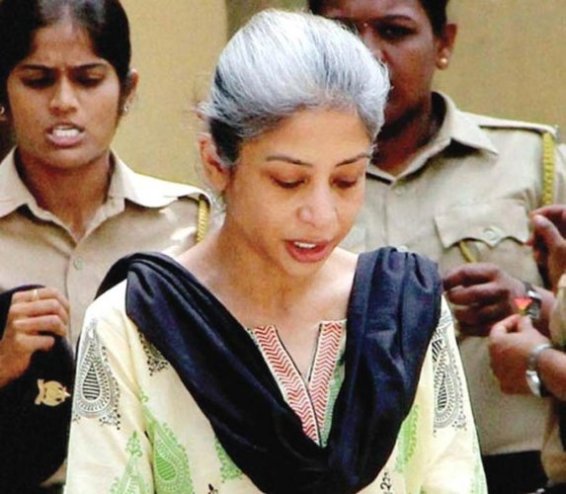
Along with the concerns raised about the conclusive nature of these pre-trial prima facie findings that betrayed a sense of unusual certitude, the apprehensions about the investigative processes that informed the prosecution are also important. In this context, the foundation of the suspicion of crime, the testimony of the approver witness needs to be interrogated. The legitimacy of approver witness considering the fact that investigative agencies can use this tool to nab anyone on the instruction of government. In the present case, the main witness against former finance minister P. Chidambaram in the INX Media case is co-accused and now approver, Indrani Mukerjea. The investigative agencies are relying on Mukherjee’s statement to buttress the allegations of economic offences.
This practice has been employed in previous high-profile cases as well. In the case of alleged fake encounter of an 18-year old college student, Ishrat Jahan, the investigative agencies employed this practice to ‘establish’ the veracity of her terror links and to claim that the encounter was not fake. David Headley, a Pakistani-American conspirator in the Mumbai terror attacks, became an approver witness. In the Court, Headley answered a multiple-choice question posed by the Public Prosecutor Ujjwal Nikam pertaining to a “female suicide bombers in LeT”. Even as the lawyer of Jahan’s mother, Advocate Vrinda Grover, stated that the multiple choice question asked was leading and has negligible evidentiary value due to high degree hearsay involved, the investigative agencies succeeded in changing the narrative about Jahan. This is because the public (and Courts) are likely sympathise much less with an encounter victim who is suspected terrorist than a college-going student. Ultimately, the charges against the encounter accused police officers were recently dropped.
Hence, both these cases present the infirmities of the practice of adjudicating on the testimony of the approver witness as there are inherent perverse incentives for the ‘approver’ to acquiesce the putative institutional bias of investigative agencies. This clearly makes the accused vulnerable to investigative excesses while mitigating the threshold of checks and balances for the prosecuting agencies.
In addition to that, Section 133 of the Evidence Act along with Section 114(b) makes it clear that the most important issue with respect to accomplice evidence is that of corroboration. The general rule regarding corroboration that has emerged is not a rule of law but merely a rule of practice which has acquired the force of rule of law in both India and England. The rule is that a conviction based on the uncorroborated testimony of an accomplice is not illegal but according to prudence it is not safe to rely upon uncorroborated evidence of an accomplice and thus judges and juries must exercise extreme caution and care while considering uncorroborated accomplice evidence. The Supreme Court of India has laid down what is known as theory of “double test” in the case of Sarwan Singh v. State of Punjab. Firstly, the court has to satisfy itself that the statement of the approver is credible in itself and there is evidence other than the statement of the approver that the approver himself had taken part in the crime. Secondly, the court must seek corroboration of the approver’s evidence with respect to the part of other accused persons in the crime and this evidence has to be of such a nature as to connect the other accused with the crime. Clearly, the spirit of these guidelines and legal safeguards needs to be imbibed in the functioning and execution of our criminal justice system.
However, even as the prosecutorial processes present several infirmities that directly and substantially prejudice the constitutional safeguards of the accused, the public debate in these high-profile cases should be a subject of critical reflection. In recent times, there have been increased instances of mediatized criminal investigations which are successful in creating a prejudice against the accused. The media distortion of crime and deviance has a significant impact on society, and this impact is somehow detrimental. On the political front, the concern has been that media glamourize crime and encourage criminality. Today, image and representation penetrate all areas of social existence. Media tap into and reinforce social and political concerns. They help shape individual and collective identities, sensibilities, fears, anxieties and appetites. They provoke public outcry and, at times, generate moral panics. Most importantly it is pertinent to note that media, with its 24 * 7 reporting and commentary on the investigation and administration of justice, tends to function as an extension of the State’s apparatus that is susceptible to political control. The case in point is the premature vilification of the former minister as an absconder and uncritical endorsement of the point of view of investigative agencies. While this mode of functioning presents the fourth estate as biased statist propaganda platform that readily paints the opposition in a detestable manner, it also shows a need for neutrality and restraint in the functioning of our institutions. This assumes pronounced importance in this case as Senior Advocate Kapil Sibal alleged that counter affidavit and legal documents were being unethically leaked by the investigative agencies to the media houses.
Justice H.R. Khanna rightly enunciated in famous emergency-era ADM Jabalpur case that the history of personal liberty is largely the history of insistence upon procedure. As a democratic society, both the public and its institutions needs to engender higher degree of respect for legal and constitutional safeguards, including for those who may not be enjoy majoritarian sympathy. This is not about the legal protection and defense of a former Cabinet minister belonging to the political opposition but about the protection and safeguarding of impartial and fair criminal justice mechanism that complies with the constitutional safeguards and processes in letter and in spirit.
[The authors are third-year B.A. LL.B. students at National Law School of India University, Bengaluru.]


