
By Raj Krishna and Vivek Kumar
Introduction
“We declare that human rights are for all of us, all the time: whoever we are and wherever we are from; no matter our class, our opinions, our sexual orientation.”
– Former UN Secretary-General Ban Ki-moon
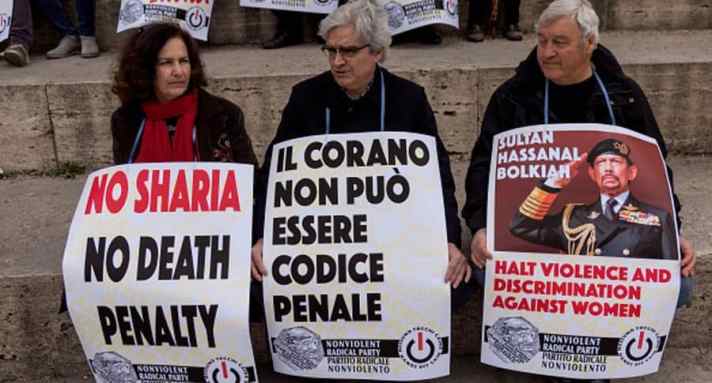
On 6th of May 2019, amidst international criticism, the Government of Brunei decided to roll back the 2 months old draconian law which punished those convicted of having homosexual sex with the death penalty.
The new law enacted by the Government of Brunei on 27th March 2019 made adultery and homosexual sex a capital offense, even if such an act was consensual and was executed in private. The law also announced amputation as punishment for theft. As per this new penal code, anyone involved in an act of adultery or a homosexual act would face the capital punishment of stoning. It is noteworthy that this new law would have applied only upon the Brunei’s Muslim population. This new penal norm was based upon the Sharia law, which outlines strict corporal punishments.
The enactment of this law triggered a wave of international criticism. The United Nations (UN) and many other human rights groups urged the country to review it. Popular celebrities like George Clooney, Elton John, Richard Branson, and many others chose to boycott the establishments owned by Hassanal Bolkiah, the billionaire Sultan of Brunei.
The legal position of the LGBT community in Brunei
A brief history of legal development on this subject in the State of Brunei reveals that this was a graded effort to define homosexuality as an offence and escalate the nature of the punishment attached to such offence. Prior to 2014, homosexuality, even consensual and in privacy, was considered illegal in the State of Brunei, and it was punishable by up to 10 years of imprisonment. In the year 2014, the Brunei Government invoked the stringent Sharia law thereby making adultery and gay sex a capital offence punishable by stoning. The decision aroused international protest. Some of the investments of the country’s sovereign wealth fund became a target of boycotts. Following the outcry, the state of Brunei delayed carrying out the harshest provisions of its Sharia law. However, after a lapse of 5 years, the Government decided to go ahead with this draconian law.
Brunei’s Sharia Penal Code: An Archaic Code in Modern World
Brunei’s Sharia Penal Code is a flawed piece of legislation that violates the basic human rights of its own citizens. The Code imposes cruel, inhuman and degrading punishments. The Penal law further restricts the rights to freedom of expression, religion, and belief, and codifies discrimination against women and girls.
The Sharia Penal Code under Articles 213, 214 and 215 punishes both Muslims and non-Muslims for printing, disseminating, importing, broadcasting, and distributing publications against Islamic beliefs. Under its Articles 197 and 198, the law punishes indecent dressing and cross-dressing. Thus, it is possible to assert that Brunei’s Penal Code violates the right of freedom of expression of its own citizens.
Furthermore, under Article 195 of the Code, anyone who publicly consumes food, drink, or tobacco before sundown during the month of Ramadan will face both imprisonment and a fine. As a result, international human rights activists advised the LGBT community, Christian and Buddhist minorities staying in Brunei to remain discreet; because anyone caught tarnishing the image of Islam is heavily punished under the native Sharia law.
Thus, it is possible to argue that the latest draconian enactment by the Brunei Government was just an addition to the already existing authoritarian Penal Code which has suppressed the people of Brunei for long.
The Way Ahead
The UN immediately urged Brunei to review its latest law, which was described by the human rights group and media as uncivilized and a return to Stone Age. Rupert Colville, the spokesperson for the Office of the UN High Commissioner for Human Rights (OHCHR), has stated that, under international law, stoning people to death constitutes torture and is thereby prohibited. Despite all of this, Brunei’s Prime Minister Office announced on the 30th of March 2019 that the country had no plans to halt the new law amidst international pressure. However, wide-scale international protests and an all-round boycott of the State of Brunei from the international sphere resulted in the annulment of this draconian law from the Brunei Penal Code as it happened earlier in 2013-14.
Even though the 2 months old draconian enactment has been rolled back by the Government of Brunei, it is imperative not to forget the fact that this new enactment was just an addition to the already existing authoritarian Penal Code of Brunei. As a result, it is time for the International community to continue its protest until Brunei’s Sharia Penal Code is thoroughly amended, and the provisions of the Code are made in sync with the international conventions on human rights, which aims to protect the basic human rights of the peoples.
[The co-authors are fifth-year and fourth-year students at Chanakya National Law University, Patna, respectively.]


