
By Arush Mittal
Introduction
Sudan has recently seen a landmark development concerning the rights of women, as the Sudanese government has recently ratified and criminalized the draconian practice of Female Genital Mutilation (‘FGM’). In the past, the transitional government had been working to curb this widespread practice and in turn, approved the draft legislation after some deliberation. According to the proposed amendment, anyone found guilty of committing such an act would be sentenced to prison for up to three years and also be made liable to pay a fine.
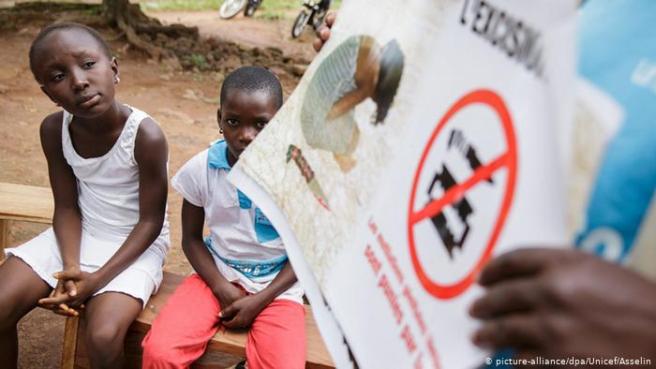
Female Genital Mutilation is a dehumanizing form of sexual violence where the inner/outer labia and the clitoris of the female is partially or fully removed without any medical reasons, due to the deep-rooted vicious traditions (essential for future marriage prospects). The cutting of sensitive genital tissues causes tremendous pain and excessive bleeding and may even result in a haemorrhage or a shock. Women who undergo FGM suffer a high risk of transmitting HIV by the use of unsterilized surgical instruments. This act also results into painful urination, menstrual problems, childbirth complications and sexual health problems. FGM is a highly traumatic event for these women disturbing their mental health for the rest of their life. Women and girls who undergo FGM are likely to experience post-traumatic stress disorder, depression, anxiety disorders, emotional disturbances and severe psychological problems.
The U.N. Children’s Agency’s (‘UNCA’) report of 2014 estimated that nearly 87% (9 out of 10) of Sudanese girls and women between the age of 15 and 49 have been a victim of FGM. This post focuses on the journey that leads to the criminalization of FGM; and the crucial importance of proper implementation of the new law.
The Journey of criminalizing FGM
In 1946, Sudan had become the first-ever African Nation to introduce a legislation against Type III FGM. However, this legislation was removed from the Criminal Act due to the introduction of the Sharia Law in 1983. In 2008, the National Council of Child Welfare (‘NCCW’) in collaboration with the United Nation Children’s Fund’s(‘UNICEF’) Sudanese wing had launched the Saleema Initiative to bring an end to the practice of FGM in Sudan. The primary focus of this initiative was to eradicate the practice of FGM at the community level. It also espoused to educate women and girls about the various health hazards that accompany FGM and encouraged them to fight for their rights. The initiative helped to formulate certain laws that restricted FGM in some states from 2008, however, due to the inefficacious implementation of these laws, prosecutions were not carried out resulting in failure to bring the practice to a halt. Article 13 of the draft National Child Act (‘NCA’) of Sudan dealt with criminalization of FGM, but it was removed in 2009 due to the opposition of the conservative religious leaders who firmly believed this provision would affect the Sharia law adversely. In September 2016, an amendment was proposed to the Criminal Act that would bring in Article 141, a provision criminalizing the practice of FGM. In April 2020, Article 141 was endorsed by the Ministerial as well as the Sovereign Councils that aimed towards eradicating the dehumanizing and barbarian practice of FGM.
Sudan upholding its dignity
The global trend to ban this practice had been going on for quite some time. There had been previous attempts to eradicate the practice of FGM, but the parliament under the leadership of Omar al-Bashir neglected these suggestions with a wanton disregard. The campaigners that supported the criminalization of this practice accused the government of discriminating against the women and girls. In November 2019, Sudan had repealed a restrictive public order that took away the rights of the women and controlled the way women dressed and acted in public. This move had proved to the nation that the women of the country would not tolerate any more cruelty.
Interestingly, the act of FGM violates certain articles under the Sudanese Constitution such as Article 15(2), 28, 32, and 33. These articles mainly deal with the safeguarding the rights of women and children and constitute certain measures to combat the egregious practices that take place against them. It is hoped that making FGM illegal will effectively protect these rights enumerated under the Constitution. Sudan has signed and ratified a lot of regional and international human rights treaties. Such treaties include the International Convenant on Civil and Political Rights (‘ICCPR’), Convention on the Elimination of All Forms of Discrimination Against Women (‘CEDAW’), Universal Declaration of Human Rights (‘UDHR’), the African Charter (Banjul Charter), Convention on the Rights of the Child (‘CRC’), and International Covenant on Economic, Social and Cultural Rights (‘ICESCR’). By introducing Article 141 in the Criminal Act and criminalizing the practice of FGM, Sudan has upheld its commitments that are mentioned in the provision of these treaties. The practice of FGM is not only a transgression of the child’s rights of a girl, but it is also pernicious and has serious consequences on a girl’s mental and physical health. The criminalization of this abhorrent practice has been seen as a ray of hope for the women and girls in Sudan.
Necessity for proper implementation
According to the report of UNICEF, FGM is widely carried out in 29 countries across the region of Africa and the Middle East. 24 out of the 29 countries have some form of legislation or decree that is against the practice of FGM. Prior to the recent developments, FGM had been declared illegal in some states of Sudan, but these bans were openly ignored by these states. The recent amendment to the Criminal Act is indicative of significant progress and initiative to preserve the dignity and rights of the women, but more focus should be placed on the implementation of this law. It is feared that now this practice might go underground. The traditional and religious beliefs regard the practice of FGM as being necessary to marry off the daughters and to ensure that they do not indulge in any sexual activity before marriage. Sudan also has a low rate of literacy that makes the implementation of the new amendment challenging in nature. The government must take the primary responsibility to ensure the successful implementation of the new law and carry out various awareness programs to educate the public at large about boycotting this unscrupulous practice. The removal of Omar-al Bashir from the office of the President has also played a significant role in the criminalization of FGM. The earlier legislations were neglected when he was in power (1989-2019) due to the conservative nature of the leaders. A change in leadership would certainly mean an aberration and a massive possibility to see and most importantly welcome such a progressive change.
A remarkable analogy can be drawn from the Indian perspective regarding the abolition of Sati. The British East India Company wanted to make its way into the murky politics of India; and control India by attacking the unorthodox Indian culture for being savage and barbaric, with dire need of reform. Sati was the perfect entryway as it was a rampant exercise which was being carried out throughout the country. To prove the brutal nature of sati, the British appointed Pandits in the civil and criminal (NizamatAdalats) courts and questioned them regarding the practice of sati. The Pandits were made to answer these questions by interpreting texts from various scriptures (Smriti, Shruti, Manusmriti, etc). The British tried to instil the reality in the minds of the people by showing the superficiality of the custom of sati. A great misconception of this custom was that the widow would go to heaven to meet her dead husband. However, the reality was a shade darker and more realistic than what was fed to these naive women. If the woman remained alive, she would be entitled to the family property after her husband’s death. To ensure that the woman could not claim her share, she was coerced into performing the gruesome act of Sati.The views of Raja Rammohan Roy resonated with the British argument that stated that the widows were coerced into the pyre for material gains. The eradication of sati was possible only because of the mass awareness about the ignorance of reality; and education.
This is in close contrast to the practice of FGM in Sudan. The exercise of FGM has a lot of traditions and customs that make it so widespread. This exercise is supposedly said to be the girl’s initiation into adulthood and to ensure the virgin status of a women before marriage. The United Nations Population Fund (‘UNFPA’) has been working with the Sudanese government to ensure regional outreach by organizing declarations that involve key local community leaders and religious figures to hold public ceremonies educating the people about the ill-effects of FGM. Abdul-Mouty, a representative of the UNFPA in Sudan said that there are teams working in the field with the tribal leaders, raising awareness, and trying to reach all the communities concerning FGM. Plan International has been working tirelessly to outlaw FGM together with the UN, NCCW, Saleema Initiative, and child rights advocates. Anika Krstic, Country Director of Plan International in Sudan has emphasized the importance of implementation through tracking mechanisms and clear accountability as well as nation-wide awareness and proper resource allocation for the new law to work in its entirety.
Practices like Sati and FGM are social evils. The word ‘social’ connotes deep-rooted customs and traditions that are derogatory and demeaning to the women. To truly eradicate these practices, they need to be pulled out from their roots by raising maximum awareness possible and educating the masses.
The Way Forward
Internationally, FGM is recognized as a violation of the human rights of girls and women, and also an extreme form of gender discrimination. The Sustainable Development Goal 5 on Gender Equality, Target 5.3 focuses on the elimination of FGM by 2030. The criminalization of FGM in Sudan has come at a challenging time for woman’s rights internationally, embracing the women’s Sexual and Reproductive Health and Rights (‘SRHR’). After a public order law was repealed that controlled the movement and dressing sense of the women, in February 2020, at a ceremony marking the International Day of Zero Tolerance for FGM, Nasr al-Din Mufreh (Minister for Religious Affairs) expressed his support to eliminate FGM by 2030. Outlawing FGM in Sudan is undeniably a big step forward as the status of human rights in the country is abysmal with rampant human rights violations. Sudan stands as a beacon of light for other nations when it is seen from the lens of FGM; this massive step would hopefully steer similar legal reforms in the affected countries.
Conclusion
Around 200 million women and girls have been a victim of FGM that is prevalent mainly in countries of Africa, Asia, and the Middle East. A lot of these nations do not have any kind of legislation on this matter, but the countries that do, struggle with the trouble of implementation of such laws. FGM is a socio-cultural practice that has been in prevalence for a long time. The introduction of the amendment may certainly reduce the occurrence of this practice, but, only a change in the socio-cultural outlook would lead to its eradication. Proper implementation fills the void to a well-meaning legislation.
[ The author is a law student at Hidayatullah National Law University .]


