The conundrum of ‘Necrophilia’ in India: Broadening the sphere of punishment is demanded.
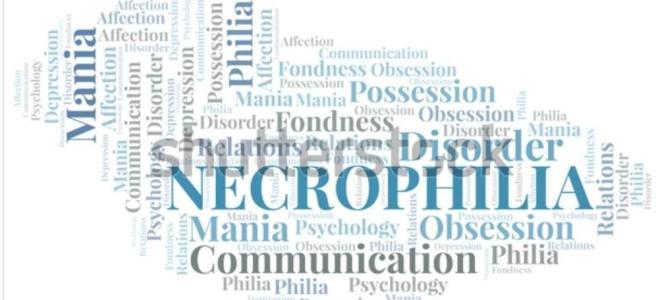
                                                                                                     - Rohan Mishra INTRODUCTORY REMARK - NECROPHILIA Ever since the Indian Penal Code, 1860 (hereinafter, “IPC”) came into play it has been celebrated widely as a great piece of penal legislation by positively testifying as the balance wheel of the society containing in itself a rich lode of progressive laws as per the growing … Continue reading The conundrum of ‘Necrophilia’ in India: Broadening the sphere of punishment is demanded.

ALEXA: A CATALYST IN THE EVIDENCE LAW?

By: Rishabh Saumya “Alexa raise your hand”. The problem is Alexa has no hands or any other human feature. We know Alexa- that’s the name used by Amazon for its virtual personal assistant, most frequently invoked on its echo in-home smart speaker. It may not have a face but the program can be treated as … Continue reading ALEXA: A CATALYST IN THE EVIDENCE LAW?

GUJARAT CONTROL OF TERRORISM AND ORGANISED CRIME ACT: A PROCRUSTES SOLUTION

-By Darshil Sakhia and Pratham Shah Introduction In September 2020, a petition was filed in the Gujarat High Court (“Gujarat HC”) challenging the constitutionality of sections 2(1) (c), 16, 20(3), 20(4) and 20(5) of the Gujarat Control of Terrorism and Organized Crime Act, 2015 (“Act”). While the case is still being heard in the Gujarat … Continue reading GUJARAT CONTROL OF TERRORISM AND ORGANISED CRIME ACT: A PROCRUSTES SOLUTION

Bail under CrPC v. Bail under UAPA: A Critical Analysis

-By Renuka Nevgi The term ‘bail’ essentially means procurement of release of an accused awaiting trial or appeal by the deposition of security as an assurance for his/her submission whenever demanded by legal authority. The application for bail can be approved or rejected on various grounds such as nature of the offence, severity of punishment, … Continue reading Bail under CrPC v. Bail under UAPA: A Critical Analysis

Discrimination through the Tinted Glass: VIP Culture and its Manifestation

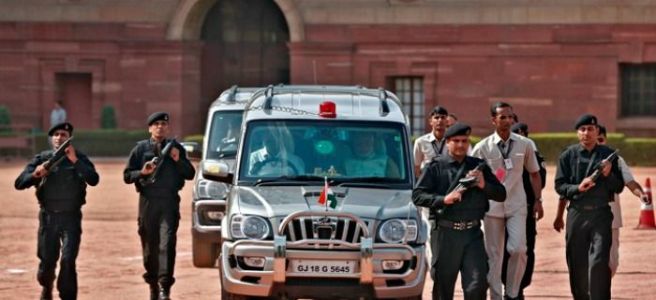
By: Injila Khan and Utkarsh Mishra Abstract – “The current political situation in the country with the right-wing government and a complex set of relations between the state and the centre has given us a cause to revisit the realms of the VIP culture that has pervaded our governments and bureaucracy since the colonial era. … Continue reading Discrimination through the Tinted Glass: VIP Culture and its Manifestation

AWARDING CUSTODIAL CONFESSIONS WITH EVIDENTIARY VALUE: A TIME TO MAKE REFORMS?

By: Shambhavi Shani INTRODUCTION Confession made by a suspect, being decisive in nature plays a significant role when criminal proceedings are pursued. Confession, simply put, is an acknowledgment of guilt by accused which is traced back, in various common law countries, to the guilt conscience associated with it. Being conclusive, it is of utmost importance … Continue reading AWARDING CUSTODIAL CONFESSIONS WITH EVIDENTIARY VALUE: A TIME TO MAKE REFORMS?

MARITAL RAPE: REDIFINING SOCIETAL NORMS AND CONSENT BOUNDARIES IN MARRIAGE

By: Harsh Sethi INTRODUCTION Marital rape is defined as the non-consensual sexual intercourse in a marital relationship with one’s own spouse. The act, often justified for reasons of the ‘implied consent of the spouse’, not only violates the sexual freedom of the wife but also undermines her dignity and self esteem. Nonetheless, marital rape remains … Continue reading MARITAL RAPE: REDIFINING SOCIETAL NORMS AND CONSENT BOUNDARIES IN MARRIAGE

Criminalising “Stealing the Affection of a Brother Officer’s Wife”: A Comparative Analysis with reference to the USA and South Africa

By- Digvijay Sahni Introduction Decriminalising adultery and viewing it from outside the realm of criminal jurisprudence, was one of the landmark judgments that was rendered by the Supreme Court in 2018. The abrogation of the long-standing English provision in the IPC 1860 was seen as a step in the positive direction for which civil remedy … Continue reading Criminalising “Stealing the Affection of a Brother Officer’s Wife”: A Comparative Analysis with reference to the USA and South Africa

ECOCIDE: CHANGING THE LEGAL REALITY AND CULTURAL MINDEST

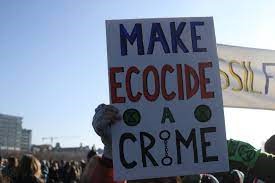
By- Swetha Somu On March 18, 2021, the French MPs approved to make ‘ecocide’ a serious crime under French law. The draft legislation passed the National Assembly by 44 votes to 10. Under the law, anyone intentionally causing pollution to land, water or soil will be liable for up to 10 years in prison along … Continue reading ECOCIDE: CHANGING THE LEGAL REALITY AND CULTURAL MINDEST

Rendering Criminal Law Meaningless: On the Draconian Telangana Preventive Detention Law

-By Abinav Sekhri In 2017, the Telangana government passed a Bill to ratify and ordinance which had made the "Telangana Prevention of Dangerous Activities of Bootleggers, Dacoits, Drug-Offenders, Goondas, Immoral Traffic Offenders and Land-Grabbers Act 1986", into the "Telangana Prevention of Dangerous Activities of Bootleggers, Dacoits, Drug-Offenders, Goondas, Immoral Traffic Offenders, Land-Grabbers, Spurious Seed Offenders, Insecticide Offenders, Fertiliser Offenders, … Continue reading Rendering Criminal Law Meaningless: On the Draconian Telangana Preventive Detention Law

Protection of Women from Harassment at Workplace: A Mirror Reflection of the Vishakha Judgment

-By Vidhik Kumar Introduction The status of women in our society can only be uplifted when we as a community tread towards the path of social justice, equality, and dignity- and provide women, without any discrimination, equal opportunities in every sphere of life. India has adopted several legislations for uplifting women in the social sphere, … Continue reading Protection of Women from Harassment at Workplace: A Mirror Reflection of the Vishakha Judgment

Social Media – A Breeding Ground for Juvenile Offenders

-By Yana Gupta and Ayush Mangal Social Media may either act as a bane or a boon for society and individuals. However, sometimes its cost outweighs its benefits, especially for juveniles. The access to electronic gadgets for long durations has opened floodgates of opportunities for juveniles to get inspired from the content on social media … Continue reading Social Media – A Breeding Ground for Juvenile Offenders

In ‘Furtherance’ of Substituting Criminal Conspiracy

-By Sarthak Wadhwa (This article is the second part of a two part series) Introduction In a recent two-part post on this blog, Shraddha and Yana present a comprehensive account of how colonial era laws are weaponized to ‘crackdown on dissent’ – and how the detention of Safoora Zargar and Disha Ravi for sundry charges … Continue reading In ‘Furtherance’ of Substituting Criminal Conspiracy

Crackdown on Dissent: A Conspiratorial Approach

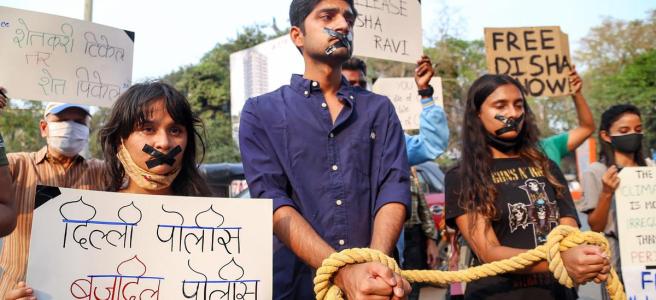
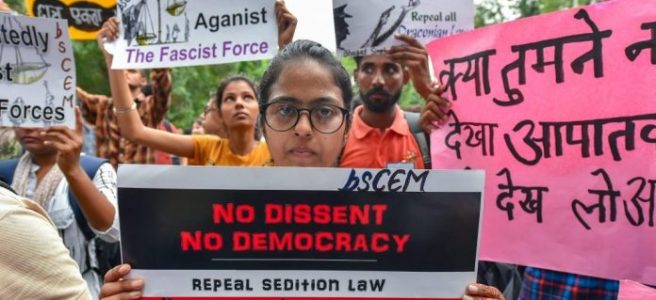
~Sarthak Wadhwa (This article is the first part of a two-part series) Introduction In a recent two-part post on this blog, Shraddha and Yana present a comprehensive account of how colonial era laws are weaponized to ‘crackdown on dissent’ – against the ideals of democracy and criminal justice as found in the Indian Constitution and … Continue reading Crackdown on Dissent: A Conspiratorial Approach

Section 295A and Harm-Offence Debate

-By Kirti Meena and Sandli Pawar Introduction Section 295A of the Indian Penal Code, 1860 has become a catchword in the context of any real or reel issue related to hurting religious sentiment. Section 295A criminalises any deliberate or malicious act intended to offend the religious sentiment of any class of people. The Section mandates … Continue reading Section 295A and Harm-Offence Debate

The Abuse of Parole and Furlough – An Analysis

-By Mannat Marwah Introduction Parole or furlough is the temporary release of a prisoner before they have completed their sentence, on a conditional basis. Rules relating to parole and furlough are enshrined under the Prison Act, 1894 and the Prisoner Act, 1900. Each state has its own rules governing parole and furlough with only minor … Continue reading The Abuse of Parole and Furlough – An Analysis

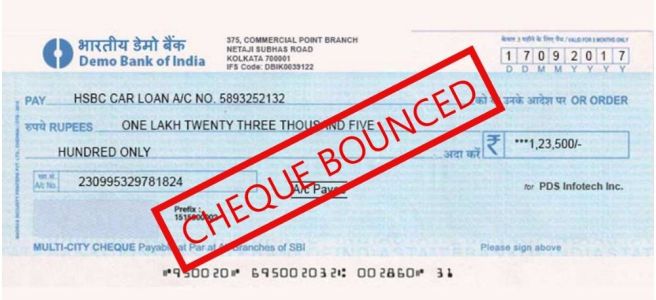
The Supreme Court and Delays in Cheque Bouncing Cases

-By Abhinav Sekhri This April, a Constitution Bench of the Indian Supreme Court took up the issue of delays in cheque bouncing cases — i.e., complaints instituted under Section 138 of the Negotiable Instruments Act 1881 — and passed some important directions on how such cases should be run [Order dated 16.04.2021 in Suo Motu Writ Petition (Crl.) 2 … Continue reading The Supreme Court and Delays in Cheque Bouncing Cases

A Closer Look at the 1976 Deletion of Section 438 CrPC in Uttar Pradesh

-By Abhinav Sekhri (Special thanks to Ashna D and Aniket Singh for their help with research on some aspects.) In 2019, the State of Uttar Pradesh amended the Criminal Procedure Code of 1973 insofar as it applied to the state, to re-insert Section 438 (its at the end of the linked file) which provides for anticipatory bail. … Continue reading A Closer Look at the 1976 Deletion of Section 438 CrPC in Uttar Pradesh

Virendra Khanna v State of Karnataka –Passwords and the Dilution of the Right Against Self-Incrimination

-By Kashish Khandelwal In Riley v California, while holding that an accused cannot be forced by the police to reveal their password, the US Supreme Court observed that owing to the rapid development of technology, the majority of the people “typically carry a cache of sensitive personal information” in their pockets. However, this has also … Continue reading Virendra Khanna v State of Karnataka –Passwords and the Dilution of the Right Against Self-Incrimination

Marry your rapist: An unending saga of compromise in Rape Cases

-By Harshita Dixit Introduction Recently a Supreme Court bench headed by Chief Justice of India S.S. Bobde asked a rape accused to marry her victim. The accused, who is a state government employee, is facing charges for repeatedly raping his relative- when she was a minor. The apex court was hearing a petition against an … Continue reading Marry your rapist: An unending saga of compromise in Rape Cases

Crafting Accessible Remedies to deal with Multiple FIRs and Complaints

-By Abhinav Sekhri 2020 (and January 2021) witnessed a series of high-profile cases where the potential accused persons were sought to be prosecuted across the country for their conduct. Arnab Goswami, Amish Devgn, the makers of Tandav; in all these cases, specific speech acts of the accused persons attracted the ire of people across states … Continue reading Crafting Accessible Remedies to deal with Multiple FIRs and Complaints

Crafting Accessible Remedies to deal with Multiple FIRs and Complaints

-By Abhinav Sekhri 2020 (and January 2021) witnessed a series of high-profile cases where the potential accused persons were sought to be prosecuted across the country for their conduct. Arnab Goswami, Amish Devgn, the makers of Tandav; in all these cases, specific speech acts of the accused persons attracted the ire of people across states … Continue reading Crafting Accessible Remedies to deal with Multiple FIRs and Complaints

Right against Self-Incrimination: A Deontological Pitch

-By Shantanu Mishra Right against self-incrimination has its origins in the English common law and cannon law. It is an important right amongst a few rights which are available to the accused. The fact that it has been envisaged as a fundamental right in the Indian Constitution shows the importance that should be accorded to … Continue reading Right against Self-Incrimination: A Deontological Pitch

Victim Assistance in India: Broadening the Scope of Victim Reparations in the Criminal Justice System

-By Tanisha Prashant Introduction The justice system does not provide any succor to the victims of crime. The concept of fair trial and justice embodies in itself a triangulation of rights and interests of the accused, the victim and the society. Under an adversarial system, the rights of the community and the accused are exhaustively … Continue reading Victim Assistance in India: Broadening the Scope of Victim Reparations in the Criminal Justice System

Parole in India – Current state and the Need for Reforms- II

-By Tanish Arora and Hardik Batra (This article is the second part of a two-part series.) The Need for Reforms and Suggestions As observed in the previous part, the subjectivity and non-uniformity in the procedure to increase the scope of rehabilitation and reformation throughout the country leads to significant confusion and differentiation. It is owing … Continue reading Parole in India – Current state and the Need for Reforms- II

Parole in India – Current state and the Need for Reforms- I

-By Tanish Arora and Hardik Batra (This article is the first part of a two-part series) Introduction Crime is a matter of public importance in the society. The way a society responds to crime is what shapes its future. If such way of responding is harsh or arbitrary in its impact, it works a gross … Continue reading Parole in India – Current state and the Need for Reforms- I

Preservation of Evidence: Need of our Criminal Justice System

-By Mujeeb Ur Rehman “A person is innocent until proven guilty” This is one of the most sacred principles of the criminal justice system, regardless of jurisdiction of which it belongs to; and in order to prove any person guilty, evidence against him/her is a mandatory requirement. Here the criminal justice system fails to believe … Continue reading Preservation of Evidence: Need of our Criminal Justice System

Solitary Confinement: A Temporary Measure Causing Permanent Isolation?

-By Aditi Behura Introduction Solitary confinement is a penal form of confinement in which a prisoner is isolated from fellow prisoners and is under rigorous surveillance. It has been established that such confinement is torturous, and has an adverse impact on the holistic well-being (physical and mental health) of the prisoner. Convicts are placed in … Continue reading Solitary Confinement: A Temporary Measure Causing Permanent Isolation?

Rethinking Mental Cruelty under Indian Matrimonial Law

-By Mohd Rameez Raza & Neha Tripathi The Hindu Marriage Act, 1955 (‘Act’ hereafter) lays down marital laws that are applicable to Hindus, Jains, Buddhists, and Sikhs. Up until the 1970s, the ground for divorce under the Act did not include ‘cruelty’. The various grounds were: voluntary sexual intercourse with any other person than his … Continue reading Rethinking Mental Cruelty under Indian Matrimonial Law

Chemical Castration of Sexual Offenders in India – A Need for Reformation in Indian Anti-rape Laws

- By Anand Singh Introduction - On November 24th, 2020, Pakistan’s cabinet approved two anti-rape ordinances that call for chemical castration of the rapists and setting up special courts for trails. The two ordinances are the Anti-Rape (Investigation and Trail) Ordinance, 2020 and the Criminal Law (Amendment) Ordinance, 2020. The legislation comes after an incident … Continue reading Chemical Castration of Sexual Offenders in India – A Need for Reformation in Indian Anti-rape Laws

Rajesh Sharma And Ors. v. State of UP – Wrongly Feeds into the Narrative of 498A being Misused?

-By Khushi Agrawal INTRODUCTION With the incidents of domestic violence increasing by manifolds during COVID-19 times, it becomes pertinent to throw light on a 2017-judgement which reduced the importance of section 498-A IPC to a major extent. Section 498-A provides that if any person being the husband or the relative of the husband of a … Continue reading Rajesh Sharma And Ors. v. State of UP – Wrongly Feeds into the Narrative of 498A being Misused?

The state of undertrial incarceration in India

-By Vidushi Gupta Introduction Prisons and correctional facilities are an essential component of the criminal justice system in India. However, very little attention is paid to the state of the Indian prison system. Particularly neglected is the group comprising undertrials within these prisons. The issue of undertrial prisoners in India first came to light in … Continue reading The state of undertrial incarceration in India

Need for exclusion of evidence obtained through entrapment in India

-By Gunjan Shrivastav https://reischlawfirm.com/wp-content/uploads/2018/02/When-Can-the-Entrapment-Defense-Be-Used-in-a-Criminal-Case.jpg In this blog, it is argued that any evidence obtained by the police by way of a trap should not be admissible in a court of law. In the absence of any specific provision that restricts the admissibility of evidence procured by way of trap, the court should adopt an approach … Continue reading Need for exclusion of evidence obtained through entrapment in India

Repeated Refusal of Wife: A Mitigating Factor?

By- Oshi Priya Introduction India reports the highest number of acid attacks in the world with the least number of convictions. The graph of crime against women has seen an exponential rise in the past century. Acid attack, though not gender-specific, yet targets women in most of the cases. This crime is often used as an … Continue reading Repeated Refusal of Wife: A Mitigating Factor?

Misogyny In India: A Virulent Form Of Hate Speech

-By Tania Gupta Over time, our supposedly egalitarian society has nourished misogynist attitudes and beliefs and pushed ideologies that glorify the speaker as a maverick but inflict hatred on women for being as unfortunate as they are, to be women in men’s world. The laws that govern Indian women are dictated by social perceptions formed … Continue reading Misogyny In India: A Virulent Form Of Hate Speech

China forces birth control on Uyghur Community: violation of International Law Principles

By Divyanshu Gupta Introduction In a recent report prepared by Adrian Zenz titled ‘The CCP’s Campaign to Suppress Uyghur Birthrates in Xinjiang’, it has come to light that China is forcing Uyghur women, a Muslim ethnic minority population in Xinjiang, to be sterilized and take birth control measures to curb its population. Adrian Zenz is … Continue reading China forces birth control on Uyghur Community: violation of International Law Principles

Criminalizing Genetic Discrimination in India

By Sangita Sharma & Sayan Chandra Introduction Genetic Discrimination has acquired the platform for techno-social discussion for quite sometime now especially with the advent of life insurance companies excluding patients from their policy based on their genetic pre-disposition to any particular health condition. Such an act hits the basic tenet of rights of equal treatment … Continue reading Criminalizing Genetic Discrimination in India

Evaluation of Death Penalty in Modern Penology: A case for abolition

By AbhinavGoyal &Meghna Nimbekar The criminal law of our country has become rather static and this is attributable to the neglect of the Supreme Court of India in considering the jurisprudential questions which relate to crime and punishment. The Court is content in using its discretion by interpreting the law as it is, and does … Continue reading Evaluation of Death Penalty in Modern Penology: A case for abolition

“Expounding Juvenile Culpability: Muddling Between Heinous and Serious Crimes”

By Mohd. Kumail Haider “Children are not things to be moulded, but are people to be unfolded.” -Jess Lair Cohesive Structuring- The United Nations General Assembly adopted the United Nations Standard Minimum Rules for the Administration of Juvenile Justice on 29th November, 1985. These Rules are commonly referred to as the Beijing Rules. Clause 4.1 of … Continue reading “Expounding Juvenile Culpability: Muddling Between Heinous and Serious Crimes”

Mentally Ill Prisoners & their Rights

By Rashika Bhardwaj & Prasoon Introduction The Prisons Act of 1894 (PA) and the Prison Statistics India reveal how mental health is not a lesser discussed issue in just the society, but it has largely been ignored by the government and especially the prisons of India. When the prison statistics released by the National Crime … Continue reading Mentally Ill Prisoners & their Rights

India’s blow to Humanity- Ignorance of Genocide and Prearrangement of Impunity

By Aniket Panchal and Diya Vaishnav  Introduction "It is forbidden to kill; therefore, all murderers are punished unless they kill in large numbers and to the sound of trumpets." This distinct quote by a French Writer Voltaire exposes a jarring truth in the realm of the domestic legislation of India. The substantive law of India … Continue reading India’s blow to Humanity- Ignorance of Genocide and Prearrangement of Impunity

Killing Many Birds with One Stone–Curing the Trials in India.

By Ansh Karnawat Introduction: Trials in India suffer from many flaws, but at the root of it all is the failure of foresight, easily visible from the growing divide between the intentions of lawmakers and their results, between their policies and the ground realities. The fundamental right to speedy trial under Article 21 of the … Continue reading Killing Many Birds with One Stone–Curing the Trials in India.

CCTV footage: A silent witness

By Prachi Agarwal Abstract This article deals with some basic concept of identification of an accused person. Firstly, the author here is trying to elaborate on the importance of identification of accused person with reference to Section 9 of the Indian Evidence Act, 1872 (hereinafter referred to as “IEA”). Sometimes the crimes are committed under … Continue reading CCTV footage: A silent witness

Has the Supreme Court set an erroneous precedent by transferring Sushant’s death probe to the CBI?

By Shikhar Aggarwal Introduction The recent Supreme Court judgment, transferring the probe into the unnatural death of actor Sushant Singh Rajput and the surrounding circumstances, to the Central Bureau of Investigation (CBI), is being hailed as a victory for the public sentiment attached with the aftermath of his death. On the other hand, some believe … Continue reading Has the Supreme Court set an erroneous precedent by transferring Sushant’s death probe to the CBI?

Dr. Kafeel Khan and Our Punitive Preventive Detention Law

By Abhinav Sekhri On August 11, the Supreme Court had requested the Allahabad High Court to expeditiously decide the habeas corpus petition filed by Nuzhat Perween for her son, Dr. Kafeel Khan. The petition challenged orders for his preventive detention under the National Security Act of 1980 (NSA) that were passed on February 13, 2020. … Continue reading Dr. Kafeel Khan and Our Punitive Preventive Detention Law

The Constitution Bench Judgment in Mukesh Singh — A Sensible Retreat from Automatic Bias

By Abhinav Sekhri On 31.08.2020, a Constitution Bench of the Supreme Court delivered its unanimous verdict in Mukesh Singh v. State (Narcotic Branch of Delhi) [SLP (Crl.) Diary No. 39528/2018 decided on 31.08.2020, along with other batch matters]. The Constitution Bench had been assembled to decide on the correctness of a Three Justices' Bench decision of … Continue reading The Constitution Bench Judgment in Mukesh Singh — A Sensible Retreat from Automatic Bias

Constitutional Failures of the CrPC: An Analysis of S. 41D and An Accused’s Right to Legal Counsel

By Shivjeet Parthasarathy The deaths of George Floyd in the US, and Jayaraj and Bennix in India have resulted in significant outcry against the power wielded by the police. In light of these events, the right to have a lawyer becomes much more relevant as it is an important check on police power. The right … Continue reading Constitutional Failures of the CrPC: An Analysis of S. 41D and An Accused’s Right to Legal Counsel

The ‘othering’ of death row prisoners and their victims: two sides of the same coin

By Ashna D. Introduction Most societies perceive the rights of accused persons as diametrically opposite to the rights of their victims, and our society is no different. In January 2020, the central government urged the Supreme Court to issue ‘victim-centric’ guidelines in death penalty cases, suggesting that the present framework adopts an overly ‘accused-centric’ approach. … Continue reading The ‘othering’ of death row prisoners and their victims: two sides of the same coin

Deaths due to potholes: Need to invoke Criminal Liability

By Aneesha Sondhi The high number of accidents and deaths that take place due to potholes is appalling. There exists a lot of red-tapism and the authorities often absolve themselves from taking responsibility in such incidents. Municipal Corporation of Delhi (“MCD”) blames the Delhi Development Authority (“DDA”), DDA blames some other unknown vehicle and so … Continue reading Deaths due to potholes: Need to invoke Criminal Liability

Different stages of criminal trials that are impacted by covid’19

By Aaj Sikri "COVID-19 descended without a warning. We limited the number of lawyers, sanitised the courtrooms et al. However, access to justice cannot be suspended even if there is a lockdown"-Justice D.Y. Chandrachud            INTRODUCTION: COVID'19 being the most unprecedented situations of all time, has impacted not only country’s economy but the legal functioning … Continue reading Different stages of criminal trials that are impacted by covid’19

Inflammatory Speeches during Delhi riots: why even ‘Lalita Kumari’ can’t make High Courts direct the registration of FIRs

By Krishnagopal Abhay , In late February, a PIL was filed in the Delhi High Court by Mr. Harsh Mander, seeking registration of FIRs against several political leaders for alleged inflammatory speeches, which as per him instigated the riots in North-East Delhi. In the affidavit submitted by Delhi Police, inter-alia, the maintainability of the PIL … Continue reading Inflammatory Speeches during Delhi riots: why even ‘Lalita Kumari’ can’t make High Courts direct the registration of FIRs

The Tofan Singh Reference — Part 4: Summing Up

By Abhinav Sekhri (This is the fourth part of a multi-part series. Previous posts discussing Tofan Singh can be accessed here) The 2013 judgment by Two Justices' in Tofan Singh v. State of Tamil Nadu [(2013) 16 SCC 31 ("Tofan Singh")] had referred two interlinked issues arising under the Narcotic Drugs & Psychotropic Substances Act 1985 ("NDPS") … Continue reading The Tofan Singh Reference — Part 4: Summing Up

Need for Mitigation Investigation in Death Penalty Cases in India: A Step to Ensure Individualized Sentencing

By Merrin Muhammed Ashraf Capital sentencing practice in India is in a broken state and in the words of the Law Commission, death penalty is being imposed ‘arbitrarily and freakishly’ by the courts. Since our penal laws do not provide for mandatory death penalty for any offence, the sentencing court has the onerous task of … Continue reading Need for Mitigation Investigation in Death Penalty Cases in India: A Step to Ensure Individualized Sentencing

The Tofan Singh Reference — Part 3: Statements under Section 67 NDPS Act

By Abhinav Sekhri The previous two posts in this series have discussed the facts in Tofan Singh, the relevant statutory provisions of the Narcotic Drugs and Psychotropic Substances Act 1985 [NDPS] and the Criminal Procedure Code 1973 [Cr.P.C.], and also the first proper issue posed in the reference: Whether officers of the central and / … Continue reading The Tofan Singh Reference — Part 3: Statements under Section 67 NDPS Act

The Tofan Singh Reference — Part 2: NDPS Investigating Officers are Police Officers?

By Abhinav Sekhri, Shashwat Bhutani and Rishabh Narain Singh This blog has introduced the scope of the reference in Tofan Singh and the statutory context of the NDPS Act. Which means that we can straightaway jump in to discuss the first question: Whether an officer who investigates a case under the NDPS Act is a "police officer", … Continue reading The Tofan Singh Reference — Part 2: NDPS Investigating Officers are Police Officers?

The seesaw exercise of Immunity obligations under International (Criminal) law outside the ‘Security Council route’

By Vedantha Sai and Winy Daigavane Introduction The International Criminal Court can exercise jurisdiction over Heads of States (“HoS”) not party to the Rome Statute provided the alleged offences are committed in the territory of State Party. However, the problem arises in the enforcement of such jurisdiction as it involves State-to-State interactions in the process … Continue reading The seesaw exercise of Immunity obligations under International (Criminal) law outside the ‘Security Council route’

Aghnoo Nagesia v State of Bihar: analysing section 25 of the Indian Evidence Act, 1872

By Somyajit Mohanty Introduction “There is a great deal of laziness in it. It is far pleasanter to sit comfortably in the shade rubbing red pepper into a poor devil’s eyes than to go about in the sun hunting up evidence.”[1] A three-judge bench of the Supreme Court of India, in the case of Aghnoo … Continue reading Aghnoo Nagesia v State of Bihar: analysing section 25 of the Indian Evidence Act, 1872

Bulbbul: Myth Of A Witch

By Gaurangi Sharma and Nitya Saxena “Why do I have to wear toe rings?” a 5-year old Bulbbul asks her aunt. “There is a nerve there which if not pressed, girls fly away”, she answers. “Like a bird?” Bulbbul asks in amaze. “No, it’s to control you,” her aunt swiftly replies. Bulbbul, a minor gets … Continue reading Bulbbul: Myth Of A Witch

The Tofan Singh Reference — Part 1: Some Key Questions of Fact, and the Scheme of the NDPS Act

By Abhinav Sekhri In this first substantive post, the focus is on getting the facts straight. The legal issues that are bound to be raised turn on some very specific facts, and so it is critical to be sure of just what had happened in Tofan Singh. After having set out the facts, the post … Continue reading The Tofan Singh Reference — Part 1: Some Key Questions of Fact, and the Scheme of the NDPS Act

National Security Law 2020: a tool for curbing dissent and massacring Hongkong’s autonomy

By Shubhankar Tiwari and Snehil Tiwari Introduction On June 30, 2020 the Chinese Parliament unanimously passed the national security law titled - ‘The Law of the People’s Republic of China on Safeguarding National Security in the Hong Kong Special Administrative Region (HKSAR)’. The new law was passed just an hour before the Hong Kong Day … Continue reading National Security Law 2020: a tool for curbing dissent and massacring Hongkong’s autonomy

Sushant Singh Rajput matter: Continuing dilemmas in Investigation

By Harpreet Singh Gupta and Sahil Raveen Late Sushant Singh Rajput, an actor with pan India following, was found hanging on June 14 at his Bandra residence. The unnatural death is raising a number of questions in relation to the power of police to investigate a cognizable offence. After Sushant’s death, Bandra police filed the … Continue reading Sushant Singh Rajput matter: Continuing dilemmas in Investigation

Palghar, Alwar and Beyond: The Anatomy of Lynching Necessitating a Legal Framework

By Mahima Balaji On the night of 16th of April 2020, three men were attacked in the district of Palghar in Maharashtra, India. The men were dragged out of their vehicle and were subjected to brutal violence due to suspicion of them being thieves. The mob that attacked them is estimated to be over 100 … Continue reading Palghar, Alwar and Beyond: The Anatomy of Lynching Necessitating a Legal Framework

Section 144 Cr.P.C. — Part VII: Same Old, Same Old? (1950 to 1960)

By Abhinav Sekhri (This post is the seventh part in a multi-post series. For previous posts, see here) A long time ago, this multi-part series studying the long historical arc of Section 144 Cr.P.C. had reached the decade leading up to India's independence and the coming into force of the Constitution of 1950. This post … Continue reading Section 144 Cr.P.C. — Part VII: Same Old, Same Old? (1950 to 1960)

Sanctions to prosecute MPs and MLAs : An analysis

By Anuj Shukla and Govind Gehlot INTRODUCTION A high voltage political drama unfolded in the state when the CM Ashok Gehlot of congress-led Rajasthan government accused BJP of toppling their MLA’s with bribe, while Deputy Chief Minister Sachin Pilot along with 30 supporters alleged the Government to be in minority. Government pressed the charges against … Continue reading Sanctions to prosecute MPs and MLAs : An analysis

Who Will Police the Police?

By Aparna Singh The above question posed by the late Justice V R Krishna Iyer in the year 1980, unfortunately, still remains unanswered. The recent incident of the egregious killings of Jayaraj and his son Bennix inside a police station in Thoothukudi, Tamil Nadu, has once again led to a public clamour against the excesses … Continue reading Who Will Police the Police?

A deal violating Privacy Rights in the COVID veil

By Ayushi Mishra & Gunjan Mehta   Introduction The past decade has seen an unprecedented growth of information technology, computational power, and cellular network. This growth has to be contextualized and seen from the spectrum of an increased collection in the generation and dissemination of data, to the extent that experts have termed data as … Continue reading A deal violating Privacy Rights in the COVID veil

Critical appraisal of Bail law under §43d(5) of the Unlawful Activities (Prevention) Act, 1967

By Abhinav Gupta Introduction Bail can be defined as a security such as personal bond or surety, required by the courts for the release of a person accused of committing a crime from custody. The accused, however, must appear before the court for future hearings.Bail is provided as a matter of right and is only … Continue reading Critical appraisal of Bail law under §43d(5) of the Unlawful Activities (Prevention) Act, 1967

Criminalization of the practice of FGM in Sudan: A Ray of Hope

By Arush Mittal Introduction Sudan has recently seen a landmark development concerning the rights of women, as the Sudanese government has recently ratified and criminalized the draconian practice of Female Genital Mutilation (‘FGM’). In the past, the transitional government had been working to curb this widespread practice and in turn, approved the draft legislation after … Continue reading Criminalization of the practice of FGM in Sudan: A Ray of Hope

Our laws for Sexting: Round pegs in a square hole?

 By Riya Karkera What is one’s biggest fear when sending a sexually explicit image of oneself to another? Is it that in the wrong hands, these images could be sent out widely, and could be used to harass, humiliate and extort oneself? Well, what if one was told that this is not the worst outcome … Continue reading Our laws for Sexting: Round pegs in a square hole?

Criminal Law Reform — Many Misgivings, and the Long, Uncertain, Road Ahead

By Abhinav Sekhri Introduction The Indian law school experience revolves around the idea of submitting "projects" or "assignments". At the start of the 5-year marathon, many of us used to be petrified about the idea of failing to submit the assignment beyond the "Last Last Day" — the last permissible date for handing in the … Continue reading Criminal Law Reform — Many Misgivings, and the Long, Uncertain, Road Ahead

Running Roughshod Over Legislative Concerns and Entrenching the Public- Private Dichotomy- Scrutinizing the Inherent Powers of the High Court Under S.482 of the CrPC – Part II

By Keshab Roy Choudhury Introduction In the first part of this two part piece, we saw that the Court’s use of its inherent powers under S.482 of the CrPC in allowing the settlement of non-compoundable offences frustrated the statutory scheme of the CrPC and the policy considerations of the Legislature. In this part, I shall … Continue reading Running Roughshod Over Legislative Concerns and Entrenching the Public- Private Dichotomy- Scrutinizing the Inherent Powers of the High Court Under S.482 of the CrPC – Part II

Running Roughshod Over Legislative Concerns and Entrenching the Public- Private Dichotomy- Scrutinizing the Inherent Powers of the High Court Under S.482 of the CrPC – Part I

By Keshab Roy Choudhury Introduction The Supreme Court of India (‘SC’), in some legal and academic circles, is regarded as ‘the world’s most powerful Supreme Court'. However, it can easily be argued that the High Courts (HC’s) have equal, if not more, power vis-à-vis the SC. First, the jurisdiction of the HC under A.226 of … Continue reading Running Roughshod Over Legislative Concerns and Entrenching the Public- Private Dichotomy- Scrutinizing the Inherent Powers of the High Court Under S.482 of the CrPC – Part I

Neither bail nor a remedy to avail- the ignorance of the government towards the 277th report of the Law Commission of India

By Sahibnoor Singh Sidhu Introduction The Delhi High Court via an order in the case of BablooChauhan v. NCT of Delhi(247 (2018) DLT 31) had requested the Law Commission of India (“LCI”) to examine the issue of relief and rehabilitation of victim of wrongful prosecution and incarceration. The High Court was of the strong opinion … Continue reading Neither bail nor a remedy to avail- the ignorance of the government towards the 277th report of the Law Commission of India

The Need to Criminalize Juvenile Incest in India

By Akshita Tiwary Introduction Incest is defined as the sexual relationship between close blood relatives who are forbidden by law to marry. While many developed nations around the world have criminalised incest, the Indian Penal Code contains no specific provision against this crime. This article aims to analyse why it is imperative to have a … Continue reading The Need to Criminalize Juvenile Incest in India

The Supreme Court, 65-B Certificates, and Electronic Evidence

By Abhinav Sekhri A Three Justices' Bench of the Supreme Court delivered a much-awaited decision in Arjun Panditrao Khotkar v. Kailash Kushanrao & Ors. [Civil Appeal Nos. 20825-26 of 2017, decided on 14.07.2020 ("Arjun Panditrao")]. The issue referred to the Three Justices was an apparent conflict that had emerged in the position of law on the … Continue reading The Supreme Court, 65-B Certificates, and Electronic Evidence

Online Gambling and the Regulation of Money Laundering

By Vibhore Yadav Introduction Modern money laundering essentially relies on legitimate businesses characterised by a large cash-flow and complex, anonymous transactions that are difficult to trace in order to convert proceeds from illegal activities into ‘clean’ money which can be used for legitimate purposes. Historically, businesses such as retail outlets, restaurants, rental companies, casinos etc. … Continue reading Online Gambling and the Regulation of Money Laundering

Why Penalisation of Attempt to Commit Suicide is Not the Solution: A Response

By Paras Marya (This is in response to the previous post regarding retaining S.309 of the IPC and its validity presently in India (found here). In the post, it was argued that S.309, IPC serves another purpose and therefore, shall not be completely scrapped from the IPC. The following post provides a different perspective on … Continue reading Why Penalisation of Attempt to Commit Suicide is Not the Solution: A Response

Open Jails for Women: The Disguised Discrimination

By Aditya Saraswat Introduction The number of women prisoners is constantly rising in India; however, the male-centric prison system in the country is denying some crucial rights to them which are extremely necessary for their reformation. One such right is the access to Open Jails. There is apparent discrimination in the selection procedure of inmates … Continue reading Open Jails for Women: The Disguised Discrimination

Police in India: Protectors against Injustice or Perpetrators of Injustice?

By Gahna Rajani and Himanshu Bhargava Introduction J Jayaraj and Bennix Immanuel were subjected to brutal torture in police custody and later succumbed to death. This was not the first incident. The prisoners in India have been subjected to torture and violence for a long time. The apex court has issued several guidelines in the … Continue reading Police in India: Protectors against Injustice or Perpetrators of Injustice?

Paatal Lok: Fact or Fiction?

By Mayank Udhwani and Ragini Agarwal  An investigation into whether the highly acclaimed crime thriller had an element of truth on the basis of real cases from Indian Courts. [SPOILER ALERT] When Pataal Lok released on Amazon Prime, it received raging reviews for its fast-paced, engrossing narrative and stellar acting performances. The crime-thriller also irked … Continue reading Paatal Lok: Fact or Fiction?

The 2019 Amendment to POCSO: A Socio-Legal Analysis

By Tanvi Rahim and Sannidhi Buch The 2019 Amendment “There can be no keener revelation of a society’s soul than the way in which it treats its children.” -Nelson Mandela Sexual abuse of children is a dark reality which is prevalent in several countries. A recent review of 55 studies from 24 countries found that … Continue reading The 2019 Amendment to POCSO: A Socio-Legal Analysis

Stranger Danger: Making a Case for Cyber Flashing as a Crime

By Shivangi Pandia Remember our parents telling us about the term “stranger danger” and the risk that we might be exposed to on the internet? Today the youth is facing much more insidious threats to its emotional and mental health with the menace of cyber flashing. Have you ever come across a situation when you … Continue reading Stranger Danger: Making a Case for Cyber Flashing as a Crime

Section 67 of IT Act 2000: Scope, Misuse and the Striking Inadequacy

By Shubhra Agarwal and Anusha Agarwal INTRODUCTION The Information Technology Act, 2000 has been contentious legislation since its enactment. The Act gave a new direction to how cyber-crimes are dealt with in India. However, the question we ask today is whether it fits satisfactorily in the current scenario or does it require revision. One particular … Continue reading Section 67 of IT Act 2000: Scope, Misuse and the Striking Inadequacy

Female Genital Mutilation: When Will India Take Concrete Steps?

By Abhiraj Das and Nihal Deo Sudan has in April 2020 banned and criminalized Female Genital Mutilation. India is also no less a victim of the practice, but the absence of special legislation and inadequacy of the existing laws has allowed FGM to persist in silence. What is FGM? WHO has defined Female genital mutilation/Cutting … Continue reading Female Genital Mutilation: When Will India Take Concrete Steps?

Emanating Consequences of AI in Healthcare- Ethicality and Legality

By Ranjeet Soni and Rohit Shrivastava INTRODUCTION “Success in creating AI would be the biggest event in human history. Unfortunately, it might also be the last unless we learn how to avoid the risks.” -- Stephen Hawking In the twenty-first century, technology’s role in the domain of healthcare has grown leaps and bounds. Previously in this … Continue reading Emanating Consequences of AI in Healthcare- Ethicality and Legality

Attachment of Property, Freezing Orders, and PMLA Investigations: The Need for Reasonable Exclusions

By Abhinav Sekhri In almost any prosecution, the property used to commit a crime becomes case property (a murder weapon). In some kinds of prosecutions, this extends to locking down the site of criminal acts (a brothel or a gaming house). There are also other prosecutions, such as those for money laundering, where a major focus is on identifying … Continue reading Attachment of Property, Freezing Orders, and PMLA Investigations: The Need for Reasonable Exclusions

Columbia Constitutional Court’s Judgment on Abortion: A Missed Opportunity

By Neelabh Niket On 2nd  March 2020, the Constitutional Court of Colombia with a 6-3 motion refused to change the status quo of the restrictive abortion laws in the country which allowed the practice of abortion only on selected grounds. While doing so, the Apex Court missed a golden opportunity in heralding a transformative trend … Continue reading Columbia Constitutional Court’s Judgment on Abortion: A Missed Opportunity

Environmental Crimes in the Forests of Kamrup District, Assam

By Jayanta Boruah INTRODUCTION Protection of forests is both a responsibility of the state[1] and a duty of the citizens[2] in India. It is even a moral obligation of the entire humanity to protect and conserve the forests since they provide with the basic necessities for surviving on this Planet. Moreover, at present conservation of … Continue reading Environmental Crimes in the Forests of Kamrup District, Assam

Section 120A of the Indian Penal Code: At the Cusp of Civil and Criminal Jurisprudence

By Pramothesh Mukherjee Two individuals enter into a contract of services, however, due to unforeseen circumstances, it so happens that the fulfilment of such contract turns out to be equally fruitless to both. They ‘agree to end’ the contract; as a result, neither party is obligated to perform their contractual duties. In essence, they agree … Continue reading Section 120A of the Indian Penal Code: At the Cusp of Civil and Criminal Jurisprudence

Sudan’s Criminal Law Amendments and the State of Women’s Rights

By Rishav Devrani and Poojan Bulani INTRODUCTION The Sudanese government on April 22, 2020, made an announcement criminalizing the long-followed practice of Female Genital Mutilation/Cutting (hereinafter ‘FGM/C’) by amending its Criminal Law Article 141. A WHO report shows that more than 200 million women and girls alive today have undergone the practice of female genital … Continue reading Sudan’s Criminal Law Amendments and the State of Women’s Rights

UAPA, 1967: A Draconian Law to Combat Terrorism

By Diksha Singh “Adherence to the constitutional principle of substantive due process is an integral part of our collective response to terrorism. We must uphold the right of fair trial for all individuals, irrespective of how heinous their crimes may be.”[i] Terrorism persists as an iniquitous operation in society that has shaken the entire human … Continue reading UAPA, 1967: A Draconian Law to Combat Terrorism

COVID-19 – XVI: Monitoring the Prisoners Beyond the Prisons: GPS Tracking for Interim Bails/Paroles

By Bodhisattwa Majumder and Ritika Acharya A pandemic does not discriminate on the basis of class, community or character and strikes every section of the society equally. However, the precautions one can take against the virus are highly prejudiced and biased based on an individual’s financial, social and geographical position in the society. While society … Continue reading COVID-19 – XVI: Monitoring the Prisoners Beyond the Prisons: GPS Tracking for Interim Bails/Paroles

COVID-19 – XV: Atrocities against Healthcare Workers- Why India needs a Comprehensive Legislation?

By Milind Rajratnam and Srishti Bhargav Introduction The healthcare workers across the world are most susceptible to workplace violence, but still their concerns are least discussed and deliberated upon. According to the World Health Organization, around 8% to 38% of healthcare workers suffer physical violence at some point in their careers. A study conducted by … Continue reading COVID-19 – XV: Atrocities against Healthcare Workers- Why India needs a Comprehensive Legislation?

Conceptualizing a Kautilyan Criminal Justice System

By Kaartikay Agarwal “It is the power of punishment alone when exercised impartially in proportion to the guilt, and irrespective of whether the person punished is the King’s son or an enemy, that protects this world and the next” – Chanakya Reformation of a Penal Code based on 19th-century Victorian ideals has been a constant process … Continue reading Conceptualizing a Kautilyan Criminal Justice System

Sentencing Policy of India: A Critical Analysis and Suggestions [Part II]

By Shivam Mishra and Dharmesh Basedia In the concluding part of the bipartite blog series, the authors continue their discussion on the undesirable effect of Indian sentencing policy in the constitutional touchstone. An imperative analysis of the Constitutional touchstone has been followed by suggestions including the adaption of measures enshrined under the Coroners and Justice … Continue reading Sentencing Policy of India: A Critical Analysis and Suggestions [Part II]

The Sentencing Policy of India: A Critical Analysis and Suggestions [Part I]

By Shivam Mishra and Dharmesh Basedia In the opening part of this bipartite blog series, the co-authors take a gestalt perspective to carefully analyze the sentencing policy of India, its evolvement and ranging wide discretion power entrusted to judges. The compelling concern of such wide range power and its effect in the form of different … Continue reading The Sentencing Policy of India: A Critical Analysis and Suggestions [Part I]

Mobile Phones and Criminal Investigations

By Abhinav Sekhri [This post first appeared on the author's blog, 'The Proof of Guilt'.] I've put out a short primer/paper (made with friends) explaining the basics about mobile phones and criminal investigations. This is meant to help convey the legal issues that arise in the context of the following: (i) seizure of a phone by … Continue reading Mobile Phones and Criminal Investigations

Parental Child Abduction and the Extraordinary Application of s.188 CrPC.

By Samarth Srivastava INTRODUCTION In today’s globalised world, Non-Resident Indians (NRIs; Indian citizens who work overseas on a visa and are actually Indian citizens) and Persons of Indian Origin (PIOs; people who live overseas and are Indians by descent) form an important part of the economic and social prosperity of many countries across the globe. … Continue reading Parental Child Abduction and the Extraordinary Application of s.188 CrPC.

Barriers to Recognition of Information Theft

By  Livie Jain How feasible is it to protect the rights of owners by legally recognising the theft of information? In the recent annual report on Cyber Safety Insights, the country director of NortonLifeLock, Ritesh Chopra has flagged concerns regarding increasing instances of data theft and the complacent attitude of people when it comes to … Continue reading Barriers to Recognition of Information Theft

Reverse Onus Clauses: Validity, Regulation and the Correlation with Death Penalty

By Abinand Lagisetti Introduction One of the most fundamental characteristics of the complex Indian Criminal Law framework is the presumption of innocence bestowed upon the accused by the Courts and the burden of proof conferred upon the prosecution to prove the accused’s guilt. This principle was borrowed from English criminal law system and has been … Continue reading Reverse Onus Clauses: Validity, Regulation and the Correlation with Death Penalty