

By Riya Sharma
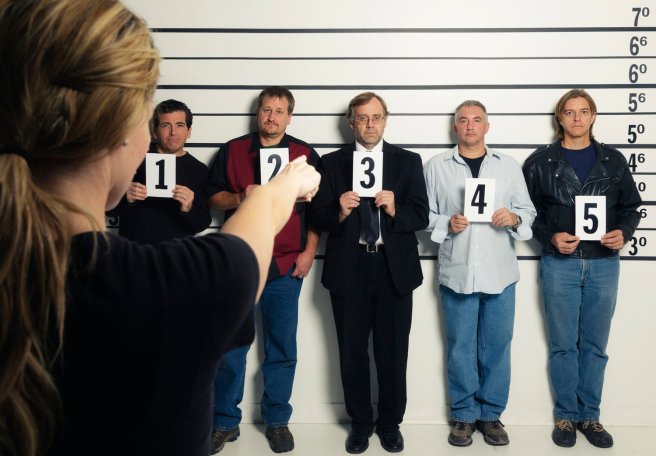
In criminal law cases, convictions in India take place on the basis of whether the prosecution is able to establish the facts beyond reasonable doubt. The aim of the prosecution is to reconstruct facts of a past event through direct, indirect and corroborating evidences. Eyewitness testimonies are an account of the events from the perspective of a bystander to the crime. They help retrace the incident as well as identify the accused in various situations. Such testimonies help the Court in receiving a first-hand knowledge of the crime and are admissible in Court under Section 9 of the Indian Evidence Act, 1872. This article evaluates the reliability of eyewitness identifications, keeping in mind the problems surrounding it and eventually aims to discuss reforms in terms of making such evidence more dependable, with special reference to an individual’s ability to recollect the happenings and people involved.
The principle ‘innocent until proven guilty’ is the cornerstone of all criminal law cases and if there is even the slightest possibility of there being a misidentification on the part of the eyewitness, the probative value of such an evidence diminishes considerably. Hence, it is important to decide how valid an identification is. An individual’s ability to identify an accused through a test identification parade largely depends on and is influenced by factors like his ability to remember such an incident, remarkability of the event, characteristics of the accused and the context in which the crime took place. Wrongful or misidentifications by witnesses have plagued our justice system over the years. In a study conducted on proven cases of wrongful convictions, the highest percentage of such convictions, i.e., 52% were attributed to false identification or misidentification by eyewitnesses[1]. It is hard to draw objective standards for such exercises as biases, gender and societal norms as well as cultural values influence a witness’ association with the accused and for the same reason, witness identifications are said to be “hopelessly unreliable.”
Psychologist Hermann Ebbinghaus, in his ‘Forgetting Curve’, has shown that human memory fades over time and the more the retention interval is, i.e., the time between the crime and the identification, the more are the chances of a misidentification.[2] In fact, it has been stated in the Atkinson – Shriffin Multi Store Model of Memory,[3] that the first stage of memory is our sensory register, after which it becomes a part of our short-term memory, which has a limited capacity and can hold such information only for a limited period of time. Only if such information is recalled and rehearsed, it can become a part of our long-term memory, after which it can be remembered as and when required. If a witness sees an accused that he does not know, for a brief period of time, chances are that his memory of the accused face remains in the short-term memory and can be easily lost. Research, especially in the field of facial recognition and memory, suggests that, “memory for a face is affected by the introduction of subsequent misleading information about that face, indicating that memory for faces is susceptible to what others have called ‘interference’.” Any new information that the eyewitness hears, be it via the police, the media or other witnesses, alters the memory of the face, suggesting that facial memory is highly suggestible and not trustworthy. This is the prime reason behind covering the face of the suspects taken into custody by the police, so that the face registered in the mind of the witness is not influenced.
Witnessing a crime can be a traumatic and emotional event. What effect does this have on an individual’s recollection power? Another aspect that affects memory and recollection is the amount of stress an individual is exposed to. The Yerkes – Dodson Curve shows that the relationship between an individual’s alertness and levels of arousal is a normal probability curve. This means that with a low level of arousal, performance is bad and an increase in arousal after this causes an increase in levels of performance, up till a certain point. Thereafter, further increase in the levels of arousal causes a decrease in the performance. In almost all cases where a bystander witnesses a crime, there is a high level of arousal, so the memory is not negatively impacted due to a low level of arousal. But where is the distinction drawn when it comes to an optimal level of arousal as compared with excessive arousal that leads to an undesirable impact on one’s memory?
Memory reconstruction is another aspect to be looked at while assessing the reliability of an eyewitness. Frederic Bartlett in his work, “Schematic Theory of Reconstructive Memory” stated that the memory of an individual could be reconstructed through a cognitive process depending on the learned societal norms, cultural values and conformation biases which influence that individual.[4] Considering this to be true, the witness’s perception of the event that has taken place, traced with societal stereotypes and traditionally followed thoughts, alters the initial memory formulated. Memory reconstruction becomes especially relevant for us because India, being a culturally diverse country, gives rise to various stereotypes and societal customs.
Courts in India place emphasis on the character of the witness to determine the reliability of the witness. In the case of Daya Singh v. State of Haryana, the Supreme Court of India has noted that,
“…power of perception and memorizing differs from man to man and also depends upon situation. It also depends upon capacity to recapitulate what has been seen earlier. But that would depend upon the strength or trustworthiness of the witnesses who have identified the accused in the Court earlier.”
Strength and trustworthiness are subjective aspects that are judged by the confidence with which a witness speaks, along with his demeanor while speaking. Instead of judging the ability of the witness to recollect an occurrence, the courts generally look at something that can very easily be portrayed, sometimes even unconsciously. A witness may not misidentify the accused due to a mala fide intention, but through cognitive process may be convinced that he is correctly identifying an individual. Biases and reconstruction of our memory take place subconsciously, so even if a witness is confident of the person he is identifying, such subjective qualities like confidence, trustworthiness and strength cannot be relied on. In the Indian courts, there is a basic discussion on what impacts the dependability of a witness, but these discussions are limited to factors like a when a witness would not be able to see properly in the dark, or, the more the time, the more likely the witness is to forget the face of the accused. The courts do not consider more important factors such as the extent to which an individual’s memory is consistent, and there is no discussion on the steps that should be taken to improve an individual’s recollection power.
Considering how problematic and unreliable an eyewitness testimony is, and the bare minimum guidelines available on how to conduct it in such a manner that it becomes reliable, one would think that maybe it should be completely done away with. However, this cannot be done. Eyewitness testimony is an essential piece of evidence, especially when a test identification parade is correctly conducted, followed by the dock identification, to increase its evidentiary value. The only alternative would then be reform in this sphere of evidence law.
A few of the important factors to consider when looking at the reliability of the memory of an eyewitness are, (1) the time lapse between the incident and the identification, (2) circumstances of the situation and (3) the nature of the accused’s face. The Levels of Processing Theory of Memory, states that in shallow processing, where there is a mere encounter with an object, it is likely to be forgotten, whereas in the deep semantic processing, which looks at the rationale and consequences of an event, recollection is improved. Hence, if an event is remarkable or odd, an encounter that the witness would not have in the ordinary course of nature or an encounter where he sees something normally not seen with people (for example, a gun or any other weapon), the individual is likely to use deep semantic processing to process the information, thereby making it easier to recollect and makes an eyewitness testimony more reliable. Ordinary information, that we are used to, is more likely to be forgotten and hence, when determining the dependability of this eyewitness’ identification, this factor is important to keep in mind.
There is research to prove that the more elaborate the memory encoding process is, and the more enriched with associations of relationships and emotions it is, the better the retrieval process is. One way to “conceptualize memory is to think of elements as nodes in a network of associative relationships”. An element can be associated with various other elements, and the number of associations formed and the length of the associative pathways formed between them characterizes a relationship between them. The more the associations, the deeper the correlation and the easier the recollection.
In a study conducted by Malpas and Devine, two groups of people were subjected to the experiment, one under controlled circumstances and the other under experimental circumstances. One group was asked to identify the vandal in a line of 5 images and the other group was given a guided interview of the situation and reminded of the events of the day, the date and other details to jog their memory. The results of the study were that 60% of the people who went through the guided interview identified the vandal correctly, whereas only 40% of the people who didn’t go through the interview were able to correctly identify the vandal. This experiment shows that our memory is aided when reminded of the context of an event. Although, this is not always possible in legal cases because a lot of the times, the investigating officers are relying on the eyewitness to give them the sequence of events.
An important question to be considered is whether sequential line-ups, where individuals are brought before the witness one after the other, are better than simultaneous line-ups where the witness sees all the individuals simultaneously. In various instances,, false identifications take place because the witnesses indulge in relative judgment through the process of elimination in simultaneous line-ups. “The purpose of the sequential showing of suspects is to decrease relative judgments”. The witness can only compare the individual he is seeing with the previous person but cannot be sure that the person he is going to see after this one will not resemble the culprit more. “Hence, the eyewitness must rely more on an absolute judgment process.” This influences the witness’ memory and helps them to identify correctly, because misidentification is more likely to be a result of an individual using relative judgment, rather than absolute judgment. Here, the rationale is that resemblance is not the same as recognition.
According to the procedural guidelines available in a report published by the US Department of Justice, the officer in charge must first get a basic description of the accused from the witness to ensure that no biases affect an individual’s recollection process. If every individual who agrees to be an eyewitness is made to sit with a sketch artist or an officer who takes down descriptions of how the accused looked, this can jog the memory of the witness well in time, so that this short term memory turns into long term memory and can also act as a corroborating evidence for the test identification parade, as well as, eventually, the dock identification. The issues with this would then lie in the impracticality of this solution, in terms of employing resources for the same as well as the fact that it is not always possible for individuals to be able to convert their visual memory of a person into verbal descriptions.
Concluding Remarks
An evidence though eyewitness identification is therefore, almost a paradox in itself. Its importance cannot be ignored but since it relates to the cognitive, psychological and covert processes of the human mind, which are subjective and theorized on the basis of empirical studies, it cannot be trusted completely due to the lack of factual or statistical evidence. The question whether eyewitness identification is one that should be depended on by the court, therefore, is one that cannot be answered in a simple yes or no. What can although be done, is implementing reforms and taking steps to ensure that the Courts understand the subjectivity involved in this question and apply the law accordingly.
[Riya Sharma is a third year law student studying at Jindal Global Law School, Sonipat.]
[1] Rattner, Arye. Convicted but Innocent: Wrongful Conviction and the Criminal Justice System, 12(3) Law and Human Behavior 283 (1988).
[2] Siegen K. Chou, What is the Curve of Forgetting? 45(2) The American Journal of Psychology 348 (1933).
[3] Robert Feldman, Understanding Psychology (New York: McGraw-Hill).
[4] Ibid.


