
By Varsha Gulaya
Note: This work is divided into two parts. The first part discusses the initial response of Indian courts to the applicability of plea bargaining, till the time it was finally given acceptance. The second part will go on to discuss various Law Commission reports in this regard along with the incorporation of this concept into the Criminal Procedure Code.
Introduction
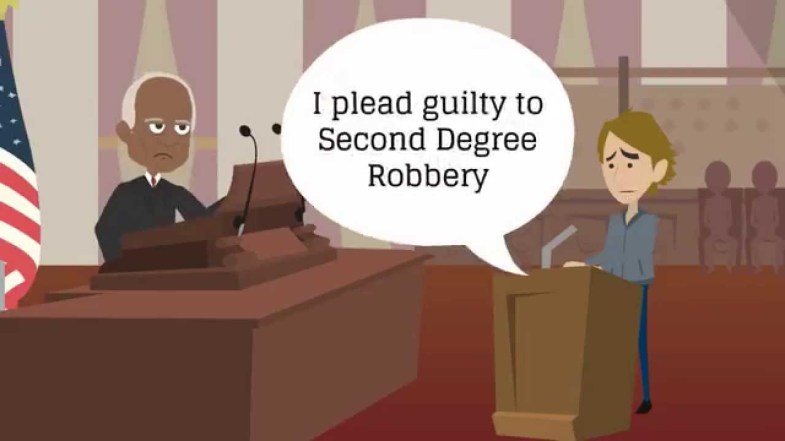
Plea bargaining is an arrangement between the victim and the prosecutor wherein the victim agrees to plead guilty in return of certain concession in the form of a lesser punishment. The infamous Latin phrase, ‘nolo contendere’ which means ‘I do not wish to contest’, though a plea of guilt, is nevertheless seen as a principle on which the concept of plea bargaining has been founded.
In the earlier times, hardly any encouragement was given to plea bargaining, which is apparent from the wide acceptance of the retributive theory based on the ideology of ‘an eye for an eye’. But the concept of plea-bargaining gained momentum after the endorsement it received from the Courts in the United States. Thereafter, its success knew no bound, especially in the US.
Meaning
In general parlance, plea bargaining is nothing but a trade-off between the nature of concessions offered to the accused on his proclamation of self-conviction, and his pleading guilty to the offence with which he had been charged. The concession so offered may be in the form of lesser punishment, dropping of some charge, etc. The Black’s Law Dictionary (8th edition) defines this as:
“A negotiated agreement between a prosecutor and a criminal defendant whereby the defendant pleads guilty to a lesser offense or to one of multiple charges in exchange for some concession by the prosecutor, usu. a more lenient sentence or a dismissal of the other charges.”
Further, the 142nd Law Commission Report (1991) in India defined plea bargaining as “any agreement by the accused to plead guilty in return for the prosecutor’s agreeing to take or refrain from taking a particular course of action.”
Initial Response to Plea Bargaining in India
In India, there exist various situations where a criminal case may end without a full trial and one of such is that of plea bargaining. However, Indian judiciary has time and again denied acceptability of this concept on Indian soil until it received legal approval in 2006. Let’s have a look at the response plea bargaining received at Indian front with the help of the following cases.
- In Madanlal Ramchandra Daga v. State of Maharashtra (1968), the Supreme Court reprimanded the High Court when it enabled the appellant (accused of cheating) to deposit money when he pleaded to the High Court to pay his share of losses if his sentence was reduced. Then, this three-judge Bench, speaking through Justice Hidayatullah, disapproved the practice of plea bargaining by the following succinct observation:
“In our opinion, it is very wrong for a Court to enter into a bargain of this character. Offences should be tried and punished according to the guilt of the accused. If the Court thinks that leniency can be shown on the facts of the case it may impose a lighter sentence. But the Court should never be a party to bargain by which money is recovered for the complainant through their agency. We do not approve of the action adopted by the High Court……”
- In Murlidhar Meghraj Loya v. State of Maharashtra (1976), the Supreme Court agreed with the High Court on conversion of the provision for conviction and enhancement of sentence in case of dangerous food adulteration crimes when the lower Court only asked those accused to pay a small fine after they pleaded guilty. And, while deciding this case, the Division Bench held,
“It is idle to speculate on the virtue of negotiated settlements of criminal cases, as obtains in the United States but in our jurisdiction, especially in the area of dangerous economic crimes and food offences, this practice intrudes on society’s interests by opposing society’s decision expressed through predetermined legislative fixation of minimum sentences and by subtly subverting the mandate of the law.”
Further, it also observed that a streamlined procedure should be devised if the state was to administer justice by having recourse to plea bargaining.
- In Kasambhai Abdul Rehman Bhai Sheikh v. State of Gujarat (1980) the Supreme Court set aside the enhancement of sentence, noting the error of the High Court on not sending the case back for trial when the conviction of the accused in matter of food adulteration was a result of plea bargaining between the prosecution, accused and the Magistrate. Here, the Division Bench disapproved the practice of plea bargaining by holding it unconstitutional and observed:
“It is obvious that such conviction based on the plea of guilty entered by the appellant as a result of plea bargaining cannot be sustained. It is to our mind contrary to public policy to allow a conviction to be recorded against an accused by inducing him to confess to a plea of guilty on an allurement being held out to him that if he enters a plea of guilty; he will be let off very lightly. Such a procedure would be clearly unreasonable, unfair and unjust and would be violative of the new activist dimension of Article 21 of Constitution… It would have an effect of polluting the pure fount of justice, because it might induce an innocent accused to plead guilty to suffer a light and inconsequential punishment… There is no doubt in our mind that the conviction of an accused based on a plea of guilty entered by him as a result of plea bargaining with the prosecution and the magistrate must be held to be unconstitutional and illegal.”
- In Thippaswamy v. State of Karnataka (1982), the Supreme Court remanded the case back to the Judicial Magistrate when confronted with an appeal from Karnataka High Court. The High Court in question, on appeal, imposed a sentence of rigorous imprisonment of three months and disregarded the nature of conviction recorded by the lower court based on plea bargaining entered between the parties and accepted by the Magistrate. Thus, the Division Bench held that enforcement or imposition of sentence in revision or appeal after the accused had plea bargained for a lighter sentence or mere fine in the trial court as unconstitutional being violative of Article 21, as it would not be reasonable, fair or just to act on the plea of guilty.
This case made very clear that plea bargaining was never appreciated by the Apex court as a concept in Indian criminal system.
- In State of U.P. v. Chandrika (1999), SLPs were filed by State of U.P. when the Allahabad High Court, while hearing the matter, entertained the plea bargain on the ground that the incident had taken place long back and since the appellant had been in jail for some time both as under-trial prisoner and as a convict, it was desirable to substitute his remaining period of jail sentence as awarded by the trial court and thus altered the sentence. And, the SC chided away the approach adopted by HC stating,
“It appears that the learned Judge has overlooked the settled law or is unaware that concept of `plea bargaining’ is not recognized and is against public policy under our criminal justice system. Section 320 Cr. P.C. provides for compounding of certain offences with the permission of the Court and certain others even without permission of the Court. Except the above, the concept of negotiated settlement in criminal cases is not permissible. This method of short circuiting the hearing and deciding the criminal appeals or cases involving serious offences requires no encouragement. Neither the State nor the public prosecutor nor even the Judge can bargain that evidence would not be led or appreciated in consideration of getting flee bite sentence by pleading guilty.”
- In State of Gujarat v. Natwar Harachandji Thakor (2005), the question before the Gujarat High Court was whether Innovative Judicial Directions and prescription of New Format (allegedly plea bargaining), for recording plea of guilty of an accused, when statutory prescription of such a process or procedure has been prescribed in the Act, would be competent and legal? And in answer to this question the High Court stated,
“The very object of law is to provide easy, cheap and expeditious justice by resolution of disputes, including the trial of criminal cases, and considering the present realistic profile of the pendency and delay in disposal in the administration of law and justice, fundamental reforms are inevitable. There should not be anything static. As such, “Change is only constant thing in the world”. If the individual, society or for that purpose, nation feels allergic to the change for the reforms and remaining oblivious to the realism and prevalent situations, the very existence may be in jeopardy. It is, therefore, rightly said that all must have an open mind, as mind is like a parachute; it starts working when it is open. Although, hitherto, as a part of colonial legacy, “plea bargaining” has not been recognized, so far in our system and Criminal Jurisprudence. However, keeping in mind the huge arrears and long time spent in trials and resultant hardships to parties, and particularly, the accused and the victims of the crimes, the benefit of “plea bargaining” as an alternative method to deal with the dispute or question of offence requires serious consideration, which would not be admissible and available to the habitual offenders. We should remember a saying that “every saint has past and every sinner has a future” and also that “law and justice should not be distant neighbours.”
[This work shall be continued in the next post, wherein the author will go on to discuss Law Commission reports and the provisions in the Cr.P.C. concerning plea bargaining.]
[The author is a fifth-year law student at Faculty of Law, Jamia Milia Islamia.]


One thought on “Tracing the Development of Plea Bargaining in India [Part I]”