By Anthony Schembri
Manuel Valle was born in Florida. I was born in Brooklyn.
On Sept. 28, 2011, we would meet for the first time at Florida State Prison in Starke. Our roles were different. He had to die. I had to watch.
On April 2, 1978, Manuel Valle killed a Coral Gables police officer who pulled him over for running a red light. I had been invited to witness an execution by the Florida Department of Correction, having served as Corrections Commissioner in New York. As a criminologist, I accepted the invitation, because from time to time the death penalty comes up in my class on criminology and witnessing one would contribute to the class discussion.
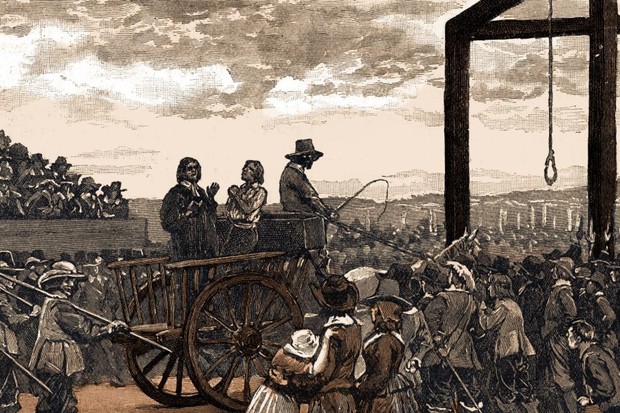
The death penalty is nothing new; it’s been with us for centuries. This century we have been searching for more humane ways of killing people. We’ve shot them by firing squads, suffocated them, gassed them, buried them alive, lopped off their heads, burned them alive and hung them because it reflects the popular notion the death penalty is a deterrent. Now we have developed a new device, the most humane of all, lethal injection.
Counting down
Arriving at 2 p.m., they escorted me to the Warden’s Conference Room.
They knew me. Several other witnesses came in. He was to die at 4 p.m., but he got a stay of execution. At 6:30 p.m. they came in and told us the stay was lifted and he was to die at 6:55 p.m. I looked at my watch; he had 25 minutes to go.
I wondered if he was looking at his watch. Later, they drove the 16 of us in two vans to the Q Building (execution chamber). There are 397 inmates on death row. On the day of an execution, the inmates are locked down. Inmates saw us exit the vans and began to scream obscenities. We were escorted to the witness room. They seated me in front. We stared at a brown curtain in front of a 14-foot window. At 6:55 p.m. the curtain was raised.
Final moments
He was strapped to a gurney. Needles were already in his arm. In England, they would say: “The scaffold is high, eternity is near.”
They asked him if he had anything to say. He said “No.” The officer nodded to someone behind the screen. I saw the needle move.
Dostoevsky once said, “You can judge the degree of civilization in society by entering its prisons.”
I was hoping we weren’t being judged today.
Mechanics of death
The first shot anesthetized him. The second shot stopped his lungs. No. 3 stopped his heart.
On the outside, it looks like he goes to sleep, but on the inside, his organs are going through Armageddon. The muscles on his face would contort and his body would jump, but shot No. 1 was a muscle relaxant, so we don’t have to witness a horror show.
You die in your own arms. You can’t describe the impotence of witnessing the last breath of a person while his organs writhe, twist and contort. We just sat there quietly. No one spoke. It seems like we shared a common embarrassment for being there. Someone said: “Justice has been done.”
Aftermath
We got up, lined up, stared at the floor and left. We were not unlike a group of strangers who huddled in a doorway out of the rain and shared an experience, never to see each other again. Manuel Valle was pronounced dead at 7:14 p.m. He was put to death as you would put to death a beloved pet.
We are all safer now from Manuel Vale. Florida is scheduled to do this 397 more times.
It’s funny how our memory works and we connect dots. I thought years ago you could walk into a delicatessen and would be overcome by the wonderful smells. You could smell the bread, the pickles, the cheeses, and the meats. It made you hungry. Today, everything is shrink-wrapped. It’s like entering a drug store. It’s sanitary, clean. Years ago, we electrocuted a man in the electric chair. It smelled like an execution. Flesh burning, you were overcome by the smell of death. Today, it’s sanitary, antiseptic, you don’t smell the death.
Emotional toll
I had conflicting emotions. The emotions of a police officer who became a police commissioner and attended many police funerals and hugged the wives of slain police officers as they wept a river. Emotions and the criminal justice system is not a good combination. Then, conflict. I had the emotions of a criminologist who teaches criminology and criminal law and expects research to affect and determine public policy. When it doesn’t, I think we are stupid. I wish stupidity caused pain. Just think how wonderful that would be.
I pose questions to my class like “Why do we execute?” The crime issue is manipulated for political ends — you can’t get elected dog catcher in this country unless you’re tough on crime.
It’s time to get smart on crime. It’s time to raise the level of public debate on the subject without emotions, without being labeled a liberal or a conservative. I understand the death penalty and I can relate to the retributive impulsive for murder.
1962 flashback
Walking out of the execution chamber, the streets of Borough Park flashed before me. The place was Brooklyn, the time was my childhood. It was May 1962; I heard a bulletin on television.
Two detectives, Finnegan and Fallon, were killed in a tobacco shop in Borough Park, Brooklyn. Unheard of, two detectives killed at the same time. I drove there. I stood behind a police line. Lt. Al Seedman went past me. I told him I wanted to be a cop and wanted to help find the killers. He told me to go home before I get in trouble.
Twenty years later, he would become chief of detectives and I would be a deputy chief of detectives in the prosecutor’s office and work with him. I saw cops weep a river that day. Cop killers should die I’m thinking.
Well, here I was 49 years later, about to see a cop killer executed. The criminologist in me takes over. The research said the death penalty in America is dying. In 2009, the number of death sentences dropped for the past seven years.
States’ standards
In Illinois, the governor halted all executions because of problems in the criminal justice system with it. Eleven states considered abolishing the death penalty last year, citing high costs and the lack of measurable benefits.
A dozen states that have chosen not to enact the death penalty since it was ruled permissible in 1976 have not had higher homicide rates than the states with the death penalty. Indeed, 10 states without capital punishment have homicide rates below the national average, according to the FBI data. According to the Innocence Project, 154 people on death row have been exonerated by DNA evidence. Supreme Court Justice Harry Blackman said the American “machinery of death” is broken.
Judicial process
After reviewing the research and applying 45 years of experience, I found: most homicides are impulsive actions and crimes of passion where the killers do not consider the consequences, law enforcement officers sometimes fudge the truth, they coerce false testimony, court-appointed lawyers sleep through trials, they miss deadlines, they fail to put on exculpatory evidence, juries believe every word of “experts,” witnesses opine on defendants they never met, jurors evade responsibility by hiding behind other jurors, judges evade responsibility by hiding behind jury verdicts and appeals courts hide behind trial courts.
In three cases, I found the lawyers slept during the trial, did not call witnesses, gave no closing arguments and used drugs. One was disbarred, and one handled the case of the victim’s will (a conflict). One made racial remarks.
These issues are a self-inflicted wound to the death penalty. Would you want to die on the evidence cited above?
Higher certainty
If we are to continue to use the death penalty, it is my opinion the level of certainty should be higher. Perhaps instead of proof beyond a reasonable doubt, it should be proved beyond all doubt. Without fear of contradiction, I can say the law has become a rubrics cube; you can twist it into anything you want.
As an example, Blackstone and Bentham discussed a 1278 statute establishing the penalty for “stealing horses.” The English judges held this provision did not apply to someone who stole a single horse.
As a criminologist, I demand proof for my opinion. Two-thirds of all witness identification has been reversed because DNA cleared them. Research demonstrates the death penalty does not deter murder.
Penalty studies
The first of the comparative studies of capital punishment was done by Thorsten Sellin in 1959.
Sellin was a criminologist at the University of Pennsylvania and one of the pioneers of scientific criminology. He was a prime mover in setting up the government agencies that collect statistics on crime. Sellin applied his combination of qualitative and quantitative methods in an exhaustive study of capital punishment. He compared states to other states and examined changes in states over time. Every comparison he made led him to the “inevitable conclusion . . . that executions have no discernible effect on homicide rates” (Sellin 1959, 34).
Sellin’s work has been replicated time and time again, as new data have become available, and all of the replications have confirmed his finding capital punishment does not deter homicide (see Bailey and Peterson 1997, and Zimring and Hawkins 1986).
Life or death?
The popular notion that the death penalty is a deterrent is wrong. Most murders are committed by people who know each other. Surveys of inmates said they would rather die than get life in prison. So, life in prison is more of a deterrent to inmates than the death penalty.
The year 1963 is distinguished by two facts: the first year in U.S. history in which executions of criminals did not occur and a crime rate higher than any previous year. In many polls, the most often cited reason for the death penalty is the belief it deters crime. Research fails to support a deterrence justification for capital punishment, so say the scientists of crime.
Finally, we must look at retribution, the notion that punishment (the death penalty) is imposed because it is deserved. As a criminologist, I often pose this question to my students: “Is retribution the true currency of justice?”
Costly punishment
The death penalty means murderers deserve death in Texas but not in Massachusetts. I do not call for an end to the death penalty — I call for a light on the death penalty. Life in prison is cheaper than the death penalty, so a life sentence is more cost-effective.
Pierrepoint’s point
In preparation for this article, I researched the work of a man who executed 608 people from 1933-1945. Albert Pierrepoint was the official executioner of England. Pierrepoint kept his opinions to himself on the topic until his 1974 autobiography. “Executioner: Pierrepoint.”
He wrote: “I have come to the conclusion that executions solve nothing, and are only an antiquated relic of a primitive desire for revenge which takes the easy way and hands over the responsibility for revenge to other people.
The trouble with the death penalty has always been that nobody wanted it for everybody, but everybody differed about who should get off.”
The death penalty made Pierrepoint feel hanging was no deterrent. Lewis Lawes was the Warden of Sing Sing prison from 1920 to 1941. He supervised 303 executions.
“I shall ask for the abolition of the penalty of death until I have the infallibility of human judgment demonstrated to me,” he said in 1923.
A conversation
Picture this. I had imagined that when I was driving down the road from the prison I spotted a space ship that had just landed. I stopped my car.
An alien came out and walked over to my car.
He asked me: “What are you doing here?”
I said: “I just came from an execution.”
He said: “What is that?”
I said: “It’s where and when the government puts a man to death.”
He asked me: “Why do you do that?”
I said: “We kill people who kill people, to show that it’s wrong to kill people.”
When those words came out of my mouth, it struck me.
He said: “That doesn’t’ make sense. Who was the executioner?”
I said: “We the people. The government kills people in our name.”
He retorted: “Your society should be better than him and model the way.”
He asked: “What happens now?”
I said: “Politicians will make more speeches, the press will sell more papers, the police and parole will be blamed, more laws will be passed, Jenna’s law, Caylee’s law etc.”
He said: “That doesn’t make sense.”
I said: “I know, welcome to America.”
He told me a story about a Jewish man in a concentration camp who was about to be executed. His friend found him kneeling and praying.
His friend said: “What are you doing?”
He said: “I am thanking God.”
Amazed, his friend said: “You are about to be executed and you are thanking God-for what?”
Looking up he retorted: “For not making me like them.”
Have we become like them? Is the government now a killer?
Similar opinions
Supreme Court Justice Louis E. Brandeis said: “Government is a teacher, for good or bad, but the government should set the example. You don’t solve violence by committing violence.”
Kirk Douglas in Paths of Glory, in defense of soldiers about to be executed, said:
“There are times when I am ashamed to be a member of the human race and this is one such occasion.”
At 7:14 p.m. Sept. 28, 2011, I felt the same way.
The end result
Once again, I do not call for an end to the death penalty — I call for a light on the death penalty and I pose a question — why doesn’t evidence influence public policy? I came home, hugged my wife, called my son and looked forward to my next class on criminology. I will not ask my students: “Do they deserve to die?”
But — “Do we deserve to kill them?”
[Former Citrus County Administrator Anthony J. Schembri is the Radzinowicz professor of criminology, criminal law, and police science at the University of Florida. This article was first published in Citrus County Chronicle Oct. 14, 2012.]



Very well written, clears the misconception of death penalty being an epitome of deterrence.
LikeLike