

[Radhika Malpani is a fourth year law student at National Law University, Jodhpur. It was first published on the blog on Dec. 11, 2018]
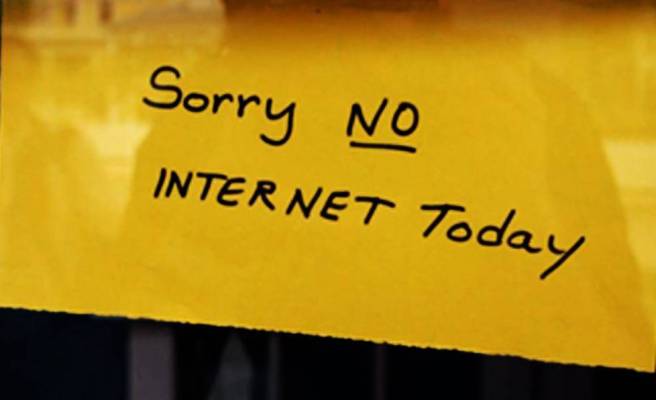
Introduction
With the increase in the reliance on internet for every single detail, its significance in today’s world is not less than a necessity. It helps in imparting information and knowledge to masses and has become an indispensable way of communicating opinions and expressions. No doubt, there are other mediums to access information. However, the reach and accessibility with internet cannot be compared with any such medium.
I. A Note on Section 144, CrPC
The trend followed by the State governments today it that it is curbing more of such expressions by shutting the internet over the areas of disturbance of public tranquility. Such use of power is effectively exercised by virtue of Section 144[1] of the Code of Criminal Procedure, which empowers the State Government to do all what is necessary for preventing urgent breach of public peace and tranquility.
A. A Scuffle Between Fundamental Rights And Section 144
Many of the fundamental rights guaranteed by the Constitution are exercised largely through internet. There has to be an equilibrium struck between the fundamental rights of individuals and maintenance of law and order. Therefore, there ought not to be a greater invasion on the individual’s right than what is strictly necessary to achieve the state’s purpose.
The guaranteed freedom of free speech and expression, enshrined under Article 19(1)(a) of the Constitution, can be restricted only if a danger qualifies as an immediate threat as per Article 19(2).[2] This danger should not be remote, conjectural or far-fetched, but have a proximate and direct nexus with the expression sought to be restricted.[3] In the context of Section 144, the Supreme Court in Re-Ramlila Maidan Incident Dt. v. Home Secretary mentioned that along with the test of direct and proximate nexus, the State Government has a duty to ensure that the measures imposed for restricting this right are least invasive in nature and also unavoidable in the given circumstance.[4]
The wide power under Section 144 calls for a caution while its exercise by an Executive Magistrate as it is his responsibility to take reasonable steps due to its wide ramifications on the fundamental rights enshrined under the Constitution of India. Right to freedom of expression[5] and right to know[6] are the basic rights which cannot be curbed for a disproportional period and in an arbitrary fashion. The three part test of legality, legitimacy and proportionality needs to be fulfilled.[7] The threat to public tranquility and peace under urgent cases demands attention of this provision and only then such provision can be invoked.[8]
Internet shutdowns, on a prima facie level, fail the test of proportionality. This is because they are indiscriminate, in both whom they target (that is, everyone within a defined area, whether potential disruptors of law and order, or the entirely innocent), and the manner in which they do so (cutting-off access to the entire internet, which includes a vast majority of entirely bona fide and legal uses of the internet). Proportionality means that the purpose sought to be achieved is achieved and equilibrium is reached. It should be the “least injurious means” or “minimal impairment” so as to safeguard the fundamental rights of the citizens.[9] Therefore, the restriction under 19(2) fails as it is not proportional and such a blanket ban cannot be imposed. Also, the use of the provision in an arbitrary fashion leads it to be in violation of the underline principle of Article 14.[10] Moving further, I would like to bring to your attention the popular Gujarat Agitation Case, which was an attempt to challenge internet shutdown but was not addressed the way it should have been.
B. A Critical Analysis Of The Gujarat Agitation Case, 2015.
The Gujarat agitation by Hardik Patel for the demand of Patel reservation is an apt example of such an exercise of power to shut down the internet facilities for as long as a week. A PIL challenging the ban was filed in the Gujarat High Court,[11] which was dismissed by the Court stating that such an extraordinary situation calls for extraordinary measures.
However, the aforesaid reasoning is ignorant of the fact that other legal provisions, like Section 69A of the Information Technology Act, are also to be looked into rather than seeing the ban in isolation. It allows the Central government to direct, in the interest of public order, any agency of the Government to block for access by the public or cause to be blocked for access by the public any information generated, transmitted, received, stored or hosted in any computer resource. Therefore, the Central government is the trustee of the radio frequencies and spectrums and only it has the power to curtail the access to connectivity services, including the internet. The role of State governments is limited as such issues dealing with telegraph fall under the Entry 31 of the Union List.[12] This facet of the telecommunication regulation was not delved into by the Gujarat High Court.
Moreover, Section 69A[13] of the Information Technology Act covers blocks to Internet access. Since it is a special law dealing with internet, it prevails over the general law under the CrPC. Section 69A can be resorted to during social unrest to block specific webpages, as was done during the anti-Northeast disturbances in Bangalore in 2012 and the communal clashes in Muzaffarnagar in 2013.[14]
Furthermore, Section 144 is to be used as a last resort, when a lesser alternative would be inadequate.[15] The State government could have explored the alternatives under Section 69A to specifically block the social media websites that were reportedly used by Mr. Hardik Patel to communicate with the public and spread this propaganda for inciting caste based violence in the State. Also, the shutdown has certain grave impacts which cannot be overlooked.
C. Grave Impacts of Shutdown
The e-commerce businesses, web based or application based; cab companies; bank services; hotel and travel services were among the major categories of businesses that were significantly hit during the shutdown of mobile Internet in the state of Gujarat for over a week in August, 2015.[16] This sector, especially start-ups have become immensely integrated and dependent on the internet for their orders and delivery notifications. They make use of mobile applications to make it convenient for consumers to buy their products. Furthermore, businesses who sell their commodities on platforms like Flipkart, eBay and Amazon have complained of losses and were concerned about customer satisfaction from their products because the extent of their sales depend on customer reviews and ratings, and a delay in delivery or notification may not fare well for their record. Thereby affecting their fundamental right to practice any profession, or carry on with any trade, business or occupation.[17] Also, there are Suspension Rules which are not of much avail for internet shutdowns.
D. Suspension Rules, 2017.
Perhaps realising that Section 144 of the CrPC was not a powerful provision, the government notified certain “Suspension Rules” to the Telegraph Act of 1885.[18] However, there was no transparency or democratic debate when these rules were framed, their scope is severely vast, and include phone calls as well as Internet calls. Moreover, there is no provision that envisages a lifting of the shutdown after any specific time period. After designating certain officers who can authorize internet shutdowns, the rules only require a “review committee”, whose scope is limited to decide whether the declaration was valid or not.[19] No accountability is given to any person who is authorized to pull the plug. This in turn would lead to the problem of assigning liability to the person accountable.
II. Conclusion & Recommendations
In the 21st century, the Internet has assumed an increasingly important place in our lives. With 106 Internet shutdowns, triggered by States all over India this year, India had attained the suspicious distinction of joining Iraq in “reporting the highest number of incidents involving government mandated shutdown of Internet access”—with serious consequences both for civil rights, and for business.[20]
Internet acts as a platform for exercising the right to freedom of speech and expression. Moreover, as has been clarified by the Supreme Court, Section 144 and the restriction on free speech should only be used as the last resort, when a lesser invasive alternative is not available. Additionally, a complete shutdown of this system is a significant restriction on the guaranteed right of free speech and expression. Therefore, pulling the plug on entire internet is not only a colossal violation of Article 19 of the Indian Constitution, but is also not the right use of powers under Section 144.
Also, internet shutdown has become integral in today’s scenario while conducting examinations. This new development has an increasing trend and by the time people realize their rights and freedoms, the damage would already have been done; then there would be no coming back.
Recommendations
- First, instead of opting for a shutdown, what the French government did is that it developed an app, because it knew that people were speaking to each other on WhatsApp, even the victims and find a new way using the Internet to help people. An App was developed with an alert button in order to tell the police in areas of disturbance. Another example is that Facebook updated the app in France to have a specific button for the users to mark themselves safe. In India, we can look at the Cauvery dispute, which was a serious issue and still the internet was not shut down. Instead, through the internet the local police stations created WhatsApp groups with residential associations to be able to have a direct channel of communication.
- Second, the reasoning of posting fake news over social media platform cannot be taken to justify such a blanket ban. This is because, internet is just a medium and this propagation can well be done through newspapers and radios. However, the issue at hand is not defending such fake news acts, but to make authorities realize that there are other aspects, apart from social media, for which internet is used. I am not denying that social media is not used as a medium to incite people, but the same cannot be a reason to impose a sweep ban over the internet. Thus, the solution lies in proper implementation of Section 69A i.e. having a restricted ban on social media sites and not the whole of internet.
However, then arises the problem of inadequacy in the ability to investigate cyber-crime. There is a need to give police the technical skills and equipment to do policing online. This way the State Government ends up banning the medium through which such propagation is happening. Accordingly, they can be properly trained in order to make them confident enough to catch the perpetrator without imposing such sweep bans. Moreover, if the miscreants know that there will be consequences, they will be less likely to spread fake news. The government can trace the message back to the person who originally disseminated it and prosecute him which would help in putting responsibility.
[1] Section 144, The Code of Criminal Procedure, 1973.
[2] Article 19(2), The Constitution of India, 1950.
[3] S. Rangarajan Etc v. P. Jagjivan Ram, (1989) 2 SCC 574.
[4] Re-Ramlila Maidan Incident Dt. v. Home Secretary And Ors., (2012) 5 SCC 1.
[5] Article 19(1)(a), The Constitution of India, 1950.
[6] Right to Information Act, 2005.
[7] Justice K.S. Puttaswamy (Retd) v. Union of India, (2017) 10 SCC 1.
[8] Gulam Abbas and Ors. v. State of UP, AIR 1981 SC 2198.
[9] Chairman, All India Railway Rec. Board and Ors. v. K. Shyam Kumar and Ors., (2010) 6 SCC 614.
[10] Article 14, The Constitution of India, 1950.
[11] Guarav Sureshbhai Vyas v. State of Gujarat, W.P. (PIL) No. 191 of 2015.
[12] Entry 31, Union List, Schedule VII, Constitution of India, 1950.
[13] Section 69A, The Information Technology Act
[14] Siddharth Narrain, Dangerous Speech in Real Time: Social Media, Policing, and Communal Violence, EPW Engage (24 August, 2017), https://www.epw.in/engage/article/dangerous-speech-real-time-social-media-policing-and-communal-violence.
[15] Ramlila Maidan Incident v. Home Secretary, Union of India & Ors., (2012) 5 SCC 1.
[16] Gautam Bhatia, Making the Internet disappear, The Hindu (October 18, 2017), http://www.thehindu.com/todays-paper/tp-opinion/making-the-internet-disappear/article19879182.ece.
[17] Article 19(1)(g), The Constitution of India, 1950.
[18] Suspension of Telecom Services (Public Emergency or Public Safety) Rules, 2017.
[19] Legality of Internet shutdowns under Section 144 CrPC, sflc.in (2nd October, 2016), https://sflc.in/legality-internet-shutdowns-under-section-144-crpc.


