

By Raj Shekhar and Zevesh Modi
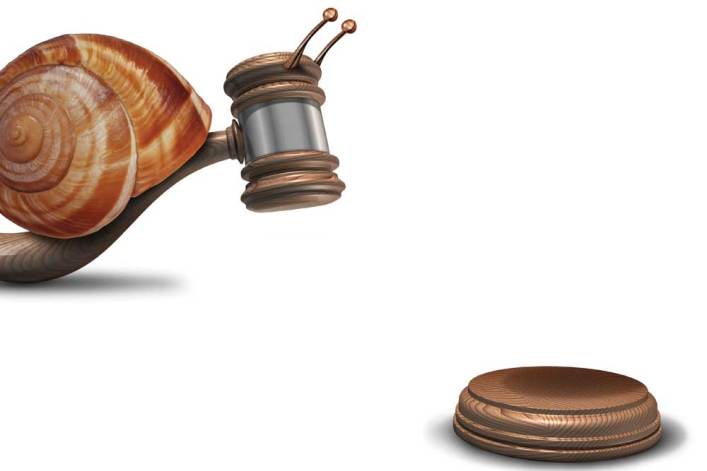
“Justice delayed is justice denied.”
Abstract
On December 16th, 2012 a young paramedical intern was beaten, brutalized and raped by five men and a juvenile on a moving bus. They threw her out afterwards and thereafter, she died due to her injuries and internal bleeding. This case sparked a whole new nationwide protest to ensure women’s safety and laws to prevent such incidents in the future. The death of Nirbhaya, or the fearless, as she was reported to have fought against her assaulters, forced the union to set up enquires into the plight of women safety, amend rape laws and ensure the fast track trial of rape cases in India. February 2020, it’s been seven long years now and unfortunately, the case still lingers to this day. This blog critically analyzes the key reasons behind this delay and tries to act as a beacon for amendments by comparing the existing Indian Scenario to the International one. It also suggests reformative steps that could ensure better law and ultimately a better tomorrow.
The Ground Reality of Execution Order
Just like the old times, the sorry state of the Indian Justice Dispensation system continues. Day and again, the repeated postponing of the hanging of Nirbhaya rapists is not testing the patience of the nation. As if seven years were not enough, the case is still being dragged in the corridors of judicial temples of our country. One of the convicts who was a juvenile (now an adult) is out after spending three years at a remand home; one of the rapists died by committing suicide, and the Supreme Court convicted and sentenced the other four rapists to death in 2012. For almost three years, convicts Akshay, Vinay, Pawan, and Mukesh exploited the law to eke their hanging. Looking at the legal options still available to them, it might make them even a couple of more years to finally be hanged.
The Timeline of Pendency
It’s quite paradoxical to note that a fast track case has taken seven years to reach its final stages, and is still being dragged. The question that naturally arises is: Wasn’t there a way to wrap it up early? On a closer analysis of the case, the role of legal loopholes is pretty evident. Once the death sentence was awarded to the convicts, ideally the law has provisions for such convicts to file a review petition within thirty days[1]. However, respite can be provided in cases where the convict puts forward convincing reasons for not filing the same within the stipulated time frame. The convicts exploited this to the fullest.
Collectively, the four rapists filed their reviews on different dates and that too with long days between them. One of the convicts, Mukesh filed his review petition on November 6, 2017, through advocate M.L. Sharma. The other Adv. A.P. Singh, representing the other three rapists told the apex court on November 11, 2017, when the court started hearing Mukesh’s petition, that he would file the three convicts’ plea with a month. With the concluding hearing of Mukesh’s case on 12th December 2017, the advocate again told the court that Pawan and Vinay would take three days for filing, whereas Akshay would need another ten days. The petitions for Pawan and Vinay were filed within a few days, but Akshay’s petition was not filed till the time the court dismissed the review pleas of the other three on the 9th of July, 2018.
The whole concept of Mercy petition is also being exploited as the court held in the case of Shatrughan Chauhan v. Union of India[2] that, “It is necessary that a minimum period of 14 days be stipulated between the receipt of communication of the rejection of the mercy petition and the scheduled date of execution…”. If we calculate rationally, this provision along with the fact that each convict can file a mercy petition separately is sacrosanct enough to add an unjustified period. Majorly these are the tactics that the convicts are resorting to keep on delaying the execution.
Capital Punishment and Remedies available
Death sentences are considered to be inhumane and this is the reason why the mandatory death sentence under Section 303 of IPC was struck down[3]. These are only given when the charges against someone are proved beyond any reasonable doubt in cases of grave offences such as injuries that may result in the death of a victim or a repeat offender, rape cases, murder of individual, tyranny, and terrorism-related offences causing the victim(s) to die[4]. At one point of time, even the constitutional validity of the death penalty was raised, however, it was held to be constitutionally valid.[5] The Supreme Court in Rajendra Prasad v. State of UP [6] (1979), and also in Bachan Singh v. State of Punjab [7] (1980) that death sentence can be given only in the “rarest of rare” cases, and the courts shall specify the reason for rendering such an order. However, looking at the Nirbhaya case, it clear without a trace of doubt that it is one of such rare cases.
The provisions of Review and Curative Petitions
As per the Supreme Court Rules, 1966 a review petition for reviewing the judgment shall be filed within thirty days from the date of passing of such an order. The rules also recommend the circulation of the order to the same bench who delivered it, without any oral arguments. The convict can also file for a Curative petition. However such petition shall be accepted by the court only if it is established that:
- Principles of natural justice were genuinely aggressed upon,
- the grounds mentioned had been taken in the review petition and they were removed due to circulation.
Mercy Petition: Article 72 of the Indian Constitution
After the award of death sentence by the Supreme Court, anybody, even an alien, can send a mercy petition concerning the convict to the President’s Office or the Ministry of Home Affairs to seek respite. Article 72 of our Constitution deals with powers exercised by the President of India to grant pardons, remissions of punishment, reprieves, and respites or to commute, remit or suspend the sentence of any person convicted of any offence under any union law.
International Scenario: Analyzing laws of USA and Japan
We can never create a flawless law, until and unless we are open enough to the ideas of the International community. When we look at India, we find that compared to other nations, it is still a very nascent country. The laws haven’t gone through the harsh test of time. It is due to this fact that even after more than seven decades of Independence, we come across certain dead ends where we have to consider the International scenario.
In the United States, to curb this menace of pendency, the lawmakers have created a cardinal rule of post-conviction proceeding which makes challenging the proceedings mandatory at the very first available opportunity. If such a claim is not raised, it is deemed to be waived.[8] Thus, eliminating the very chance of exploiting the remedies available.
Japan takes this issue very seriously, and it’s quite evident in its laws too which makes condemnation to death definitive within six months [9] and a mandatory carrying out of such order, within five days after the signing of execution order by the Ministry of Justice.[10]
The 2014 Supreme Court Guidelines: Time for a change?
Every law is exploitable, and that is the reason why the law is always deemed to be dynamic and evolving. Though the laws to appeal against capital punishment were made to safeguard people and their lives, it not surprising that such noble laws are being used to delay justice. While taking care of the rights of the convicts, it is more important and need of the hour to lay down guidelines in the interest of the victims, their families and in the larger public interest, so that these laws are not used as a shield to evade the cause of justice.[11] The guidelines issued in regards to capital punishment[12] are “accused centric”. They fail to take into account the agonizing mental trauma, upheaval, and derangement of the victims and their family members, the strain it puts on the collective conscience of the nation and the deterrent effect which capital punishment intends to create.
Indian legal system is itself not free from flaws. What the legal system needs to improve is the way such legal remedies are provided to the convicts. In case of multiple convicts of such crimes who are awaiting a death sentence, mandating the issuance of a warrant by competent Court within seven days of rejection of mercy petition and execution of death sentence within seven days thereafter irrespective of the proceeding, if any, taken by his co-convicts shall be made mandatory. The days for filing review and curative petitions should be strictly monitored. The fourteen-day breather which is provided once a mercy petition is rejected needs to be scrutinized. In case of more than one convict, the way such a breather is provided should be cumulative rather than distributive. Also, as per the Delhi Jail Manual, Rule 14(2) it is made clear that multiple convicts involved in the same crime cannot be executed before each one of them has exhausted all legal options available to him, including the chance to plead the mercy of the President. This needs to be reviewed to prevent its misuse for buying time.
Conclusion
Analyzing the whole Nirbhaya case, we can conclude that it has been a big lesson for the nation, whether it be regarding the women’s security concerns or the legal loopholes. It is expected that such a lesson is not forgotten, but rather used as a foundation for building strongly founded laws and bringing amendments to the presently existing ones for which inspirations can be taken from laws of other nations. Laws should be made to promote certainty of punishment, rather than severity. In this regard, the above-mentioned suggestions can be game-changers. With this hope, our nation still waits that a day will come when Nirbhaya shall have her justice and it would mark the dawn of an era when no other victim shall have to go through this nerve-shattering cycle of delay and pendency.
[1] Behari Lal And Anr. vs M.M. Gobardhan Lal And Ors., AIR 1948 All 353.
[2] WRIT PETITION (CRIMINAL) NO. 55 OF 2013.
[3] Mithu Vs. State of Punjab, 1983 (2) SCC 277.
[4] 25 Majumder, Sanjoy. “India and the death penalty.” BBC News 4 August 2005.
[5] Jagmohan Singh vs The State Of U. P, 1973 AIR 947.
[6] 1979 AIR 916.
[7] AIR 1980 SC 898.
[8] https://natomasunified.org/np3h/content/uploads/sites/17/2014/05/Stages-of-Capital-Case.pdf, accessed on 11/03/2020 at 10:55am.
[9] Article 475 (2) of the Law on Criminal Procedure, Japan.
[10] Sher, E.M., 2011. Death penalty sentencing in Japan under the lay assessor system: Avoiding the avoidable through unanimity. Pac. Rim L. & Pol’y J., 20, p.635.
[11] https://www.indiatoday.in/amp/mail-today/story/nirbahaya-case-govt-pushes-for-faster-review-of-mercy-petitions-1639271-2020-01-23#aoh=15827397366052&referrer=https%3A%2F%2Fwww.google.com&_tf=From%20%251%24s, accessed on 12/03/2020 at 00:38.
[12] Shatrughan Chauhan and Ors. vs. Union of India (UOI) and Ors. (21.01.2014 – SC) : MANU/SC/0043/2014.
[The co-authors are students at National University of Study and Research in Law, Ranchi.]


